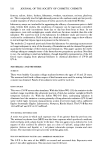
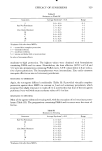
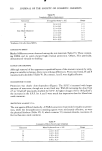
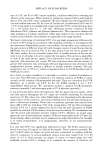
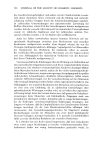
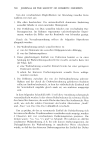
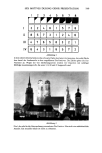
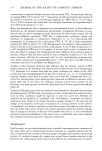
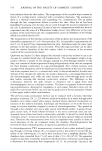
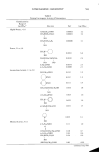
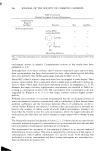
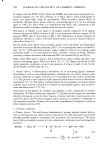
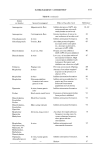
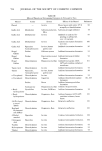
594 JOURNAL OF THE SOCIETY OF COSMETIC CHEMISTS Table III Effect of Phenols on Nitrosamine Formation In Vitro and In Vivo Phenol Amine System Effects of the Phenol Reference Phenol -- In vitro Phenol reacts with nitrite 104 X 98 as rapidly as dimethylamine. Adenoma strongly inhibited. 78 Gallic Acid Gallic Acid Gallic Acid Gallic Acid Propyl Gallate Propyl Gallate Propyl Gallate Morpholine Adenoma induction, Mice Diethylamine In vitro Diethylamine In vitro Piperazine In vitro, human Aminophenazone gastric juice Proline Oil/water system Proline Fried, nitrite-treated bacon Dimethylamine Hepatotoxicity, Rats Tannic Acid Dimethylamine In vitro Tannin Piperazine, In vitro, human Aminopherazone gastric juice o•-Tocopherol Dimethylamine In vitro o•-Tocopherol Dimethylamine Cigarettes t-Butyl- hydroquinone t-Butyl- hydroquinone 2,6-Di-t-butyl- p-cresol (BHT) Butylated Hydroxyani- sole (BHA) 4-Methyl- catechol Chlorogenic Acid Vanillin Hydroquinone Thymol Proline Bacon Aminopyrine Pyrrolidine Dimethylamine Dimethylamine Dimethylamine Piperidine Piperidine Dimethylamine Dimethylamine Dimethylamine Hepatotoxicity, Rats In vitro, Oil/Water Hepatotox., Rats Hepatotox., Rats Hepatotox., Rats In vitro In vitro In vitro In vitro In vitro Inhibited or catalysed de- 99 pending on pH and rel. conc. of reactants. Catalyses nitrosamine formation 100 (see text). Inhibited nitrosamine formation. 96 Inhibited nitrosamine formation. 93 Inhibited nitrosopyrrolidine 92 formation. Inhibited liver pathol. GOT, 101 GPT and ornithine carbamoyl transf erase. Inhibited nitrosamine formation. 93 Inhibited nitrosamine formation. 96 Inhibited nitrosamine formation. 93 Inhibited dimethylnitrosamine 102,103 formation. Inhibited nitrosopyrrolidine formation. Inhibited hepatotoxicity. Inhibited nitrosamine formation. 93 Inhibited hepatox. GOT, GPT, 101 ornithine carbamoyl trans- ferase. Relatively ineffective. 101 Relatively ineffective. 101 Catalysed nitrosamine formation. 104 Catalysed nitrosamine formation. 104 Inhibited nitrosamine formation. 93 Inhibited nitrosamine formation. 93 Inhibited nitrosamine formation. 93

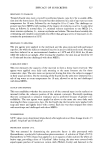
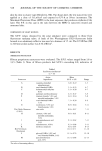
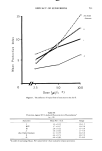
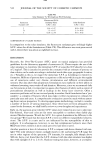
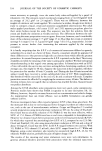
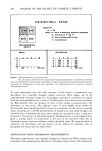
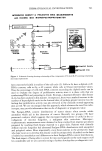
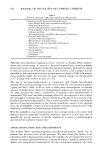
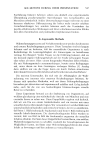
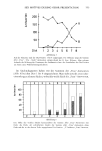
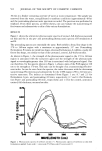
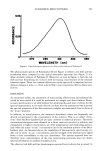
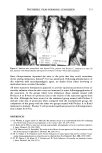
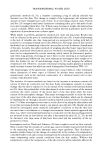
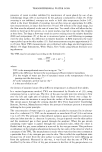
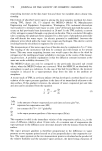
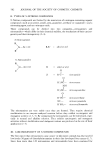
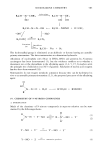
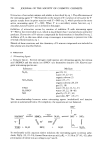
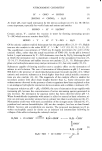
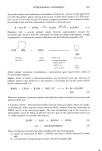
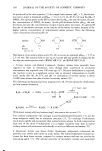
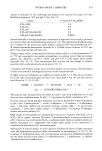
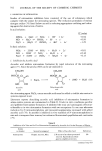
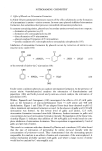
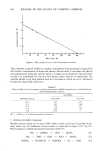
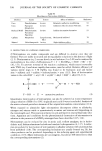
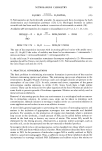
NITROSAMINE CHEMISTRY 595 2. Efj•ct of Phenols on Nitrosamine Formation In Table TTT are summarized literature reports of the •cc•. of phenols on the c __ .. of nitrosamines in amine--nitrite systems. In most cases phenols inhibited nitrosamine formation, but sometimes their presence intensified nitrosamine production. In systems containing nitrite, phenols and secondary amines several reactions compete: --formation ofquinones (eq 19) --formation ofC-nitrosophenols (eq 20) --direct formation of N-nitrosamines --phenol-catalysed formation of N-nitrosamines --aerobic oxidation of C-nitrosophenols to noncatalytic nitrophenols (105). Inhibition of nitrosamine formation by phenols occurs by reduction of nitrite to un- reactive nitric oxide (104) OH O + 2HNO2 + 2NO + 2H20 (19) or by removal of nitrite via C-nitrosation (98): OH OH • + HNO2 ) • NO + H20 (20) Under some conditions phenols can catalyse nitrosamine formation. In the presence of excess nitrite 4-methylcatechol catalyses the nitrosation of dimethylamine and piperidine (104) and both p-cresol and p-nitroso-0-cresol catalyse the nitrosation of pyrrolidine (105). Walker, Pignatelli and Castegnaro (100) investigated the effects of 0-65 mM_gallic acid on the formation of nitrosodiethylamine from 75 mM nitrite and 500 mM diethylamine. Figure 1 and Table IV are adapted from their data obtained at pH 4.2 where maximum nitrosamine formation occured. In the absence of gallic acid 0.39 mM nitrosamine was formed. At the lowest level of gallic acid added, 12.5 mM, nitrosamine formation increased nine-fold. However, further increases in gallic acid concentration decreased nitrosamine formation linearly. Extrapolation of the linear rela- tionship (Figure 1) indicates that addition of 144 mM gallic acid would result in com- plete inhibition of nitrosamine formation. This is equivalent to approximately 2 mol of gallic acid per mol of nitrite. This result is consistent with that obtained by Davies and coworkers (105) who found that the rate of nitrosation of pyrrolidine by nitrite increased linearly with the concentration of p-nitroso-0-cresol. They demonstrated that the nitrosating species responsible for catalysis is an adduct of nitrite and a tautomer of the nitrosophenol. A similar mechanism probably operates with gallic acid where a large excess of nitrite would lead to catalysis by C-nitrosogallic acid.
Purchased for the exclusive use of nofirst nolast (unknown)
From: SCC Media Library & Resource Center (library.scconline.org)