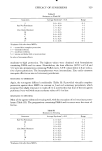
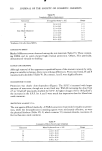
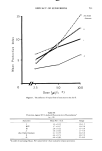
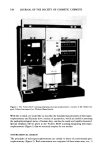
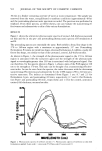
EFFICACY OF SUNSCREENS 533 ture of 34øC and 85 to 90% relative humidity, conditions which favor sweating and dilution of the sunscreen. When laboratory testing was repeated after preheating the skin to 35øC, the S.P.F.'s were comparable. We have obtained excellent agreement for one well studied sunscreen (F). At a dose of 2/xl per cm 2, our laboratory S.P.F. was 4.1 ___ 0.57 in ten subjects. In sunlight with a larger panel the S.P.F.'s at the same dose were 3.6 --- 0.4 before and 4.1 + 1.96 after swimming (studies conducted by Paul Finkelstein, Ph.D., Johnson and Johnson Laboratories). This experience validates the solar simulator as a realistic instrument. Other pilot studies of our own show that the results secured with the solar simulator are applicable to the usage situation. We found a wide range of individual S.P.F.'s for any single preparation differences by as much as 50% being not uncommon. This variability is familiar to investigators who test sunscreens. Repeatability poses a real problem. Occasionally, tests conducted on the same person at different times will yield divergent results. It is well known that the MED may vary by as much as 50% in the same person from one day to another (6). The skin's surface does not resemble a glass slide. A variable amount of the test ma- terial is lost on the glass rod used to spread the test agents. This can have a large effect in view of the small amount applied. Even distribution of the test agents is difficult, especially with ointments and creams. We have long been aware that the variance is greater with ointments than with liquids. Delayed pigmentation may develop in dark complexioned persons, making it difficult to identify minimal erythema. This pig- mentation is due to UV-A (7), which is transmitted freely by UV-B absorbers such as PABA and its esters. As a check on undue variability it is advisable to include a standard formulation in every test. The OT.C panel recommends a 4% ethanolic solution of PABA or, more recently, an 8% solution of Homomenthyl salicylate. These are convenient for UV-B absorbers. At 2 /xl/cm 2, our S.P.F. for the 4% PABA standard is 4.6 + 0.27 (unpublished observations). We customarily include a standard UV-B proprietary sunscreen, generally I, and when appropriate a UV-A absorber, generally J. It was previously shown from this laboratory that hot quartz mercury lamps, which emit line spectra throughout the UV range, are woefully misleading for assessing sunscreens (2). The values were either falsely high or low depending on the absorption characteristics of the sunscreen. Our present findings show that this same handicap ap- plies to fluorescent suniamps. These emit a continuous spectrum that extends from about 280 to 360 nm, with about 55% of the energy below 320 nm. The inordinately elevated S.P.F. for I can be explained by the fact that the peak absorption of PABA parallels the maximal UV-B emission of the fluorescent sunlamp. We reemphasize that only the xenon solar-simulator provides realistic S.P.F.'s. Likewise, we would argue against the use of monochromatic radiation. Different wavelengths in the UV have dif- ferent biologic effects and these may be augmentative rather than additive (8). Sunlight is of course polychromatic. It is inappropriate, therefore, to use monochromatic radiation. It is clear that S.P.F.'s are significantly influenced by dose. The O.T.C. panel recom- mends a test dose of 2 mg/cm 2 (or 2/xl/cm • for liquids). This is entirely reasonable. We used 5/xl/cm • when we began our study and were constrained to continue with this dose for consistency. In several published studies, doses have ranged from 10 to 60 /•l/cm (2, 9-11). Such amounts are greatly in excess of normal usage and yield artificially elevated S.P.F.'s. Schlagel et al. estimated the quantity of ointment and

534 JOURNAL OF THE SOCIETY OF COSMETIC CHEMISTS cream necessary to sparingly cover the entire body when self-applied by a panel of volunteers (12). The amounts varied enormously ranging from 4.3 to 63.8 gm/m 2 with an average of 24.2 g/m 2 (or 2.4 mg/cm=). There was no difference between the weights of ointment and cream applied. We conducted a similar, though more limited, study to compare a liquid, cream and ointment (unpublished observations). Five adult males applied petrolatum, cold cream U.S.P. and 25% aqueous propylene glycol to their entire bodies except the scalp. The sequence was first the solution, then the cream.and finally the ointment at weekly intervals. The differences between the sub- jects using the same preparation were not great. Everyone, however, used considerably more of the solution (average 17.5 g/m • range 15 to 20 g) than the cream or ointment (average 9.1 range 6.5 to 11.5 g and 8.4 g/m • range 7.0 to 9.5 g, respectively). It is im- portant to secure harder data concerning the amounts applied by the average consumer. It is hardly surprising that the S.P.F.'s of commercial sunscreens differed so greatly, sometimes by as much as a factor of three. Clearly, consumers should be appraised of these differences so that persons at high risk can choose those which offer the greatest protection. In certain European countries the S.P.F. is printed on the label. This is very desirable provided the meaning of the value is adequately clarified. We find widespread misunderstanding in this regard even among specialists. A formulation with an S.P.F. of two will enable the user to stay out twice as long before developing a sunburn in the average case, this might be 40 min. Suppose the sunscreen is then reapplied, will there be protection for another 40 min? Certainly not! During the first 40-min interval the subject would have received a certain subthreshold dose of UV. With reapplication, this threshold will be exceeded by the end of 2 hr and a sunburn will result. Complete protection cannot be afforded by reapplying the sunscreen every 40 min. The failure to develop redness does not signify that no radiation has reached the skin. Sunscreens are not perfect absorbers. Among the UV-B absorbers some preparations were very good, some unimpressive. Previous studies have shown that PABA is superior to its ester derivatives (10, 13). Efficacy, however, depends on many factors such as concentration and vehicle design. An inappropriate base can vitiate efficacy, just as skillful formulation can greatly enhance activity. Previous investigators have often reported greater S.P.F.'s than those given here. For the most part this is due to our having used lower dosages but there are other reasons, too, such as the use of monochromatic radiation. Cripps and Hegedus (11) studied several preparations using monochromatic radiation at 305 nm. At a dose of 30/•l/crn z, they found that an alcoholic solution of 5% PABA (I) was the most effective, with a S.P.F. of 17.6. Esters of PABA were less so and were comparable to benzophenones. However we obtained much better protection with red veterinary petrolatum (R.V.P.) for which they reported the astonishingly low S.P.F. of 3.2, compared to our 12.6. Mc- Cleod and Frainbell (14), also using monochromatic radiation at 305 nm and a dose of about 4.0 mg/cm z, found that the S.P.F. for R.V.P. ranged between two and ten. With 5% PABA in 70% ethanol (2.5/xl/cm2), their S.P.F. ranged from 8 to 17. Willis and Kligman, using a solar simulator, also reported an excessively high S.P.F., 23, for 5% ethanolic PABA solution, probably because of higher dosage (10). The results of the sweating and water immersion tests were very informative. In general, physical blockers provided little protection while the chemical sunscreens
Purchased for the exclusive use of nofirst nolast (unknown)
From: SCC Media Library & Resource Center (library.scconline.org)