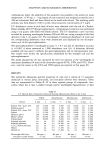
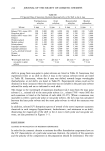
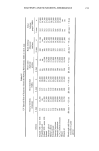
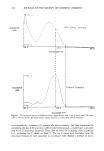
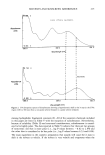
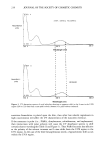
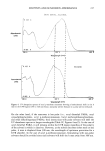
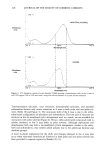
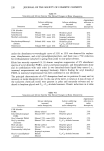
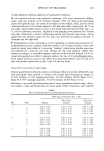
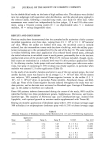
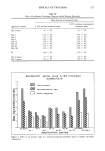
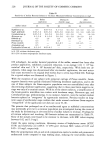
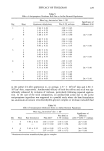
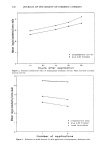
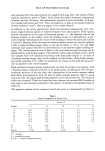
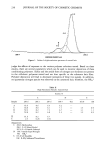
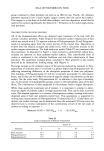
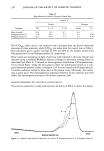
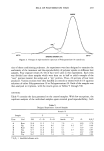
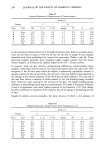
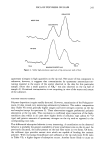
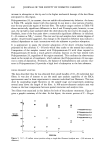
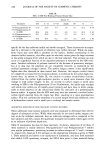
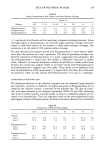
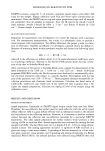
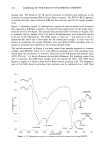
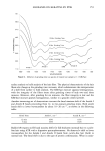
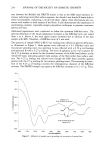
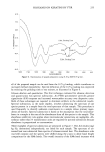
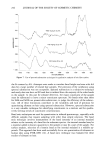
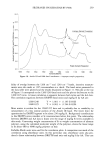
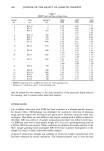
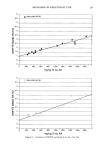
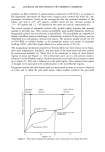
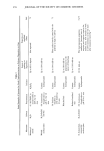
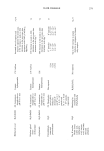
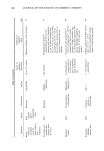
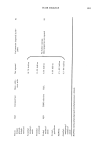
EFFICACY OF TRICLOSAN 231 little or no influence on the axillary micro flora. Findings are summarized in Tables V and VI and Figures 2 and 3. In conclusion, a number of studies conducted in our laboratories have confirmed the in vivo antibacterial efficacy of triclosan incorporated in underarm deodorant and antiper- spirant deodorant compositions (sprays, roll-ons, and sticks). A subsequent improve- ment in deodorancy has also been demonstrated from inclusion of triclosan in a de- odorant spray composition further olfactory studies, though, would be desirable, in order to establish similar benefits from usage of triclosan in combination with antiper- spirant ingredients. ACKNOWLEDGEMENTS The author wishes to thank Mr. B. Pregger for his skilled technical assistance. REFERENCES (1) C. Fox. Antiperspirants and deodorants review and update. Cosmetics & Toiletries, 100, 27-41 (Dec. 1985). (2) W. A. Vischer and J. Reg6s. Antimicrobial spectrum of triclosan, a broad-spectrum antimicrobial agent for topical application. Zbl. Bakt. Hyg., I. Abt. Orig. A. 226, 376-389 (1974). (3) J. Reg6s et al. Antimicrobial spectrum of triclosan, a broad-spectrum antimicrobial agent for topical application. II. Comparison with some other antimicrobial agents, Dermatologica, 158, 72-79 (1979). (4) C. Fearnley and A. R. Cox. A new microbiological approach to the assessment of underarm de- odorants, Int. J. Cosmet. Sci., 5, 97-109 (1983). (5) R. F. Theiler, C. L. Schmit, and J. R. Roheim. Application of a new microbiological technique to the study of antiperspirant and deodorant soap efficacy, J. Soc. Cosmet. Chem., 34, 351-359 (1983). (6) R. F. Smith. A medium for the study of the ecology of human cutaneous diphtheroids, J. Gen. Microbiol., 57, 411-417 (1969). (7) J. H. Cove and E. A. Eady. A note on a selective medium for the isolation of cutaneous propionibac- teria, J. Appl. Bact., 53, 289-292 (1982). (8) F. B. Carabello. Guidelines for the clinical study of antiperspirant and deodorant efficacy, Cosmetics & Toiletries, 95, 33-40 (July 1980). (9) J. G. Voss. Effects of an antibacterial soap on the ecology of the aerobic bacterial flora of human skin, Appl. Microbiol., 30(4), 551-556 (1975). (10) J. B. Williams, J. Brown, Jr., and E. Jungermann. An evaluation of the effect ofantibacterial soaps on the microbial flora of the hands, Develop. Indust. Microbial., 17(19) 185-191 (1976).

j. Soc. Cosmet. Chem., 38, 233-246 (July/August 1987) An ESCA study of the substantivity of conditioning polymers on hair substrates E. D. GODDARD and W. C. HARRIS, Union Carbide Corporation, Specialty Chemicals Division, Tarrytown, NY (E.D.G.), and Bound Brook, NJ (W.C.H.) Received March 2, 1987. Presented at the Annual Meeting of the Society of Cosmetic Chemists, New York, December 1986. Synopsis The viability of ESCA as a means to investigate the surface deposition onto hair of a number of cationic conditioning polymers is demonstrated. A well-known cationic cellulosic polymer is shown to have a high level of deposition which increases as one progresses from the root to the tip end of the fibers. More uniform and somewhat higher deposition is observed with a hydrophobically modified cationic cellulosic. The deposition of three noncellulosic cationic polymers which are based on vinyl chemistry is also examined. The level of deposition is somewhat lower than that observed with cellulosics. It is shown that much of the adsorbed cellulosic polymer can be removed by a wash in sodium dodecyl sulfate (SDS). This paper under- lines the great utility of ESCA as a surface analytical tool for studies of this type. INTRODUCTION A longstanding goal in the field of cosmetic science is to correlate the perceived benefi- cial effect of various hair care agents with the amount of the agent on the surface and the modification of the original hair substrate thus produced. The examination of hair sub- strates to determine adsorption and retention of small amounts of conditioning agents has traditionally relied on techniques such as radiocounting, which are not inherently surface-sensitive (1). Thus, while bulk deposition could be monitored, the true surface composition of treated samples was largely unknown. Even with the radiotracer tech- nique, in the mode generally employed, there is no differentiation between agent on the surface and that which may have penetrated into the fiber. Electron spectroscopy ø for chemical analysis (ESCA) is a technique which probes the outermost 25 to 50 A of a solid surface (2). Both elemental surface compositions and information on the chemical state of the various constituent elements within this depth regime are obtained. Recently the technique has been applied to studies of the hair surface (3,4). Due to its extreme surface sensitivity, ESCA is well suited to studies of the effects of various topical conditioning agents on hair fibers, since even submonolayer quantities of these polymers can be readily detected. 233
Purchased for the exclusive use of nofirst nolast (unknown)
From: SCC Media Library & Resource Center (library.scconline.org)