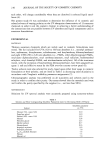
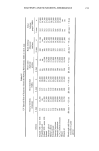
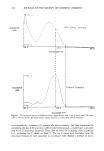
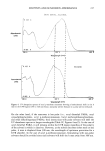
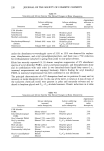
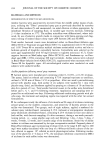
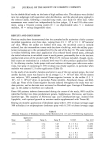
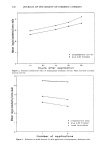
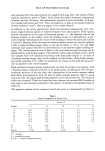
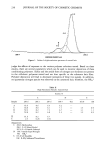
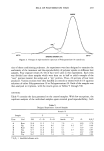
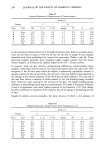
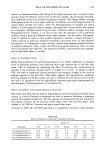
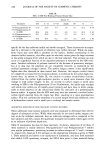
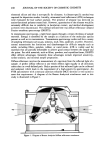
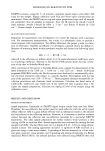
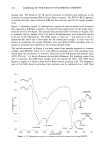
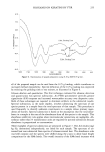
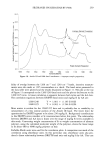
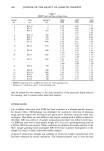
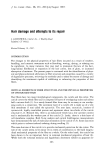
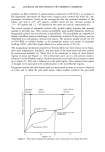
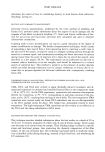
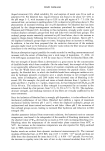
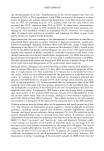
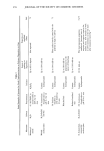
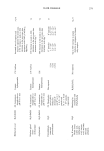
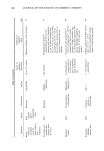
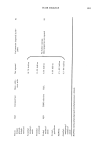
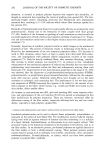
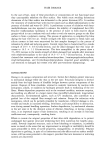
236 JOURNAL OF THE SOCIETY OF COSMETIC CHEMISTS 299.4 BINDING ENERGY {eV) 279.4 Figure 1. Carbon Is high-resolution spectrum of control hair. judge the effects of exposure to the various polymer solutions tested. Based on these results, there are several parameters which can be used to monitor deposition of these conditioning polymers. Sulfur and the amide form of nitrogen are elements not present in the cellulosic polymers tested and are thus specific to the substrate hair fiber. Polymer deposition will lead to decreased intensities of these two signals. In addition, no quaternary nitrogen species was observed on the untreated hair therefore, the NR 4 + Table II High Resolution Results: Control Hair Atomic % C N S Sample 284.6 286.1 287.6 399.7 402 163.8 168 A 63.6 8.6 6.5 6.2 -- C 64.0 8.0 6.1 7.1 -- 1.5 0.9 D 59.2 8.2 7.3 6.7 -- 1.1 1.1 E 59.8 8.2 6.8 5.3 -- 1.2 0,9 X 61.6 8.2 6.7 S 2.5 0.26 0.51 Assignments: C 284.6 Hydrocarbon 286.1 C-O Ether/Alcohol 287.6 C = O Amide Carbonyl N 399.7 Amide-Type Nitrogen 402 NR4 + S 163.8 S-S Disulfide 168 R-SO 3 Sulfonate/Thiosulfonate

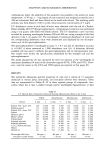
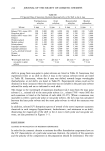
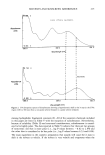
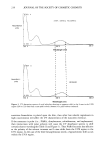
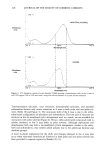
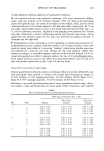
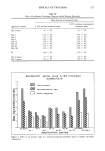
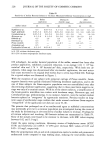
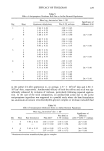
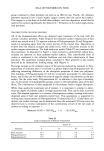
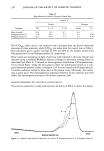
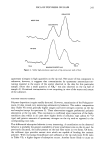
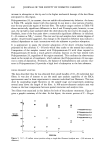
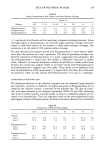
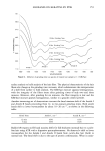
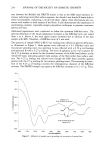
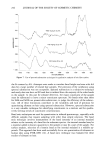
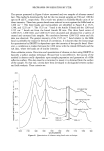
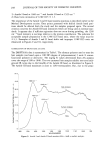
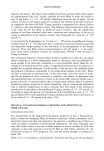
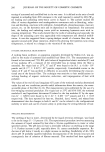
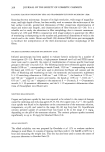
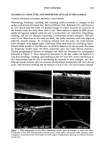
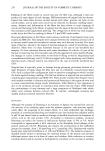
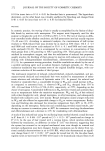
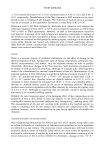
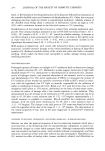
ESCA OF POLYMERS ON HAIR 237 group contained in these polymers can serve as an effective tag. Finally, the cellulosic polymers examined have a much higher oxygen content than the native hair surface. This oxygen is in the form of alcohol/ether linkages, and thus deposition would also be expected to increase significantly the observed C- O fraction in the carbon high-resolu- tion spectrum. TREATMENT WITH CELLULOSIC POLYMERS All of the aforementioned effects are observed upon treatment of the hair with the cationic cellulosic polymers. Table III gives the measured surface compositions of hair which was treated with 0.1% aqueous solutions of Polyquaternium-10 and Polyquater- nium-24, sampling again from the center portion of the treated tress. Deposition is evident from the reduced nitrogen and sulfur levels, with a concurrent increase in the surface oxygen concentration. The high resolution results (Table IV) are consistent with this conclusion. As illustrated in Figure 2, large increases in alcohol/ether carbon func- tionality are observed on these polymer-treated surfaces. This ether/alcohol form of carbon is attributed to the cellulosic backbone and side chain substitution of these polymers. The quaternary nitrogen group contained in these polymers is also readily detected by its characteristic binding energy shift (Figure 3). The large increase in the cellulosic region of the spectra produced by exposure to Poly- quaternium-24 indicates that it is retained to a greater degree than Polyquaternium-10, reflecting interesting differences in the adsorption properties of these two polymers. The binding of Polyquaternium-10 will be occasioned principally by electrostatic forces, and in this case will reflect the areas of negative charge concentration on the hair surface. On the other hand, Polyquaternium-24, in addition to this type of binding, can, by the nature of its hydrophobic groups, attach to the hydrophobic areas of the hair fibers. The combination of these properties in this polymer leads to higher adsorption. While these qualitative statements are of interest, it is important to attempt to deter- mine the degree of polymer surface coverage quantitatively. This can be done in several ways. The simplest approach is to assume a heterogeneous surface coverage with inter- dispersed areas of bare and polymer-covered hair. This assumption is supported by wetting force measurements on Polyquaternium-10 treated hair (6,7). Under these con- ditions, the surface coverage can be determined from the measured C/O ratio since the observed ratio is a linear combination of the contributions of each of the two types of surfaces according to equation 1. Measured (C/O) = X(C/O)poly ' + (1 - X)(C/O)hair (1) Table III Surface Composition of Polymer-Treated Hair Atomic % Treatment C O N S None (control) 76.7 12.8 6.4 2.5 Polyquaternium- 10 79.6 16.2 2.6 0.8 Polyquaternium-24 73.0 21.1 2.8 1.3
Purchased for the exclusive use of nofirst nolast (unknown)
From: SCC Media Library & Resource Center (library.scconline.org)