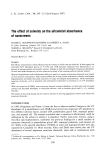
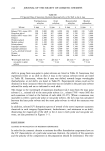
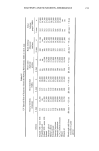
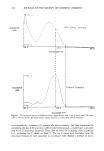
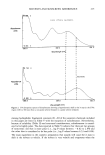
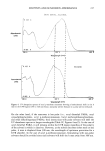
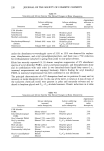
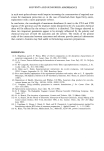
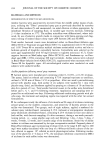
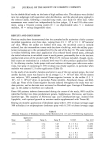
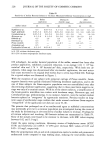
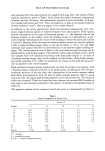
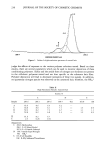
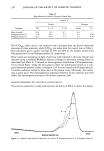
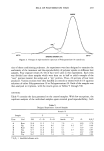
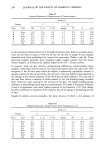
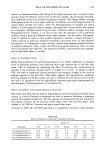
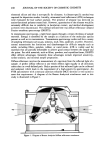
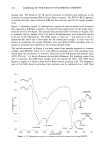
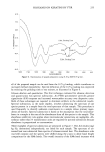
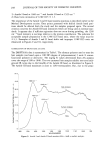
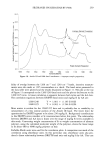
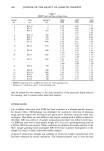
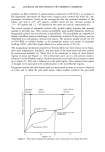
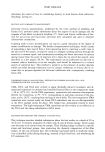
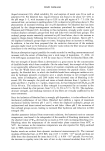
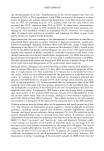
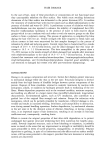
238 JOURNAL OF THE SOCIETY OF COSMETIC CHEMISTS Table IV High-Resolution Results: Polymer-Treated Hair Atomic % Carbon Nitrogen Treatment CH C - O C = O Amide N + None (control) 61.6 8.2 6.7 6.4 -- Polyquaternium- 10 51.6 22.6 5.4 1.9 0.68 Polyquaternium-24 42.7 26.9 3.4 2.3 0.50 The (C/O)poly values used in the equation were calculated from the known molecular structures of these materials, while (C/O)hai• was taken from the control data in Table I. This calculation gives a surface coverage of 25% and 66% for the samples treated with Polyquaternium-10 and Polyquaternium-24, respectively. These results are interesting in light of previous work reported in this area. Recent data obtained using a modified Wilhelmy balance technique to determine wetting forces on individual hair fibers (6,7) showed an inhomogeneous distribution of Polyquaternium- 10 on treated fibers. Using the data given in these two publications results in a com- puted fractional polymer surface coverage of 23% for hair treated with Polyquaternium- 10 under conditions similar to those used in the present study. Obviously, the correla- tion is quite good. The inhomogeneous deposition behavior of this molecule may well reflect the inhomogeneous nature of the keratin substrate itself. DESIGNED EXPERIMENT FOR TREATMENT REPRODUCIBILITY The previous experiment clearly demonstrates the ability of ESCA to detect the adsorp- 299.8 Figure 2. Carbon Is high-resolution spectrum. A: control. B: Polyquaternium~10. C: Polyquaternium-24.

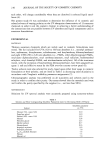
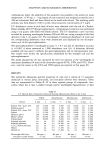
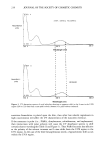
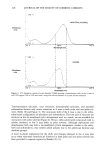
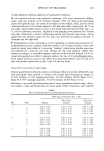
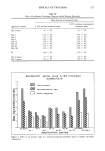
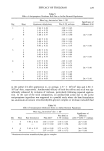
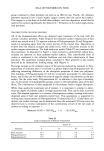
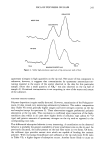
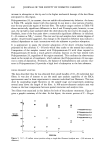
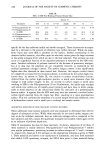
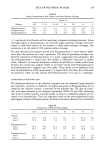
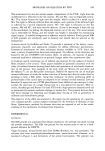
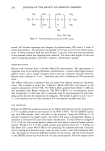
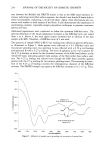
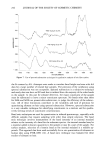
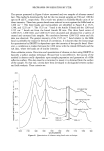
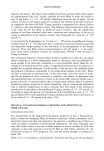
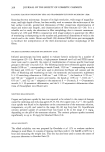
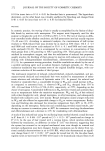
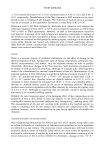
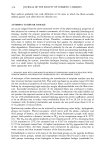
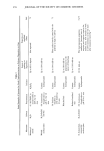
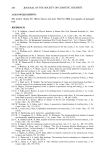
ESCA OF POLYMERS ON HAIR 239 AMIDE N R4 + / • • • I IIII 407.0 397.0 BINDING ENERGY (eV) Figure 3. Nitrogen ls high-resolution spectrum of Polyquaternium-10 treated hair. tion of these conditioning polymers. An experiment was then designed to examine the uniformity of the treatment and the reproducibility of polymer uptake on different hair samples. Four separate tresses (A-D) of hair were used in this experiment. Each tress was divided into three samples which were then cut in half to yield a sample of the "root" portion (nearest the scalp) and a "tip" portion. Thus, 24 sections of hair were produced. Various sections were then handled as controls or treated with 0.1% aqueous solutions of either Polyquaternium-10 or Polyquaternium-24. Each of the samples was then analyzed in triplicate, with the results given in Tables V through VII. CONTROLS Table V contains the data generated on the control samples. With few exceptions, the triplicate analyses of the individual samples again revealed good reproducibility, both Table V Designed Experiment: Control Samples Atomic % Sample C N Tress End CH C - O C = O Amide N + O S•/S2' A Root 55.0 11.5 7.4 7.0 14.0 2.70 A Tip 57.6 10.4 6.6 5.6 0.3 13.7 0.46 B Root 58.1 11.0 9.1 6.1 -- 11.9 1.51 B Tip 57.7 13.0 6.6 5.1 0.7 14.0 0.97 D Root 54.2 13.6 8.8 6.6 12.2 2.00 D Tip 55.7 12.3 7.4 7.0 -- 14.5 1.03 :• Sl/S 2 = disulfide/sulfonate ratio.
Purchased for the exclusive use of nofirst nolast (unknown)
From: SCC Media Library & Resource Center (library.scconline.org)