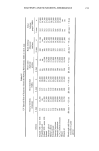
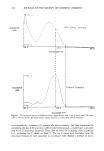
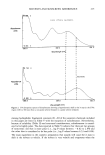
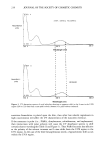
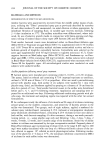
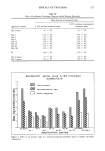
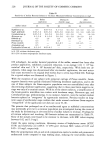
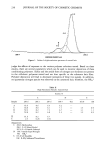
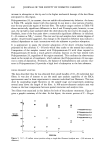
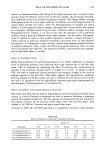
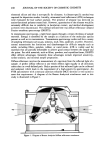
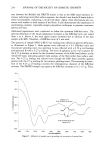
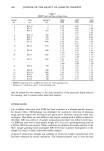
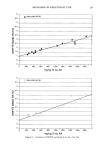
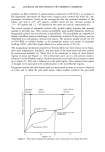
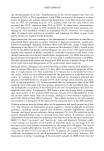
242 JOURNAL OF THE SOCIETY OF COSMETIC CHEMISTS increase in adsorption at the tip end is the higher mechanical damage of the hair fibers anticipated in this region. Polyquaternium-24, in contrast, does not exhibit this substantivity behavior. As shown in Table VII, samples treated with this material do not show a clear pattern of prefer- ence for any particular region of the hair fiber. The surface oxygen content in Table VII shows statistically significant differences in the A and D sample pairs however, in one case, the tip half is more oxidized while the other shows the root end to be oxygen-rich. Similarly, none of the four pairs show a statistically significant difference in cellulosic C- O content or NR4 + content. The root and tip end samples show similar degrees of uptake. As previously suggested, this change in the deposition behavior may indicate a reduced dependence on ionic interactions with the substrate to produce adsorption. It is appropriate to assess the relative adsorption of the above cellulose backbone polymers by the cellulosic C- O levels which they confer to the treated hair surfaces. Comparison of the samples treated with Polyquaternium-24 with those exposed to Polyquaternium-10 shows a much greater cellulosic fraction on the hair treated with Polyquaternium-24, regardless of the region examined. This confirms the observations made in the initial set of treatments, which indicate that Polyquaternium-24 was supe- rior in terms of deposition. Evidently, the balance of hydrophobicity and cationic char- acter in Polyquaternium-24 provides a high level of adsorption to the hair substrate. SINGLE FILAMENT ANALYSES The data described thus far was obtained from small bundles of 10-20 individual hair fibers. It was also of interest to use the small spot analysis capability of the ESCA spectrometer used in these experiments to examine individual hair filaments. This was done by suspending single filaments on the sample stage and sequentially analyzing several areas down the length of the fiber. A 300-micron-diameter analysis area was chosen as the best compromise between spatial resolution and analysis time. Two fibers were examined in this fashion for both of the polymer treatments. Figure 5 gives a graphic summary of the data. In this figure, the atomic percent of C- O-type %C-O CARBON 25- 20 15 [] ß ß ß [] [] [] Polyquaternium-24, 1 ß Polyquaternium-24, 2 & Polyquaternlum-10, 1 ß Polyquaternlum-10, 2 ß ß ß I I I I I 2 3 4 5 6 POSITION Figure 5. % C-O carbon versus position along a single-hair filament (analysis area --300 microns in diameter).

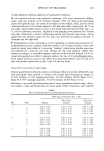
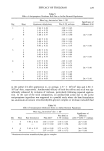
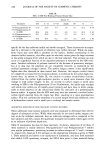
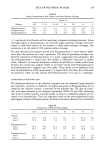
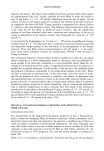
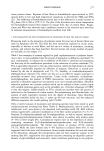
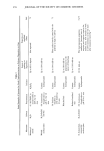
ESCA OF POLYMERS ON HAIR 243 carbon, as determined from curve fitting of the high-resolution data, is plotted versus position along the filament axis for each of the four samples. (As previously described, this component serves as an indicator of polymer retention.) The higher surface coverage of Polyquaternium-24 is once again indicated. In addition, the two Polyquaternium-24 treated fibers provide less scatter, while the Polyquaternium-10 samples are clearly different in their apparent surface coverage, indicating that, at least within this limited set of samples, Polyquaternium-24 gives more consistent surface coverages than does Polyquaternium-10. Finally, it can also be seen that the treatment is not completely uniform along a particular filament with either polymer. On the whole, Polyquater- nium-24 appears to lead to more uniform deposition however, a larger data base is clearly required to make any definitive statements concerning intra- or inter-filament homogeneity. It is important to note, however, that all areas examined showed evidence of polymer adsorption. Thus, within the 300-micron spatial resolution limit, no areas devoid of polymer were observed. The sensitivity of ESCA, which allows such examina- tion of individual fibers, is notable. EFFECT OF TREATMENT LEVEL While Polyquaternium-24 and Polyquaternium-10 do exhibit differences in absolute levels of deposited polymer, both materials show high substantivity to the hair sub- strate. This is reinforced by examining the effect of reducing the concentration of polymer in the treatment solution from 0.1 weight % to 0.01%. As shown in Table VIII, the order of magnitude dilution produced only marginal changes in the levels of polymer uptake on the hair fiber. This result suggests that the partition coefficient between polymer on the hair surface and and in solution lies very much in favor of the hair and is in agreement with the high-affinity isotherms previously demonstrated for the adsorption of Polyquaternium-10 on keratins (8). EFFECT OF WASHING WITH SODIUM DODECYLSULFATE (SDS) The results described thus far indicate high polymer retention following distilled water rinsing. It is also of interest to determine the level of retention following a surfactant rinse of the polymer-treated hair. For this purpose, the shampooed hair was exposed to the polymer solution for 30 minutes, rinsed three times with distilled water, then washed in 1% SDS for 5 minutes and again rinsed three times. As shown in Table IX, the SDS wash results in a significant increase in those elements Table VIii Effect of Polymer Concentration in Treatment Solution Atomic % Treatment CH C - O C = O Amide N + O S ß 1% Polyquaternium- 10 .01% Polyquaternium- 10 .1% Polyquaternium-24 ß 01% Polyquaternium-24 51.6 22.6 5.4 1.9 0.68 16.2 0.8 49.1 21.5 5.4 3.6 0.56 17.0 1.3 39.0 29.8 4.3 1.1 0.6 23.8 1.0 33.6 32.2 6.0 1.4 0.7 24.8 0.8
Purchased for the exclusive use of nofirst nolast (unknown)
From: SCC Media Library & Resource Center (library.scconline.org)