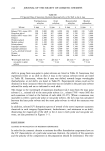
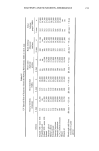
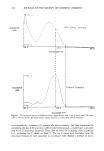
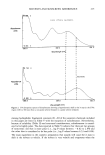
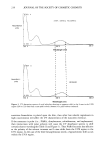
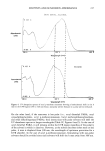
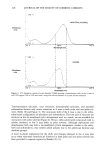
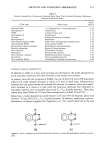
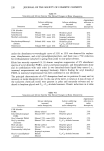
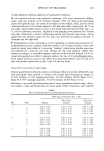
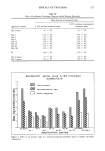
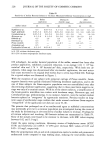
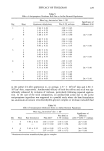
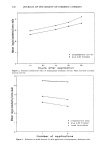
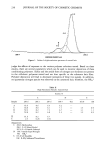
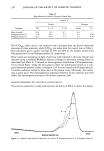
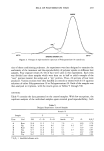
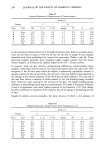
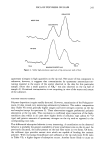
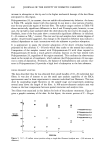
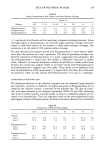
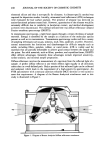
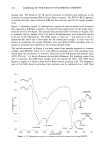
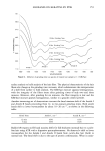
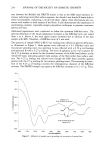
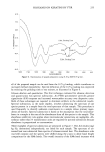
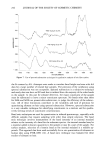
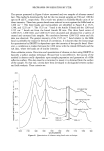
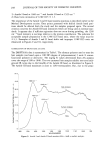
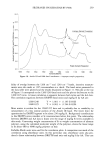
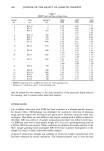
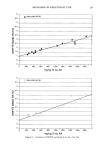
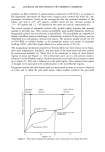
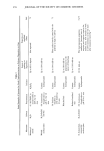
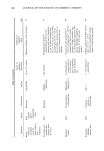
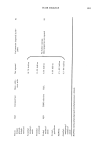
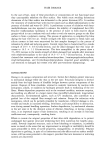
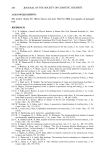
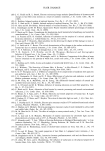
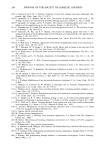
212 JOURNAL OF THE SOCIETY OF COSMETIC CHEMISTS Table III UV Spectral Data of Sunscreen Chemicals Showing Little or No Shift in the X max Triethanolamine Octyl Homomenthyl Menthyl salicylate salicylate salicylate anthranilate Solvent X max E }x max E • max e • max e Ethanol 70%-water 30% 298 2,800 308 4,900 306 4,800 336 5,600 Propylene glycol 298 2,100 307 4,800 307 3,700 335 4,800 Ethanol 90%-water 10% 297 3,000 305 4,000 305 4,300 337 5,000 Ethanol 298 2,900 307 4,200 306 4,600 338 5,000 Hexylene glycol 298 2,200 306 3,900 306 2,300 339 4,800 Methyl carbitol 301 3,100 309 4,000 307 4,800 338 5,700 Ethoxyethanol 301 3,000 310 4,000 307 4,700 339 5,600 Isopropyl myristate ins. ins. 309 4,200 308 5,100 338 4,600 Isopropyl palmitate ins. ins. 308 4,600 307 5,000 337 4,700 C12-C•5 alcohols benzoate ins. ins. 309 3,900 308 4,900 337 6,200 Hexane ins. ins. 310 4,100 308 5,100 334 5,400 Mineral oil ins. ins. 310 4,200 308 4,500 334 6,000 Wavelength shift from A•. max = A•. max ---- A•. max ---- A•. max = non-polar to polar -- 3 nm -- 2 nm -- 2 nm q- 2 nm solvent shift) in going from non-polar to polar solvents are listed in Table II. Sunscreens that experienced little or no shift in their }t max in the various solvents tested are listed in Table III. Sunscreens, where the }t max was shifted towards longer wavelengths (bathochromic or red shift), are listed in Table IV. Experimental values could not be obtained in those instances where the sunscreen was not soluble in the particular solvent selected for study and are so indicated in each table. The change in the wavelength of maximum absorbance (A }t max) from the least polar solvent (i.e., mineral oil) to the most polar solvent (i.e., ethanol 70%-water 30%) for each sunscreen is listed at the bottom of each table (II-IV). Where a sunscreen was insoluble in either a particular polar or non-polar solvent, the A }t max was calculated between the least polar solvent and the most polar solvent in which the sunscreen was soluble. In addition, selected UV absorption spectra of several of the more important sunscreen chemicals in each category (hypsochromic, bathochromic, and minimum or no shift), illustrating the magnitude of the shift in the }t max in both polar and non-polar sol- vents, are also presented in Figures 1-5. DISCUSSION CHANGES IN WAVELENGTH OF MAXIMUM ABSORBANCE In order for the cosmetic chemist to estimate the effect formulation components have on the UV characteristics of a particular sunscreen chemical, the polarity of the sunscreen and the polarity of the components in the preparation should be determined. The rela-

SOLVENTS AND SUNSCREEN ABSORBANCE 213 O-IC'-IC'-IC'-IC'-IC'-IC'-IC'-IC'-IC'-I _.[_ II 0000 + II
Purchased for the exclusive use of nofirst nolast (unknown)
From: SCC Media Library & Resource Center (library.scconline.org)