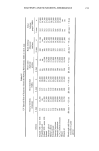
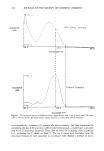
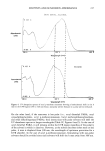
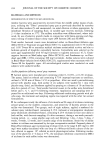
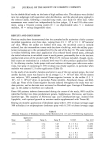
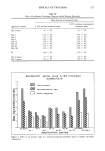
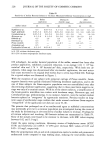
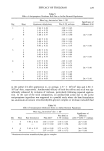
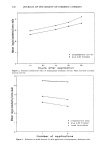
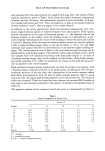
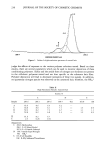
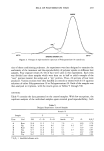
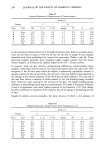
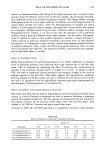
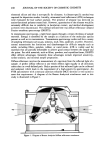
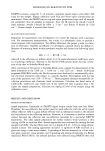
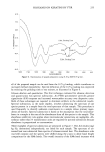
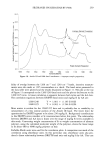
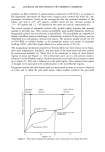
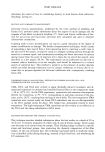
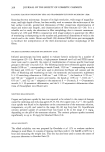
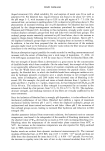
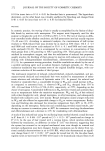
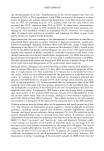
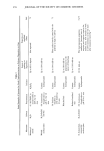
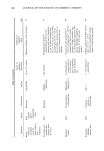
214 JOURNAL OF THE SOCIETY OF COSMETIC CHEMISTS Absorbance units Absorbance units -6.?62 • r•O 72? • t / '%,., •, // x,, 100% ETHYL ALCOHOL / \ /' I" \ / , ,, /' !, 588,8 Wavelepgth (rim} ! ! ! / / / i i ETHOXY ETHANOL Wavelength (rim) Figure 1. UV absorption spectra of PABA showing a hypsochromic shift in the •. max in the UVB region (290 to 320 nm) from a less polar solvent (ethoxy ethanol) to a more polar solvent (ethanol). tive lipophilicity, a measure of a compound's relative polarity, has been determined by calculating the log of the partition coefficient between octanol, a model lipid, and water (log P) for 15 sunscreen chemicals. These data are listed in decreasing order of polarity (i.e., increasing log P values) in Table V. The log P values were calculated from the structural formula of each sunscreen in accordance with Rekker's method of deter-

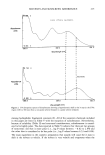
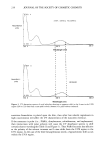
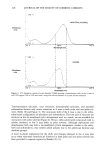
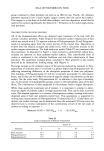
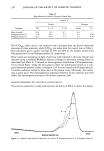
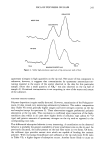
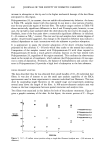
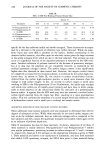
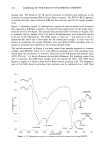
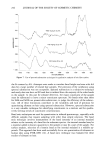
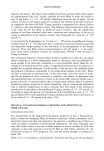
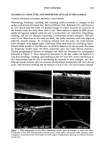
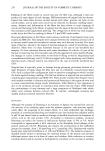
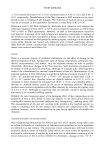
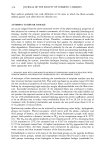
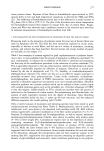
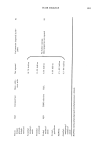
SOLVENTS AND SUNSCREEN ABSORBANCE 215 Absorbance units units -8.881 100% ETttY• ALCOItOI, 8.7•2 n 38g.8 • Wavelength 488 g 28e.• 38e•.e 488 e • Wavelength (nm) Figure 2. UV absorption spectra of dioxybenzone showing a hypsochromic shift in the k max in the UVA region (320 to 360 nm) from a non-polar solvent (hexane) to a polar solvent (ethanol). mining hydrophobic fragmental constants (9). All of the sunscreen chemicals included in this paper are listed in Table V with the exception of sulisobenzone. Nevertheless, because of solubility (Table II) and structural considerations, sulisobenzone is consid- ered to be highly polar. The data reported in Table V indicate that there are two groups of sunscreens: one that is more polar (i.e., log P values between -0.02 to 2.84) and the other that is considered to be less polar (i.e., log P values between 4.53 and 6.08). The main ingredient in the cosmetic preparation that usually will cause the k max to shift is the solvent or vehicle. If the solvent is very volatile and evaporates when the
Purchased for the exclusive use of nofirst nolast (unknown)
From: SCC Media Library & Resource Center (library.scconline.org)