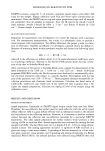
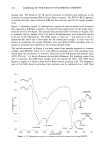
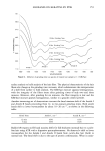
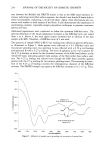
268 JOURNAL OF THE SOCIETY OF COSMETIC CHEMISTS SCANNING ELECTRON MICROSCOPY (SEM) AND TRANSMISSION ELECTRON MICROSCOPY (TEM) Scanning electron microscopy, because of its high resolution, wide range of magnifica- tions, and high depth of focus, has been widely used to examine the architecture of the hair surface (cuticle), geometrical dimensions of fiber crossections (determination of major and minor axis length), and characterization of fiber fractures (23-28). It is a valuable tool to study the alterations in fiber morphology due to cosmetic treatments. Gould et al. (28) used TEM in conjunction with image analysis to quantitate the effect of weathering or shampooing on the number and geometrical dimensions of voids in the cuticle and in the cortex. Brown and Swift (26) obtained SEM stereo-pair micrographs to facilitate the interpretation of the three-dimensional surface morphology of the fibers. FOURIER TRANSFORM INFRARED SPECTROSCOPY (FTIR) Infrared spectroscopy has been applied to evaluate keratin oxidation by a number of investigators (29-32). Recently, a high-pressure diamond anvil cell and FTIR instru- ment were used to quantify the extent of transformation of various specific functional groups in the hairs' structure (32). The following bands were referenced against peptide bands (1650 cm- •, corresponding to amide I band 1230 cm- • corresponding to amide III band and 1076 cm-•) and were used to determine the Bunte salt content and the effect of bleaching and weathering on hair: the symmetric and asymmetric sulphonate S = O stretching vibrations at 1040 cm-• and 1188 cm-•, the bands at 1219 cm-• and 740 cm-• assigned to cysteic acid moiety, the bands at 1196 cm-•, 1022 cm-•, 633 cm- •, and 522 cm- • assigned to the assymetric S = O stretch, S = O symmetric stretch, S = O symmetric deformation, and the S = O asymmetric deformation vibra- tions of thiosulphate ions (Bunte salt). SORPTION MEASUREMENTS Copper and polymer uptake by hair was reported to be related to the extent of damage caused by oxidizing and reducing agents (9,33,34). For copper ions, Cu +2, the equilib- rium uptake was found to be dependent on the concentration of the treatment solution, temperature, or pH, and varied in the range 40-60 mg Cu/g hair (9). Equilibrium cationic polymer uptake of untreated hair was found to be in the range 2-3 mg/g, depending on the pH of the treatment solution. The cationic polymer uptake increased significantly to up to 10 mg/g for bleached fibers (34). ALKALI SOLUBILITY The alkali solubility test was proposed by Overbeke et al. (35) to evaluate oxidative damage in wool fibers. It consists of treating the fibers with 0.1 N NaOH at 60øC for 1 hour and measuring the weight loss. This test has also been used to assess the extent of structure alteration in bleached hair (9).

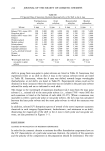
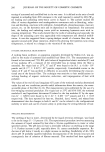
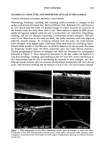
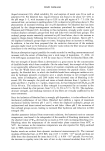
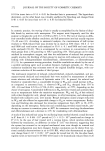
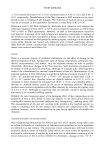
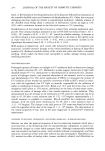
HAIR DAMAGE 269 CHANGES IN STRUCTURE AND PROPERTIES OF HAIR AFTER DAMAGE PHYSICAL HANDLING (CLEANSING, BRUSHING, AND COMBING) Weathering, brushing, combing, and cleansing results primarily in changes to the surface architecture of human hair. Swift and Brown (36), Robinson (37), and Garcia et al. (27) determined that there is a gradual change in surface structure as a function of the distance from the scalp (from root to tip). Their analysis is based on SEM micro- graphs of long-hair samples subjected only to normal hair care treatments of brushing, combing, and use of a shampoo containing a conventional anionic detergent. The por- tions of the fiber close to the scalp are sleek, the scales imbricate with free edges of relatively smooth contour. At increasing distance from the scalp, the scales become more damaged, with jagged edges, sometimes lifted away from the underlying layers. Scratch marks parallel to the fiber axis can often be observed. At the tip ends, the scales are frequently eroded away, the fibers sometimes split into many fibrous elements. Typical morphological features of damaged hair fibers are illustrated by micrographs presented in Figure 2. These destructive alterations to the hair surface are believed to arise from brushing, combing, and handling in the wet state (36). Some contribution to this deterioration may be due to weathering by exposure to rain, sunlight, and dirt, although results indicate that wet abrasion accompanying shampooing and towel drying alone, with minimal combing and no exposure to sun or rain, can cause similar damage. 1188 5KV X800 10Pm [4014 Figure 2. SEM micrographs of hair fibers illustrating various types of damage: a) intact hair fiber b) fragment of hair fiber with partially removed cuticle, lifted scales, and scratch mark exposing cortex c) fragment of hair fiber with eroded scales and early stages of longitudinal splitting into fibrous elements d) split end.
Purchased for the exclusive use of nofirst nolast (unknown)
From: SCC Media Library & Resource Center (library.scconline.org)