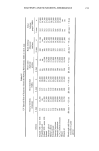
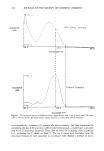
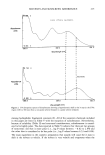
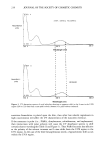
272 JOURNAL OF THE SOCIETY OF COSMETIC CHEMISTS 0.01 for intact hair to 0.14 ___ 0.01 for bleached hair is pronounced. The logarithmic decrement, on the other hand, was virtually unaffected by bleaching and changed from 0.40 ___ 0.05 for intact hair to 0.44 ___ 0.03 for bleached fibers. WAVING In cosmetic practice, the waving of hair is usually accomplished by the fission of disul- fide bonds by reaction with mercaptans. The reagant most frequently used for this purpose is thioglycolic acid (0.6-0.8 M at pH 9.1-9.5). The rate of reaction is diffu- sion-controlled under alkaline conditions, and full penetration into hair usually requires 15-20 min (41). According to aminoacid analysis, the concentration of half-cystine residues in TGA-reduced hair may decrease by as much as 40% (from 156.4 --- 4.5 mol/1000 mol total amino acids analyzed to 95.8 --- 0.1 mol/1000 mol total amino acids analyzed) (39,43). This is accompanied by an increase in concentration of free thiol groups from 2.46 Ixmol/mg to 506.5 Ixmol/mg (39). Thiol groups can be easily oxidized by atmospheric oxygen, and thus the stabilization of reduced hair properties usually involves the blocking of thiol groups by reaction with iodoacetic acid or cross- linking with dihalogenoalkanes (diiodomethane, dibromoethane, or dibromohexane) (11,21). In a permanent-waving procedure, disulfide crosslinks are rebuilt by the use of a suitable oxidizing agent such as sodium bromate, hydrogen peroxide, etc. The neu- tralization (oxidation) step reinstates most of the original disulfide bridges, with con- comitant reduction of the number of thiol groups. The mechanical properties of reduced, reduced-blocked, reduced-crosslinked, and per- manent-waved (reduced and reoxidized) hair were studied by measurement of stress- strain relations and calculation of hysteresis ratios (11). In general, for reduced and blocked or crosslinked hair, a considerable decrease in W20 and a small increase in H20 , as compared to untreated hair, is observed (W20 and H20 changed from 350 to 149-316 and from 0.524 to 0.558-0.624, respectively, at 25øC, depending on the choice of mercaptan. Considerable differences in H20 between treated and untreated hair occur at temperatures below the transition temperature. W20 and 820 of hair reduced with either thioglycolic acid, phenyl mercaptan, or ethyl mercaptan, and subsequently blocked with iodoacetic acid, were similar. Benzyl mercaptan caused a larger reduction in W20 and also effected an appreciable change in H20 at various temperatures. Reduc- tion and blocking also decreased the transition temperature from 46øC to 38-43øC, depending on the mercaptan. Reduction and crosslinking provided mixed results, pro- ducing an increase in transition point to 48øC for treatments involving diiodomethane and dibromohexane and a decrease to 4 IøC for crosslinking with dibromoethane. A study of dry reduced hair using the oscillating beam method showed a small decrease in E' from (4.1 --- 0.66) ß 10 • pascals to (3.5 + 0.2) ß 10 • pascals and no change in E" (13). In the case of hair treated with a waving lotion, which involves reduction followed by reoxidation, no difference in either E' or E" was detected, suggesting that the system has returned to its original mechanical state even though its internal and external configuration may have changed. Similar conclusions can be drawn from tor- sional modulus determinations in air at 65% RH, which also demonstrated no signifi- cant change from (1.02 --- 0.09) ß 10 TM pascals for waved hair (6). On the other hand, rigidity ratios in water and 0. IN HCI were found to be dramatically reduced from 0.26

HAIR DAMAGE 273 -+ 0.01 (waved hair) and 0.16 -+ 0.0! (untreated hair) to 0.09 -+ 0.01 and 0.06 _+ 0.01, respectively. Destabilization of the fiber structure in HC1 solution can be inter- preted as due to breaking of salt linkages. The reduction of rigidity ratios is accompa- nied by an increase in the logarithmic decrement in water from 0.40 to 0.56. Reduction with 0.1M TGA followed by alkylation with iodoacetic acid reduced the softening temperature from 242øC to 225øC and increased the expansion at 256øC from 54% to 86% in TMA experiments. However, no shift in low-temperature transition was detected. Lowering of the high-temperature transition corresponds to melting of the o•-helices and has been interpreted as being consistent with the idea that disulfide crosslinks are converted to thiol groups by reducing agents, resulting in a structure that is less stable. Samples not reacted with iodoacetic acid, to block reoxidation, did not differ from the control, untreated hair. Similar dependencies were noted in DTA exper- iments with reduced wool fibers (44). DYEING There is a genuine scarcity of published information on the effect of dyeing on the physical properties of hair. Among three types of dyeing compositions, permanent (oxi- dative), semipermanent, and surface, only the oxidative systems are able to produce irreversible, deleterious changes in the fiber structure. Such alterations are expected to be similar to those produced by bleaching, although on a smaller scale. This hypothesis seems to be substantiated by torsional measurements of hair (6). Measurement of the torsional modulus at 65% RH shows no significant difference between control (1.02 + 0.09 ß l0 n pascals) and blond (1.07 -+ 0.05)' 10 • pascals) or black-dyed (1.08 -+ 0.13)' 10 • pascals) hair. Rigidity ratios are slightly reduced to 0.23 + 0.01, as compared to those obtained for untreated hair (0.26 + 0.01), and probably reflect a decrease in crosslink density caused by the action of hydrogen peroxide. Bleaching produces more extensive degradation of the fiber integrity by reducing the rigidity ratio to 0.14 + 0.01. Although no numerical data are available, oxidative dyeing should also result in an increased swelling capacity. Probably the most important aspect of the damaging effect of dye compositions on the properties of hair is their ability to form dye deposits on the fiber surface which can considerably increase the frictional coefficient and, consequently, combing forces (20). The measurements of dry and wet combing work revealed a few hundred percent in- crease in combing forces for hair treated with oxidative dye compositions (20). This problem, however, can be circumvented by the post-dyeing application of suitable con- ditioners. ALKALINE RELAXING OR STRAIGHTENING Hair straightening formulations for African-type hair which employ strong alkali such as sodium hydroxide (or combination of carbonates and guanidine) as active ingredient are referred to as hair relaxers. The interaction of such compositions with hair involves primarily alkaline fission of disulfide bonds which can occur either by hydrolysis or nucleophilic substitution of sulphur by hydroxide ion, or-elimination consisting of the initial abstraction of the ot proton followed by heterolytic cleavage of the -S-S-
Purchased for the exclusive use of nofirst nolast (unknown)
From: SCC Media Library & Resource Center (library.scconline.org)