274 JOURNAL OF THE SOCIETY OF COSMETIC CHEMISTS bond, or lB-elimination involving abstraction of the [3 proton followed by elimination of the unstable disulfide anion and formation of dehydroalanine (41). Other hair-structure damaging reactions might be related to peptide-bond hydrolysis. Alkaline scission of the disulfide bond brings about a reduction in half-cystine content (as high as 72% (39)), with a concurrent increase in the free thiol content to 70.3 •mol/mg. Destabilization of the relaxed hair structure is evident from torsional mechanical anal- ysis (6). The torsional modulus measured in hair at 65% RH was reduced from (1.02 + 0.09) ß 10 • pascals to (0.91 + 0.11) ß 10 • pascals by alkaline relaxing. A decrease in wet fiber strength is more pronounced and is reflected in a decrease in the rigidity ratio in water from 0.26 + 0.01 to 0.06 --- 0.02, with a concomitant increase in the logarithmic decrement from 0.40 + 0.05 to 0.65 - 0.04. SEM analysis of relaxed hair, with cuticle cells removed by formic acid treatment and sonication, revealed extensive damage to the cortex manifested as fraying of large-fiber bundles (39). Reduced crosslink density of the cuticle and cortex also leads to increased swelling, which makes the fibers more susceptible to surface damage during normal handling procedures. PHOTODEGRADATION Prolonged exposure of keratin to sunlight or UV irradiation leads to destructive changes in the keratin structure (45-47). Mechanistic studies suggest interaction of light with disulfide bonds (47-51), deamination or decarboxylation of aminoacids (52), disorien- tation of hydrogen bonds, and chemical alterations of the aromatic nuclei in tyrosine and phenylalanine (53). The recent application of ESCA to investigate the process of UV oxidation of hair revealed an extensive conversion of S(II) to S(IV), which is consis- tent with the hypothesis that UV light is primarily responsible for the oxidation of sulfur in weathering of human hair (22). Beyak et al. (47) used the stress value at 15% elongation (yield point at 15% strain), determined on the basis of stress-strain curves, to assess the extent of damage after a few months exposure to solar radiation. They demonstrated that the decrease in the yield point at 15 % strain for virgin hair may be as high as 45.1% after a total radiation dose of 3.52 ß 10 4 langleys (approximately a 2- month exposure to sunlight in summer). Bleach-modified hair underwent similar damage, with the yield point declining by 36.1% after a total radiation dose of 3.31 ß 10 4 langleys. The change in the yield point at 15% strain was found to be linear with the logarithm of the dose in the range of 1-4 ß 10 4 langleys. The deterioration in the tensile properties of hair were of the same magnitude in artificial-UV irradiation experiments. EXPOSURE TO SOLVENTS, DETERGENTS, AND OTHER CHEMICALS--SUPERCONTRACTION Solvents can alter the physical properties of hair by extracting materials which play a structural role, or by interacting with the macromolecular components to induce con- formational changes to a more stable energetic form. Although commercially available hair-care products are based on water, lower alcohols (ethanol or isopropanol), and their mixtures, interaction of hair with other solvents was also investigated. Humphries et (21) studied the effect of diethyl ether, hexane, methanol, ethanol, and chloroform on

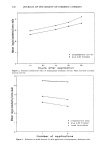
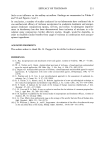
HAIR DAMAGE 275 the thermal properties of hair. Transformations in the solvent-exposed hair were not observed in DTA or TGA experiments, while TMA was found to be sensitive to alter- ations. In general, the solvents reduced the temperature of the first transverse penetra- tion (at 59øC for untreated hair) by 15øC. Diethyl ether was the only solvent that increased the 256øC expansion from 54% to 102%. In stress-strain measurements, 10-15% reduction in work to 25% extension was observed for water solutions con- taining 45-55% methanol, ethanol, or n-propanol (54,55). However, the weakening effect of alcohol-water mixtures is reversible, and resoaking the fibers in pure water nearly restores the original tensile properties. Supercontraction (the term referring to the phenomenon of contraction of stretched or unstretched fibers subjected to certain chemical or physical treatments), usually per- formed by prolonged treatment of keratin fibers with 8M LiBr, causes a longitudinal shortening of the fibers (10-30%). An increase in fiber diameter (100%), as well as loss of the X-ray diffraction pattern and birefringence (2), also occurs. The supercontracted samples were reported to behave similarly to crosslinked samples in that some of the thermal transitions were shifted towards higher temperatures (21). Helix disruption can also be produced by exposure of hair (11) or wool (56) to perfluorooctanoic acid (PFO). The data obtained with human hair treated with PFO indicate a marked change of slope of the yield region and disappearance of the second-order phase transition. Although anionic detergents such as sodium dodecyl sulfate interact with globular pro- teins or keratin fibers such as wool (57), they affect the mechanical properties of hair only to a slight extent (13). This is believed to be mainly due to the protective role of the cuticle, which acts as a diffusion barrier for the penetration of surfactants into the cortex. In contrast to this, fibers with cuticle removed by mechanical abrasion and saturated with SDS showed an increase of 35 % in the average elastic modulus and about 50% in the loss modulus (13). It was postulated that the hydrophilic head of the SDS molecule reacts with polar side-chain groups, particularly in the microfibril areas, and the hydrophobic tail portion of the molecule sticks into the amorphous and more hy- drophobic-like cortex. Consequently, SDS forms a quasi-salt bridge which is stronger than those present in the untreated fiber and also, because of its hydrophobicity in the tail section, drives water from the structure, leading to lower moisture regains at a given RH. Both of these effects increase E'. The marked increase in the loss modulus was ascribed to a disruption of the matrix by the non-polar parts of the SDS molecule. Chlorine solutions have an adverse effect on the appearance and tactile properties of hair (17). The literature on chlorination of wool suggests a variety of degradative reaction pathways, including cystine rupture and oxidation, tyrosine degradation, peptide cleavage, and loss of protein substance during treatment (58-63). The reduction in the protein crosslink density leads to softening of the fiber surface. A systematic study of chlorination of hair was made by measuring inter-fiber friction by the twist method and SEM (17). Both "tip-to-root" and "root-to-tip" static and kinematic frictional coeffi- cients increase as a function of the number of treatment cycles (in the range of 0-60 one-hour cycles) and chlorine concentration (in the range of 0-60 ppm). The rate of damage is considerably higher at low pH. At low pH the "tip-to-root" frictional coeffi- cient may rise from 0.181 to as high as 0. 347. In general, the changes in the frictional coefficient were greater in the case of measurements in the "root-to-tip" direction. The examination of surface morphology of friction-tested samples by SEM reveals that the
Purchased for the exclusive use of nofirst nolast (unknown)
From: SCC Media Library & Resource Center (library.scconline.org)