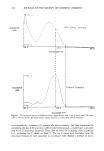
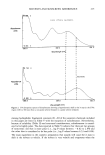
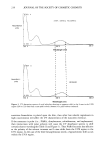
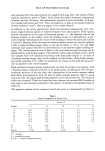
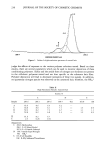
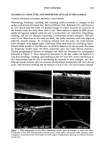
276 JOURNAL OF THE SOCIETY OF COSMETIC CHEMISTS fiber surfaces gradually lose scale definition in the areas in which the fibers actually rubbed against each other after the chlorine test. ATTEMPTS TO REPAIR DAMAGE As can be judged from the above-presented review of the physicochemical properties of hair subjected to a variety of cosmetic treatments, all of them, especially bleaching and relaxing, modify the original properties of keratin fibers. Cuticle destruction or re- moval, increased swelling, and brittleness are among the factors adversely affecting the appearance and tactile attributes of hair. Therefore, a substantial amount of work has been done to explore the means of protecting hair against the degradative action of weathering and handling or to restoring its original mechanical or surface properties after degradation. Preservation is achieved primarily by the use of conditioners which reduce the cuticle damage by decreasing frictional forces accompanying handling proce- dures. Although no method of practical utility was found to repair mechanically weak- ened hair, the general research strategy was to impart or to restore the conformational stability and mechanical integrity which in intact fibers is primarily derived from cova- lent crosslinking by cystine, interchain hydrogen bonding, electrostatic interactions, and, to a small extent, by hydrophobic bonding between nonpolar residues. Basically three approaches were utilized: 1. TREATING HAIR WITH LOW-MOLECULAR-WEIGHT COMPOUNDS CAPABLE OF REACTING WITH KERATIN PROTEIN AND PRODUCING CROSSLINKING OR a HYDROPHOBIC EFFECT A technique of hair treatment involving the introduction of nonpolar residues into the hair structure has been reported (64). This work was based on an earlier report (65) that the wet mechanical properties of reduced keratin fibers could be restored without cross- linking by incorporating high-molecular-weight alkylmonohalides into the fiber struc- ture. Successful mechanical recovery of the alkylated fibers was attributed to hydro- phobic interactions between alkyl moleties. For hair, S-alkylation with alkyl halides did not produce the expected increase in the 30% extension work index. On the other hand, the use of N-alkylmaleimides, standard blocking agents for protein sulfhydryl, proved to be an efficient way to reduce water swellability (from 39.9 to 28.2% in the case of treatment with N-dodecyl maleimide) and increase the wet-yield stress (from 0.22 to 0.32 g/denier) of reduced fibers. Qualitatively similar effects can be achieved by introducting other bulky, hydrophobic groups into keratin. Phenyl isocyanate, which reacts with the amino, carboxyl, and thiol groups of keratin, and ninhydrin, which forms Ruhemann's purple with amino groups, both produce a dramatic increase in W2o in the temperature range of 0-25øC (11). The H2o was also altered markedly at low temperatures (0-25øC), decreasing from 0.524 (measured at 25øC) for untreated hair to 0.267 for ninhydrin-treated hair and 0. 157 for isocyanate-treated hair. At higher temperatures the H2o approached the value of the control fibers. All these changes were interpreted by assuming a reduction in water content and thus increased viscosity of the keratin protein. Formaldehyde is reactive with many of the functional groups on the peptide backbone (primary amino groups, tyrosyl and tryptophane residues (66,67)) and is able to react with groups containing active hydrogens to form methylene bridges (crosslinks) be-

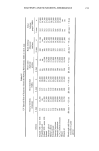
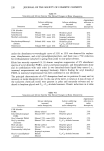
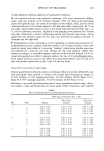
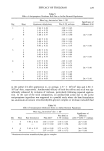
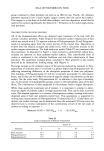
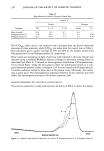
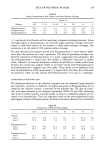
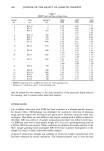
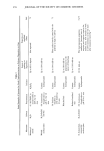
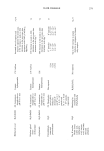
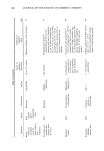
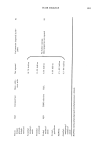
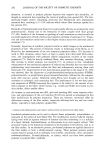
HAIR DAMAGE 277 tween protein chains. Exposure of hair fibers to formaldehyde vapor resulted in 20øC upscale shifts in low and high temperature transitions as detected by TMA and DTA (21). The stiffening of formaldehyde-treated hair is also reflected in a small increase of W2o from 350 to 389 at 25øC (11). The plot of the hysteresis ratio versus temperature for formaldehyde-treated fibers showed no change from that of control fibers. Feugh- elman and Watt also observed only a moderate increase in the viscosity ratio (wet/dry) in torsional measurements of formaldehyde-modified wool (68). 2. POLYMERIZATION OR POLYCONDENSATION OF MONOMERS WITHIN THE KERATIN FIBERS Pioneering work on the deposition of polymers inside the structure of keratin fibers was done by Speakman (69,70). The field has been extensively explored in recent years, especially in relation to wool fibers, and the use of a variety of monomers, initiating systems, and solvents has been described. Several reviews and a large number of papers are available on this subject (71). Table I lists examples of systems applied for graft copolymerization or polymer deposi- tion in hair. It was established that the process of deposition is diffusion-controlled (73) and, consequently, to enhance the accessibility of the fiber to initiators and monomers the first step of the modification procedure is the reduction of cystine crosslinks (72). This is especially important in the case of hair keratin, where the high density of cystine crosslinks considerably impedes the diffusion of reagents. Reduction is usually per- formed by the use of thioglycolic acid (73-75), bisulfite, or tetrakis(hydroxymeth- yl)phosphonium chloride (72), which can also act as an effective oxygen scavenger in persulfate-initiated vinyl polymerizations. Under acidic conditions, tris(hydroxy- methyl)phosphine, the product of THPC dissociation, reacts readily with hydrogen peroxide or dissolved oxygen but was reported to be inert towards persulfates. Disulfide reduction produces two cysteine residues which can be utilized to form a redox couple with suitable oxidizing agents such as the persulfate ion. A further advantage of THPC is that this reagent, unlike bisulfite or TGA, should not interfere with the process of initiation by the formation of a redox system. For polymerizing into bleached hair, the amount of graft copolymer increases with the degree of bleaching. Since bleaching destroys crosslinks inside the hair, it opens up the hair structure, and the enhanced diffusion augments the overall grafting yield (76,80). Only a limited amount of monomers and initiating systems have been tested in graft copolymerizations involving hair fibers (Table I). Methacrylamide, salts of acrylic and methacrylic acid, were shown to be deposited with excellent yield (20-80% add-on) without appreciable, undesired modification of the fiber surface properties (72,76,77). Nonionic N-ethylmethacrylamide and N-vinylpyrrolidone, as well as cationic methacryl- amidopropyltrimethylammonium chloride, were shown to produce only modest gains (4-5%) in fiber weight (83). Contradictory reports exist on the deposition of amine- containing toohomers N,N-dimethylaminoethylmethacrylate and N,N-dimethyl- aminopropylmethacrylamide. The former was shown to produce 20.9% add-ohs (74,75), while the latter formed only 4-8% deposits in reduced fibers (83). It was suggested that both steric and electrostatic factors might determine the rate and extent of the deposition, although this interpretation does not find consistent support in the existing data (83). Application of an aqueous solution containing an oligomeric precon- densate of glyceraldehyde and resorcinol, under conditions promoting in situ polycon-
Purchased for the exclusive use of nofirst nolast (unknown)
From: SCC Media Library & Resource Center (library.scconline.org)