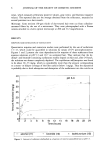
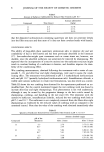
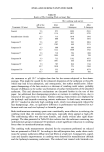
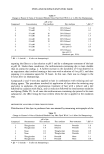
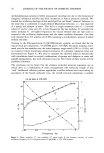
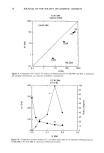
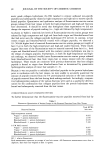
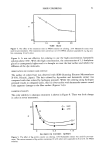
HAIR COLORING 49 Table IV Oxidation Ability of Ag-Zeolite (n = 3) Pore size Ag Content Abs. (450 nm) No. (nm) (wt%) Mean + S.D. 1 1.3 2.5 0.067 + 0.008 2 0.7 2.5 0.217 + 0.010 3 0.4 2.5 0.194 + 0.025 4 0.4 5.0 0.285 -+ 0.027 5 0.4 10.0 0.447 -+ 0.009 6 0.4 15.0 0.591 + 0.037 7 0.4 20.0 0.614 + 0.040 reaction, and tested each sample. Three systems for hair coloring shown in Table II were tested with 2-amino-anthracene (2-AA) as a positive control. RESULTS CONFIRMATION OF OXIDATIVE ABILITY OF METAL ZEOLITES Only the zeolite containing Ag(I) has been found effective in promoting fast coloring of the PPDA solution (Table III), whereas the oxidative effect was not recognized in Fe(III)-, Cu(II)-, or Zn(II)-zeolite. We investigated more closely in the case of Ag-zeolite. The progress of the oxidative reaction with Ag-zeolite was confirmed by the absorption at 450 nm after removing the zeolite (Table IV). The zeolites that have smaller pores tend to have a greater ability to oxidize PPDA. The rate of oxidation reaction is directly proportional to silver content in zeolite. HAIR COLORING USING SILVER ZEOLITE Hair tresses were colored using five kinds of Ag-zeolite that contained various amounts of silver (2.5--20 wt%). 10% Hamamelis extract solution and 0.1% PPDA solution were used for dyeing. Color values produced are shown in Table V. The hair color became reddish and dark with increasing Ag contents. The coloring effect became con- stant above 10 wt% of silver content in zeolite (Figure 2). Table V Hair Color Produced by Ag-Zeolite Ag content in zeolite (wt%) L a b 2.5 31.66 1.91 4.51 5.0 29.09 2.30 5.14 10.0 23.43 2.25 3.82 15.0 23.02 2.51 2.80 20.0 22.90 2.13 4.78

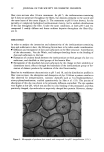
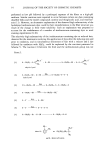
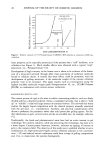
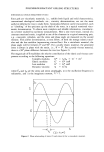
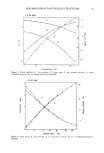
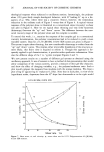
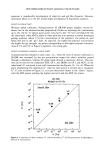
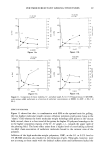
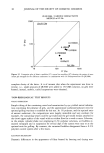
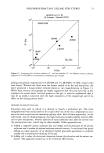
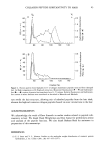
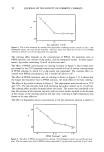
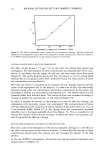
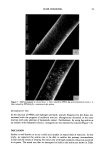
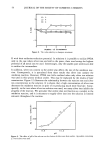
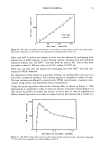
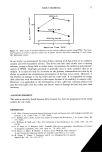
50 JOURNAL OF THE SOCIETY OF COSMETIC CHEMISTS 30 -O O-- 2O 0 10 20 Ag Content (wt%) Figure 2. The L value produced by coloring with Ag-zeolites containing various contents of silver. 10% Hamamelis extract was used for pre-treatment. The hair tresses were dyed for 30 min in 0.1% PPDA solutions in which 0.2 g of each Ag-zeolite was suspended. The coloring effect depends on the concentration of PPDA, the treatment time in PPDA solution, the content of Ag-zeolite, and the hamamelis extract. In these experi- ments, Ag-zeolite containing 10 wt% of silver was used. The effect of PPDA concentration on coloring is shown in Figure 3. Hair tresses were pre-treated in the 25 % hamamelis extract and colored in 8 ml of various concentrations of PPDA solution in which 0.2 g Ag-zeolite was suspended. The coloring effect in- creased with PPDA concentration, but it leveled off above 0.5%. The effect of PPDA-treatment time on coloring is shown in Figure 4. It is shown that the longer the treatment time in PPDA solution, the more effective the hair coloring. The effect of Ag-zeolite is shown in Figure 5. The experiments were carried out at 25øC and 37øC. The color became dark with increasing Ag-zeolite content up to 1.0 g/8 mi. The coloring effect actually decreased above this point. The reason was considered to be that the increase of the solution viscosity with too much zeolite resulted in the decrease of the contact of the coloring solution and hair tress. Coloring at high temperature was shown to be more effective. The effect of hamamelis extract concentration in the pre-treatment solution is shown in 30 2O 0%0%. 0 o o I I I 0 0.5 1 .o PPDA Content (wt%) Figure 3. The effect of PPDA concentration on coloring. 25% Hamamelis extract was used for pre-treat- ment. The hair tresses were dyed in PPDA solution-suspended 0.2 g Ag-zeolite containing 10 wt% silver.
Purchased for the exclusive use of nofirst nolast (unknown)
From: SCC Media Library & Resource Center (library.scconline.org)