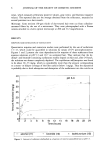
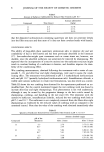
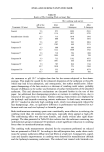
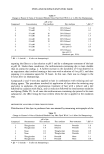
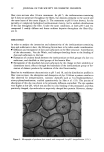
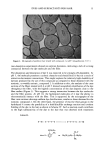
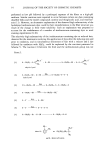
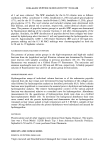
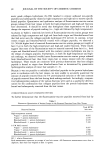
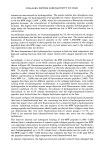
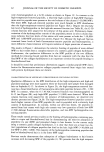
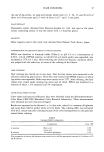
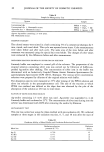
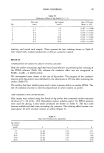
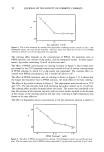
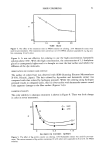
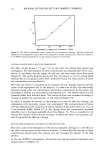
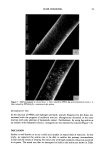
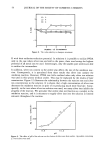
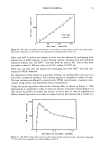
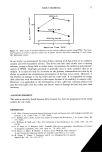
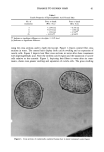
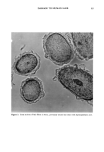
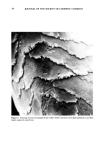
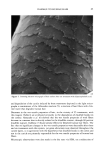
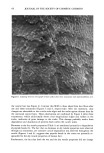
DAMAGE TO HUMAN HAIR 61 Table I Tensile Properties of Diperisophthalic Acid-Treated Hair No. of Force to break Force to break treatments (Wet: %/•) (Dry: %/•) 3 +2.0% In] -0.3% In] 6 + 0.5 % In] - 1.8 % In] 9 - 1.6% In] - 3.5%** 25 - 12.5%** -9.5%** ** Indicates a significant difference at the alpha ---- 0.05 level. [n] Indicates no significant difference. ining the cross sections under a light microscope. Figure 1 depicts control fiber cross sections in water. The control hairs display little cuticle swelling and no separation of cuticle cells. Figure 2 depicts hair fiber cross sections in water after three treatments with diperisophthalic acid. Note the swollen cuticle region and the separation of cuticle cells relative to the controls. Figure 3, depicting hair fibers in water after six treat- ments, shows even greater swelling and separation of cuticle cells. The gross swelling Figure 1. Cross sections of cosmetically unaltered human hair in water (untreated control hairs)

62 JOURNAL OF THE SOCIETY OF COSMETIC CHEMISTS Figure 2. Cross sections of hair fibers in water, previously treated three times with diperisophthalic acid.
Purchased for the exclusive use of nofirst nolast (unknown)
From: SCC Media Library & Resource Center (library.scconline.org)