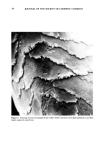
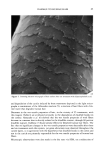
j. Soc. Cosmet. Chem., 42, 59-67 (January/February 1991) Cuticle damage and the tensile properties of human hair C. R. ROBBINS and R. J. CRAWFORD, Colgate Palmolive Technology Center, 909 River Road, Piscataway, NJ 08854. Received October 1990. Synopsis Oxidation of hair fibers with diperisophthalic acid can produce extensive damage throughout several cuticle layers that is readily observed microscopically. At the same time, no detectable changes in the tensile properties (wet or dry) are detectable. These results are consistent with the hypothesis that the tensile properties of human hair are due primarily to the cortex, with little or no cuticle involvement. INTRODUCTION Several methods have been published in the literature during the past several decades describing various ways to assess damage to human hair fibers. Evaluation of the tensile properties of hair fibers is one method that is frequently used to assess the strength of human hair. There is a long-standing hypothesis, that the cortex is primarily responsible for the tensile properties of human hair (1), although there is one publication with limited data suggesting the possibility of some cuticle involvement in the tensile properties of hair (2) and some evidence that wool fibers containing a medulla are weaker than non- medullated fibers (3). If the cortex is primarily responsible for the tensile properties of hair fibers, or even if there be only minor cuticle and/or medullary involvement in the tensile properties of hair, then the tensile properties are primarily an index of cortical damage. Therefore, if the tensile properties do not show change, without any further experimental evidence, such data does not stand as an indication of no hair damage. The lack of cuticle involvement in the tensile properties of hair or even minimal in- volvement might seem surprising, because, for a 70-micron hair fiber with a 4-micron- thick band of cuticular material (2), the cuticle represents approximately 22% of the total fiber cross-sectional area. Thus, it would be somewhat surprising if the cuticle were not involved at all in the tensile properties of human hair. With respect to medullary involvement in the tensile properties of hair, such involve- ment has only been demonstrated for selected wool fibers where the medulla represented more than 70 percent of the cross section (3), and such heavy medullation is not common in human hair. A few years ago, we examined an oxidative treatment for hair based on diperisophthalic acid. We found that under certain conditions this reagent could produce extensive 59

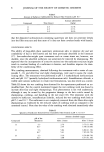
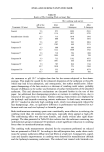
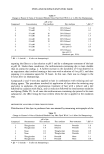
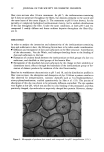
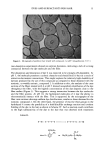
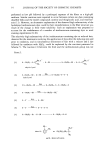
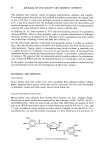
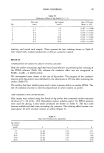
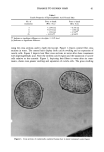
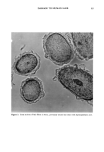
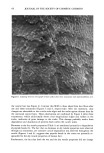
60 JOURNAL OF THE SOCIETY OF COSMETIC CHEMISTS damage throughout several cuticle layers, with no detectable changes in the tensile properties. These observations support the above hypothesis, that the cuticle in human hair has little involvement in the tensile properties of human hair. It also supports the two-phase model of Feughelman (4) that describes the mechanical behavior of human hair in terms of cortical structural components. EXPERIMENTAL The keratin fibers used in this study were either from 10-inch dark brown hair (DeMeo Brothers, New York) or from hair treated on heads of individuals, all purported to be cosmetically unaltered by permanent waves, bleaches, dyes, and straighteners. Thirteen grams of Suprox (PPG Industries, Inc., consisting of 15.4% diperisophthalic acid incapsulated in hydrated magnesium sulfate and sodium sulfate) and 6 gm of sodium carbonate were mixed together in 81 gm of a solution consisting of 3 gm sodium lauryl sulfate in 78 gm of aleionized water. Approximately 100 gm ooe this formulation was used for an average female head, in the experiments performed on heads. For the experiments on tresses, approximately 5 gm of the above prepared for- mulation was used on 2-gm tresses. Fibers were selected at random, each mounted on tabs at a gauge length of 5 cm. After the fibers were conditioned, either in water for 30 min or at 60 percent relative hu- midity for 24 hr at 24øC, they were stretched to break on an Instron Tensile Tester. The rate of extension was 0.5 cm/min. The average of 15 to 25 hairs was used for each data point, and several parameters of the tensile curves were compared. Small bundles of hairs were sectioned using a Hardy microtome, and the small hair cross sections, in water, were examined under a light microscope. Other fibers from these same treatments were selected at random, coated with gold, and examined with an Amray 1645 scanning electron microscope. RESULTS AND DISCUSSION The oxidant used in this study, diperisophthalic acid, is a relatively large molecule compared to hydrogen peroxide, and therefore its diffusion rate through hair must be considerably slower than that of peroxide. Nevertheless, this species is capable of rapid oxidation of the disulfide bond, provided it comes in contact with that bond. Human hair tresses were treated with this reagent as described in the experimental section for 10-min treatment times, and fibers were taken from the tresses, examined microscopi- cally, and tested for wet and dry tensile properties. Table I summarizes the tensile effects produced by this reagent. For the wet tensile properties, no significant differences were observed between untreated control fibers and treated fibers through nine treatments. But after 25 treatments, a significant decrease in the wet tensile properties was observed. For the dry tensile properties no significant changes were noted through six treatments. However, at nine treatments and beyond, significant decreases in the tensile properties were observed. Fibers from these treatments were examined further by making cross sections and exam-
Purchased for the exclusive use of nofirst nolast (unknown)
From: SCC Media Library & Resource Center (library.scconline.org)