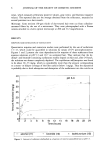
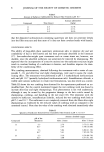
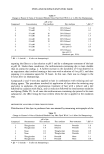
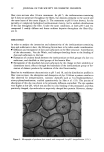
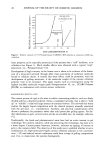
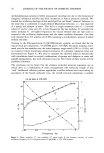
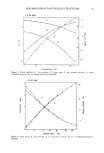
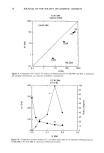
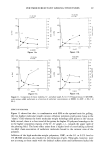
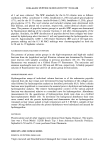
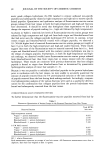
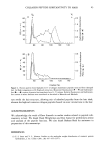
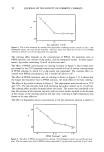
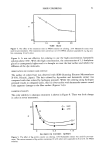
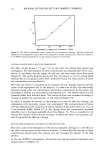
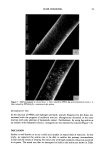
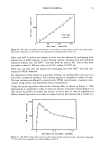
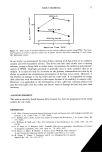
6 JOURNAL OF THE SOCIETY OF COSMETIC CHEMISTS value, which measures yellowness (positive values), gray (zero), and blueness (negative values). The reported data are the average obtained from the reflectance, measured at several positions on a hair swatch. Microscopy. Cross sections (30-1xm thick) of dye-treated hair were cut from collodion- mounted fibers by the use of a microtome. They were photographed with a Pentax camera attached to a Leitz optical microscope at 200 and 312 magnification. RESULTS SORPTION AND EXTRACTION OF SURFACTANTS Quantitative sorption and extraction studies were performed by the use of surfactants 11-13, which could be quantified in solutions by means of UV spectrophotometry. Figures 1 and 2 present the time dependencies for sorption of these surfactants from aqueous solutions at pH 5.3 and 10.7 on untreated hair. They indicate that the hy- droxyl- and bromide-containing surfactants readily deposit on hair and, after 24 hours, the solutions are almost completely depleted. The equlibrium ad(b)sorption was found to be about 30-35 mg/g, which is considerably more than the amount corresponding to a mono- or bilayer coverage of the fiber surface (below 1 mg/g). Thus the deposition is probably due to both adsorption and absorption of the surfactants into the cuticles or 40 35- o 20- o E 10- _ ,/ /+ ,/ + 2 4 pH 5.3 0 6 I• 10 1'2 1'4 1'6 1 2'0 2'2 24 Time (hours) alcohol (11) + bromide (12) x isothiuronium](13) Figure 1. Amount of surfactant ab(d)sorbed as a function of time for unmodified hair at pH 5.3.

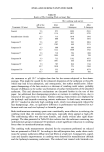
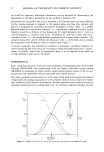
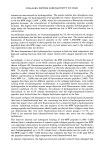
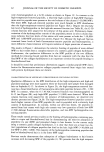
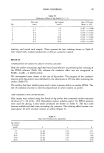
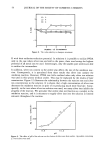
DYES AND SURFACTANTS FOR HAIR 7 cortex. The surfactant containing the hydroxyl group deposits on/in the fibers at a slightly faster rate than the bromide derivative at both pH 5.3 and 10.7. The rates and the extents of the deposition of the isothiuronium-containing surfactant were much smaller, especially at low pH. Table I presents the results of sorption experiments obtained for reduced hair. The fibers were treated with ammonium thioglycolate (6% adjusted to pH 9) for 10 min at room temperature and rinsed with deionized water for 1 min, prior to deposition. The reduced hair readily absorbs the hydroxyl and bromide-containing surfactants, and within the first half hour, the solutions are almost completely depleted. Similar to the results obtained for untreated hair, the isothiuronium-containing surfactant deposited in relatively small quantities in/on reduced fibers. The size of the isothiuronium deriva- tive, its charge characteristics, and reactivity towards the thiol groups might contribute to its slow rate of deposition in hair. The extraction data presented in Table II show that only a small fraction of the ad(b)sorbed hydroxyl- (16.0% and 11.4% for hair treated at pH 10.7 and 5.3, respec- tively) and bromide- (20.7% and 21.1% for hair treated at pH 10.7 and 5.3, respec- tively) containing surfactants can be extracted from hair. Extraction of hair treated with the isothiuronium-containing surfactant results in the removal of significantly larger quantities of the deposited material (41.3% and 80.7% for hair treated at pH 10.7 and 5.3, respectively). This result seems to indicate, in agreement with the sorption data, 40 pH 10.7 • •_ :30 __-J-- •J • 25 • -- 1 0 • 4 8 • 1'0 1• 1'4 1 1'8 •0 2• 24 '6 Time (hours) [] alcohol (11) + bromide (12) • isothiuronium (13) Figure 2. Amount of surfactant ab(d)sorbed as a function of time for unmodified hair at pH 10.7.
Purchased for the exclusive use of nofirst nolast (unknown)
From: SCC Media Library & Resource Center (library.scconline.org)