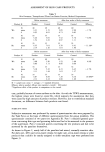
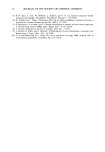
N%ACYL-L-ARGININE DIPEPTIDES 55 drolysate), the presence of which is the structural factor responsible for their water solubility and for their ionic (amphoteric and/or basic) character (titration data with base to demonstrate this have not yet been carried out). The role of the alkyl chain length in the solubility, surface activity, critical miceliar concentration, surface excess concentration, area per molecule, and antimicrobial activ- ity of these compounds was also examined in order to improve our understanding of the structure/properties relationship. EXPERIMENTAL MATERIALS The following N%acyl-arginine dipeptides have been studied: ß CAC: N%octyl-arginine-dipeptides from collagen ß KAC: N%decanoyl-arginine-dipeptides from collagen ß LAC: N%lauroyl-arginine-dipeptides from collagen ß MAC: N%myristoyl-arginine-dipeptides from collagen ß PAC: N%palmitoyl-arginine-dipeptides from collagen METHODS Method for synthesis All these compounds have been prepared according to the following scheme of synthesis: o o NH2\ C H NH2\ C /\/ CH O CH O I HgSO 4 I CH 2 + NH4NO 3 •- CH 2 H2Cx H2C X CH2 CH 2 HN HN I I c c /....x //\ H2N '©"NH2'CI- HN NH --NO 2 HN O O NH2\ C H (CH2)nNH C H /\ / CH O' HaC C CH CH 2 (CH2) n CI O CH 2 / / ' / Acetone/Water (34/66)• H2C X + H3C C H2C X CH 2 II pH = 10.5-12.5 CH 2 / O / HN HN I c NH -- NO 2 HN NHa--- NO 2

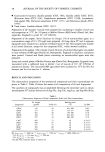
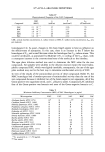
56 JOURNAL OF THE SOCIETY OF COSMETIC CHEMISTS (CH•). H•C o o R II II I NH C H / X / /(CH2)•C NH C CH •/ \CH O' H2 c / \ / XNH/ •C / CH II I II I II O OH 2 R O CH 2 O / I / HaG% + CH OH H2C % CH2 / XC/ IBCIF/DMF • / NH 2 CH2 HN II HN I o I c c // HN \NH2'-- NO2 HN \NH2-- NO2 XNA XNAC OH o R O R II I II I /(CH2)nN /NH C CH OH C CH OH \ / XNH/ •3 / /(CH2)•, /NH\ / XNH/ XC/ H2C C CH H2C C CH II I II II I II O CH 2 O O CH 2 O / H2C\ H2C \ CH 2 1) H 2 (Pd/C) CH 2 HN 2) CH 30H/HCI HN I I c c // \ /..• HN NH2'-- NO2 H2N '.'NH 2 CI- XNAC XAC General reagents were of an analytical grade or higher purity. The solvents used were of a technical grade. Dimethylformamide (DMF) was dried over a 4 • molecular sieve for about eight hr under nitrogen. L-Arginine was obtained from Merck (synthetic grade). Waste leather trimmings previously hydrolysated with 6N HC1 at 120øC for 24 h were used as a source of collagen amino acids. The acid-hydrolyzed collagen was used without further purification, its composition (after dryness) being 93 -- 5% (w/w) amino acids and the rest salt. A 10% aqueous solution of the dried hydrolysate gave a pH of 6.5 at room temperature. Its amino acid composition expressed in mol (%) is indicated in Table II. The homogeneity of substances was checked by TLC using aluminium plates (Kieselgel -ø, Merck, Darmstadt, FRG). The solvent systems were a) chloroform/ methanol/acetic acid (8.5:10.5) and b) n-butanol/acetic acid/water (4:1:5). Ninhydrin, Sakaguchi, and C12/0-tolidine (7), were used as developer solutions. The structure of final compounds and intermediates was established by infrared IR on a Perkin Elmer Spectrometer, GC on a Hewlett Packard 5840 A, and proton magnetic resonance (•H-NMR) spectra on a Bruker WP SO S spectrometer (80.15 MHz). The amino acid composition of the acid-hydrolyzed collagen from waste leather trimmings
Purchased for the exclusive use of nofirst nolast (unknown)
From: SCC Media Library & Resource Center (library.scconline.org)