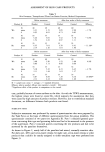
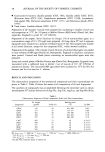
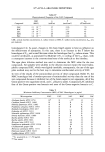
N%ACYL-L-ARGININE DIPEPTIDES 61 Table IV Physicochemical Properties of the XAC Compounds CMC •/ F A m Compound (Mol/l) (mN/m) (mols/nm 2) (]t2/molecule) CAC 2.1 10-3 35 2.26 70 KAC 4.9 10 -4 33 2.37 65 LAC 1.9 10-4 32 2.48 45 MAC 7.1 10-5 28 3.05 41 PAC 3.4 10 -5 29 2.42 46 CMC, critical miceIlar concentration % surface tension at CMC F, surface excess concentration Am, area per molecule. homologues (14). As usual, changes in the chain length appear to have an influence on the effectiveness of adsorption. In this case, there is an increase in the F below the homologue of C•4 and a small decrease when the homologue has C•6 carbon atoms. This could be attributed, as postulated by Mukerjee (15), to coiling of the C•6 chain, with a consequent increase in the cross-sectional area of the molecule at the interface. The agar plate dilution method was used to determine the MIC value for the test compounds. All samples were solubles in the dilution mixture except the more hydro- phobic compound PAC, which was slightly insoluble consequently, the use of the agar plate method may not be the best way to determine antibacterial activity of PAC. In view of the results of the antimicrobial activity of these compounds (Table V), the MAC homologue had a broader spectrum of antimicrobial activity than the rest of the test compounds because it inhibited two of the Gram-negative test organisms, all of the Gram-positive test organisms tested, and C. albicans (a yeast). Compound LAC inhibited four of the Gram-positive test bacteria and none of the Gram-negative bacteria or C. Table V Minimum Inhibitory Concentration (MIC) of XAC Homologues in Ixg/ml Microorganism KAC CAC LAC MAC LAC Alcaligenes faecalis ATCC 8750 R* R --** 32 R Citrobacter freundii ATCC 11606 R R R 32 R Klebsiella pneumoniae ATCC 13882 R R R R R Pseudomonas aeruginosa ATCC 27853 R R R R R Bordetella bronchiseptica ATCC 4617 R R R R Escherichia coli ATCC 23231 R R R R R Salmonella typhimurium ATCC 14028 R R R R R Serratia marcescens ATCC 13880 R R R R R Bacillus pumilus ATCC 7061 R R 32 R Bacillus subtills ATCC 6633 R R 128 32 R Micrococus luteus ATCC 9341 R R 64 32 R Staphylococcus epidermidis ATCC 12228 R R 64 32 R Corynebacterium agropyri CM R R R 32 R Micrococcus aurantiacus ATCC 11731 R R 128 32 R Enterococcus faecalis ATCC 19433 R R R 32 R Candida albicans ATCC 10231 R R R 32 R * R, no growth at c 256 Ixg/ml. ** Not tested.

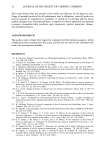
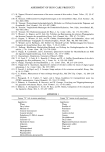
62 JOURNAL OF THE SOCIETY OF COSMETIC CHEMISTS albicans. No antimicrobial activity was detected with KAC, CAC, or PAC in these experiments due to the insolubility of PAC it is difficult to assess whether the failure of PAC to present growth is due to the lack of antimicrobial activity or to its partial insolubility. This specific activity against Gram-positive microrganisms is due to the fact that the Gram-negative organisms are more resistant to surfactants than Gram-positive organ- isms. This behavior is related to the structural differences in their cell wall, especially the resistance of the outer membrane and lipopolysaccharide to destabilization by sur- factants present in Gram-negative bacteria (16). It is curious that the greater antimicrobial activity of compound MAC appears to be correlated with the highest CMC and F, the lowest •/and Am. These data help provide the physiochemical basis for the observed MICs. As in other series of surfactant homologues (i. e., alkyl esters of N s acyl lysine and N s acyl arginine) with a different chain length, there is a peak of activity at a critical chain length of 14 carbon atoms (2,3). Bearing in mind the above physicochemical parameters and the solubility of the homologue PAC in the medium for testing the antimicrobial activity (which could influence its MIC value determinations), in the present series peak activity of the MAC homologue could be related to the combination of several physi- cochemical (surface activity, adsorption, and solubility) and structural (the length of the alkyl chain), factors which could determine the best tendency to be adsorbed at the bacterial interface and exert its antimicrobial action. The bacterial inactivity of the 16 homologue could be dependent, in accordance with Blois (16), on a balance between the solubility and the relative surface activity, one of which decreases and the other of which increases, respectively, as the alkyl chain increases. From this study we could summarize that the introduction of an appropriate long-chain N%arginine residue (in this case 14 carbon atoms) to the amino function of a mixture of amino acids yields an interesting multifunctional compound to be applied as a soft preservative peptidic surfactant in cosmetic, foods, and dermopharmaceutical formula- tions. ACKNOWLEDGMENTS Support from the CIRIT/CICIT QF/89 40411 project is gratefully acknowledged. We are indebted to Amalia Vilchez for her valuable experimental assistance. REFERENCES (1) P. L. Than, "Surfactants for Skin Cleansers," in Surfactants in Cosmetics, M. M. Rieger, Ed. (Marcel Dekker, New York, 1985), pp. 349-376. (2) M a R. Infante, J. Molinero, P. Efta, R. Juli•, and J. J. Garcia Dominguez, A comparative study on surface active and antimicrobial properties of some N ø lauroyl-L-dibasic amino acid derivatives, Fette Seifen Anstrichmitel, 87, 309-313 (1985). (3) M a R. Infante, P. Efta, R. Juli•, M. Prats, and J. J. Garcia Dominguez, Surface active molecules: Preparation and properties of long chain N ø acyl-L-ot, to, guanidine alkyl acid derivatives, Int. J. Cosmet. Sci., 6, 275-282 (1984). (4) M • R. Infante, J. Molinero, P. Bosch, P. Erra, and R. Juli•, Lipopeptidic surfactants. I. Neutral N ø
Purchased for the exclusive use of nofirst nolast (unknown)
From: SCC Media Library & Resource Center (library.scconline.org)