MODEL FRAGRANCE EMULSION SYSTEM 219 (8) (9) (10) (11) (12) (13) (14) (15) (16) (17) (18) (19) (20) (21) (22) (23) (24) (25) (26) (27) (28) (29) (30) R. Akaboski, S. Horike, and S. Noda, Study on vapor pressure of odorants solubilized in surfactant micelies. III. Vapor components of geraniol-geranyl acetate binary solution solubilized in sodium dodecyl sulfate micelies, Nippon Kagaku Kaishi, 943-948 (1985). H. Uchiyama, Sh. D. Christian, J. F. Scamehorn, M. Abe, and K. Ogino, Solubilization of 2 phenyl- ethanol by dodecyldimethylamine oxide in aqueous solution, Langvmir, 7, 95-100 (1991). M. Abe, K. Mizuguchi, Y. Kondo, K. Ogino, H. Uchiyama, J. F. Scamehorn, E. E. Tucker, and S. D. Christian, Solubilization of perfume compounds by pure mixtures of surfactants, J. Colloid. Interface Sci., 160, 16-23 (1993). S. E. Friberg, S. A. Vona, Jr., Fragrance microemulsions, triethylcitrate, water, sodium dodecylsulfate and pentanol, Soap, Cosmet., Chem. Spec., 32-40 (August 1994). H. Suhaimi, L. C. Rose, and F. B. H. Ahmad, A natural flavour in an amphiphilic association structure, PertainikaJ. Sci. Tech., 3, 141-149 (1995). M. Juszynski, R. Azoury, and R. Rafaeloff, Fragrance loaded lyophilized liposomes, S(SFW, 118, 811-815 (1992). Y. Tokuoka, H. Uchiyama, M. Abe, and Sh. D. Christian, Solubilization of some synthetic perfumes by anionic-nonionic mixed surfactant systems, Langmuir, 11,725-729 (1995). S. Horike and R. Akahoshi, Solubilization mechanism of cis-3-hexenol and menthyl acetate into sodium dodecyl sulfate micelies, and the vapor pressure of these odorants, Nippon Kagaku Kaishi, 12, 1033-1037 (1996). Y. Tokuoka, H. Uchiyama, and M. Abe, Solubilization of some synthetic perfumes by ionic and nonionic surfactants, Nihon Yukagakkaishi, 45, 13-19 (1996). J. Yang, G. Rong, S. E. Friberg, and P. A. Aikens, The phase behavior of polyoxethylene 10 stearyl ether/geraniol/olive oil/H20 system and preliminary evaluation of fragrance evaporation, Int. J. Cosmet. Sci., 18, 43-56 (1996). S. E. Friberg, Vapour pressure of some fragrance ingredients in emulsion and microemulsion formu- lations, Int. J. Cosmet. Sci., 19, 75-86 (1997). S. E. Friberg, T. Huang, L. Fei, S. A. Vona, Jr., and P. A. Aikens, Vapor pressure of phenethyl alcohol in the system with water, and polyoxyethylene, 4, laury! ether (Brij©30), Progr. Colloid. Polym. Sci., 101, 18-22 (1996). V. J. Pinfield, E. Dickinson, and M. J. W. Povey, Modeling of concentration profiles and ultrasound velocity profiles in a creaming emulsion: Importance of scattering effect,J. Colloid. interface Sci., 166, 363-374 (1994). T. Ebisama and Y. Teshima, Low-alcohol perfume compositions containing lower glycols and/or lower alcohols, Eur. Pat. AppL EP 687,460 (December 20, 1995). B. W. Barry, Rheology of emulsion stabilized by sodium dodecyl sulfate/long-chain alcohols,J. Colloid. interface Sci., 32, 551-560 (1970). S. E. Friberg, I. Kayall, A. J. I. Ward, T. Suhery, F. A. Sireion, and L. D. Rhein, Interaction of retinoic acid with a model of stratum corneum lipids, JDCES, 2, 7-18 (1991). K. Westesen and T. Wehler, Physicochemical characterization of a model intravenous oil-in-water emulsion, J. Pharm. Sci., 81,777-786 (1992). J. T. Simmonet, Lipid vesicles: Technology and advances, Cosmet. Toiletr., 109, 45-52 (1994). A. Kabalnov and H. WennerstriSm, Macroemulsion stability: The oriented wedge theory revisited, Langmuir, 12, 276-292 (1996). A. Bunde and S. Havlin, Eds., Fractals and Disordered Systems (Springer-Verlag, New York, Berlin, Heidelberg, 1991). B. H. Kaye, Ed., A Random Walk Through Fractal Dimensions (VCH Publishers, New York, 1989). S. Campbell, H. Yang, R. Patel, S. E. Friberg, and P. A. Aikens, Kinetics of vesicle formation, Colloids Polymer Sci., 275, 303-306 (1997). T. Huang, MicroemMsions, Emulsions and Liquid Crystals--implication in Cosmetics and Fragrances, PhD dissertation, Clarkson University, Potsdam, NY, 1995.

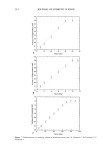
j. Cosmet. sci., 50, 221-229 (July/August 1999) Comparison of antioxidant activity of extract from seeds of white pepper (Piper nigrurn, Linn.) to commercial antioxidants in 2% hydroquinone cream ARANYA MANOSROI, MASAHIKO ABE, and JIRADEJ MANOSROI, Pharmaceutical-Cosmetic Raw Materials and Natural Products Research and Development Center (PCRNC), Natural Products for Thai Traditional Medicines Research Unit, Department of Pharmaceutical Technology, Faculty of Pharmacy, Chiang Mai University, Chiang Mai 50200, Thailand (A.M., J.M.) The Cosmetic Quality Control Subcommittee, FDA, Ministry of Health, Nontaburi, Thailand (A.M.) Faculty of Science and Technology, Science University of Tokyo, Yamazaki 2641, Noda, Chiba 278, Japan (M.A.) and Institute of Colloid and Interface Science, Science University of Tokyo, 1-3 Kagurazaka, Shinjuku, Tokyo 162, Japan (M.A.). Accepted for publication June 30, 1999. Synopsis Powdered dry fruits of white pepper (Piper nigrum, Linn.) were extracted with dichloromethane and frac- tionareal into various portions. The powder obtained from the aqueous weakly acidic fraction, which gave a yield of 1.09% w/w of crude pepper, was tested for antioxidative activity in comparison with commercial antioxidants (sodium metabisulfite and BHT) at 0.1%, 0.5%, and 1.0% w/w in 2% w/w hydroquinone cream. The systems were incubated in a dark room at 24 ø + 1.0øC for two weeks and at 45 ø + 0.5øC for three months. The physical stability and the percentages of hydroquinone remaining after two weeks and one, two, and three months were determined by UV spectrophotometry at 294 nm according to official standard procedures. The experiment revealed that oxidation degradation of hydroquinone was accelerated by heat even with the existence of antioxidants. The higher percentages of remaining hydroquinone were observed for higher antioxidant concentration but showed lower physical stability of the formulation, especially in the cases of 1% BHT and 1% extract. In two months at 45 ø + 0.5øC, the extract demonstrated the same activity as the other two commercial antioxidants at all concentrations, with about 20-30% more hydroquinone remaining than in the control system. The creams containing 0.1% and 0.5% extract gave good physical formulation stability, with about 66% and 72% of hydroquinone remaining. This suggested the possibility of using an extract from white pepper at 0.1% and 0.5% as a water-soluble antioxidant for substances that are oxidation-susceptible. INTRODUCTION One of the most important characteristics of many cosmetic products is stability. Hy- droquinone, a hypopigmenting agent employed percutaneously to lighten localized 221
Purchased for the exclusive use of nofirst nolast (unknown)
From: SCC Media Library & Resource Center (library.scconline.org)