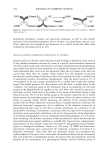
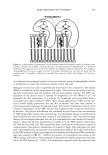
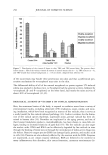
SKIN DELIVERY OF VITAMIN E 261 dimers, CPDs (61-64) and [6-4] pyrimidine photoproducts, [6-4] PDs, in mouse skin. These lesions are the two major photoproducts produced by UV light and are considered primary factors leading to UV-induced skin carcinogenesis. Characteristic lesions in UVB-irradiated DNA include cyclobutane pyrimidine dimers and pyrimidine [6-4] pyrimidone photoproducts, which form between adjacent pyrimidines (65) and photo- hydrates. Pyrimidine dimers can produce deletion, frame shift, and substitution muta- tions, and have been associated with distinctive C • T and CC -- TT transitions in the genome (66). In the sunlight reaching the earth's surface, it is the UVB (290-320 nm) portion that contains the most carcinogenic wavelengths. As DNA damage is a critical event in cancer initiation, inhibition of thymidine dimer formation has been used as a relevant parameter for assessing the efficacy of topically applied o•-tocopherol as a chemopreventive agent (67). Photodimerization serves as a more specific indicator of UVB energy deposition into DNA than end points such as edema and erythema. Although actinically induced erythema is an easily observable response, this end point is only one of a myriad of events triggered in skin by UV insult. McVean and Liebier (67) studied the induction of UV-specific DNA photoproduct using o•-tocopherol and its derivatives. Topical application of 1% tocopherol dispersions in neutral cream re- duced dimer formation to 43% of control. The maximum reduction observed was 84% less than controls for a 10% w/w o•-tocopherol cream. In addition to o•-tocopherol, other forms of o•-tocopherol, including its acetate, succinate, and methyl ether, were also studied. As o•-tocopherol methyl ether is not hydrolyzed to o•-tocopherol, this allowed the authors to investigate whether hydrolysis of the acetate ester to the free form (o•-tocopherol) is necessary for photoprotection. A 10% w/w o•-tocopherol methyl ether dispersion conferred a 50% inhibition of dimer formation (P 0.05), which is similar to that produced by both 10% o•-tocopheryl acetate and 1% o•-tocopherol. Both 'y and 8-tocopherol were less potent. The authors have shown that prevention of DNA pho- todamage could account for much of the antitumor effect of topically applied o•-tocoph- erol in photocarcinogenesis. o•-Tocopherol could inhibit the formation of pyrimidine [6-4] pyrimidone photoproducts. The authors indicated that hydrolysis of o•-tocopheryl acetate to o•-tocopherol may not contribute significantly to the photoprotective effect of o•-tocopheryl acetate when acutely applied. Furthermore, topical application of o•-to- copherol has been shown to reduce UVB-induced immunosuppression (68). Photoprotection also may involve prevention of acute responses, including activation of growth-related genes such as c-los (69) and C-H-ras (70). This could prevent early alterations in cellular metabolism that promote tumor formation. The ability to attenu- ate DNA damage could prevent mutations in critical genes associated with photocar- cinogenesis. Fuchs et•/. (71) showed that there is a 50% reduction in the concentration of o•-tocopherol in the skin of hairless mice after UVB irradiation. Berton et•/. (72) investigated the ability of vitamin E acetate to alter events involved during the initiation and promotion steps during photocarcinogenesis. Vitamin E acetate (5.2 mg/0.2 ml) in acetone was applied 30 min before UV treatment of mice or 30 min after. They observed increased cyclobutane pyrimidine dimer [6-4] PD repair when the natural vitamin E acetate was applied before UV irradiation. A greater repair rate was observed when vitamin E acetate was applied after UV irradiation, indicating that the acetate plays some role in the photoproduct removal. However, vitamin E acetate had no effect on UV-induced DNA synthesis. Gensler and Magdelano (68) found a significant reduction in tumor incidence (P =

262 JOURNAL OF COSMETIC SCIENCE 0.0065, log ranks test) in the UV-irradiated mice that received topical vitamin E application. In UV-induced skin damage, an increase in the level of the enzyme orni- thine decarboxylase has been found. Jurkiewicz eta/. (51) examined the antioxidant capabilities of ot-tocopherol and its acetate and sorbate esters using electron paramag- netic resonance in intact mouse skin. They found that topical application of tocopherol sorbate and ot-tocopherol can reduce the number of UV-induced tumors. However, the acetate form did not afford photoprotection. VITAMIN E IN ERYTHEMA AND EDEMA Topical application of ot-tocopherol, [3-carotene, or ascorbate before UV exposure pro- tects murine skin form UVB-induced erythema. Fuchs eta/. (71) analyzed skin after UV exposure and found depletion of tocopherol and ubiquinol. This makes it plausible to suppose that replenishing depleted tocopherol in the skin after UV treatment might have a beneficial effect in reducing UV-induced erythema and skin sensitivity. Rosh- chupkin eta/. (73) studied the effect of ot-tocopherol and ot-tocopheryl acetate when applied before irradiation and 2 min post irradiation. They found ot-tocopherol to greatly inhibit the erythemal response of skin to UV light. However, ot-tocopheryl acetate had almost no antioxidative activity. Potapenko eta/. (74) observed that ot-tocopherol in- hibited the phototoxic effects only if it was present in skin during irradiation. When applied after irradiation, it produced no inhibitory effect. On the other hand, Trevithick eta/. (75) reported that topical application of vitamin E acetate to mouse skin following irradiation significantly reduced the increase in erythema (skin reddening) observed following UVB irradiation, reduced aversive behavior indicative of skin sensitivity, and reduced skin edema measured by magnetic resonance imaging. There was rapid skin healing. It was thought by the authors that topical vitamin E acetate may be useful in treating human sunburn after exposure to UV has occurred. The pure phenolic form of ot-tocopherol was thought to be irritating to the mouse skin when applied topically. Previous work by Poscoe and Reed (76) have indicated that tocopherol esters may be more effective antioxidants than the free phenol, since they can pass the cell membrane and reach some critical intracellular site where they are hydrolyzed to the active phenol form. By contrast, the free ot-tocopherol may be immobilized by the plasma membrane as a result of its lipid solubility and never reach the intracellular site where it is needed. The effect of vitamin E on croton oil dermatitis in rabbits and plaster dermatitis in humans was studied by Kamimura (41). In the former case, swelling and edema was slight and the duration of lesion fairly shortened by the 2% ot-tocopherol application. In the latter case, suppression of irritability (which is the erythema, itching, and dermatitis) was significantly greater in the tocopheryl acetate-added plaster than in the control. The author reasoned that probably vitamin E inhibits histamine liberation from granules of mast cells and serotonin liberation from inside the tissue cells. Interestingly, low-dose dietary vitamin E (0.2%) did not provide protection against mercury arc lamp-induced erythema in mice. Skin bioavailability may be insufficient at this systemic concentration to afford any photoprotection. Topical use of vitamin E has been recommended for the treatment of a widespread disseminated form of granuloma anulare, which is resistant to all kinds of other treat- ment modalities. An explanation for its efficacy is the potential of vitamin E as an antioxidant and free-radical scavenger, which may play a role in the pathogenesis of
Purchased for the exclusive use of nofirst nolast (unknown)
From: SCC Media Library & Resource Center (library.scconline.org)