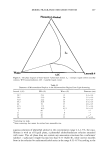
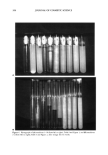
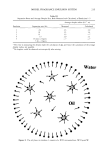
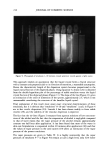
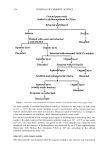
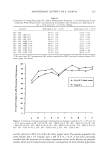
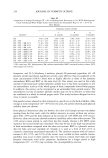
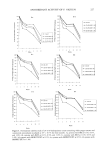
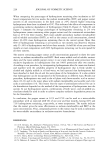
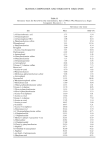
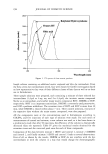
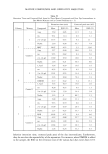
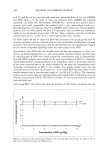
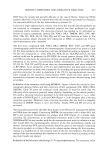
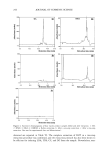
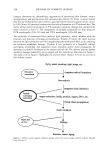
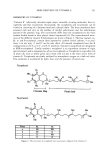
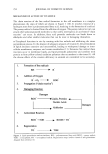
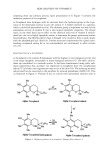
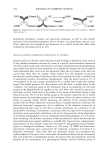
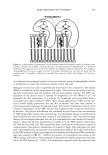
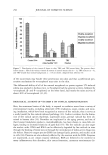
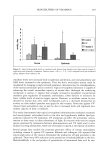
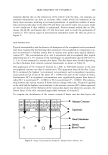
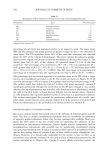
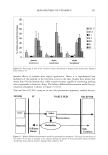
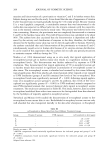
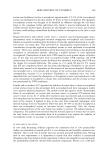
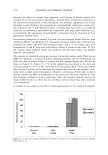
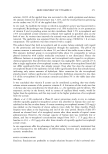
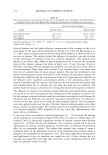
SKIN DELIVERY OF VITAMIN E 255 Antiox. idant s Figure 6. A diagrammatic representation of the proposed interactions between vitamin E, synthetic anti- oxidants, selenide- and sulphide-containing proteins, and polyunsaturated phospholipids in a biological membrane. The suggested site of action of the synthetic antioxidants is shown by the arrows. For simplicity, the phospholipids are shown as rigid structures in a bilayer membrane, but this does not imply that the membrane has a "crystalline" rather than a partially fluid character. Taken from reference 20 (with per- mission). o•-tocopherol was hydrogen bonded to the ester carbonyl group of phosphatidyl choline in membranes to retain the chromanol moiety within the space. Biological activities of some tocopherols and tocotrienols were compared to the natural (RRR) o•-tocopherol by the rat-gestation test assay. The natural o•-tocopherol was bio- logically more potent than the synthetic (a//-rac) o•-tocopherol mixture. The RRR con- figuration of the phytyl chain is optimal for biopotency (26-29). Weber eta/. (30) measured the skin penetration of a mixture of tocopherols and tocotrienols from a tocotrienol-rich palm oil fraction (TRF). After topical application of TRF, all the vita- min E forms readily penetrated into the skin of hairless mice and were present in concentrations far exceeding the baseline levels. The percent distribution of each of the vitamin E homologues in the TRF mixture was compared with its percent distribution in the skin. The percent distribution was calculated for each form as the concentration in TRF-treated skin minus the concentration in polyethylene glycol (control)-treated skin divided by the sum of the skin vitamin E concentrations x 100. They found a large fraction of o•-tocopherol absorbed into the skin compared with other forms of vitamin E. Figure 7 shows the percent distribution of vitamin E in the PEG-treated control skin, the TRF fraction itself, and TRF-treated skin after correcting for background vitamin E concentrations. The percent distribution of vitamin E forms that penetrated the skin above the background concentrations were significantly different from their distribution in the TRF mixture. Higher percentages of o•-tocopherol were found in TRF-treated skin than were present in TRF (P 0.0001), the percent of'y-tocopherol was similar to the TRF mixture, and both o•- and 'y-tocotrienols represented a smaller proportion than they did in the TRF mixture (P 0.001). The authors have suggested that the isoprenoid tail

256 JOURNAL OF COSMETIC SCIENCE lOO 90 80 70 60 50 40 30 20 lO o Control Skin Treated Skin minus baseline Vit E TRF Fraction [] alpha-tocopherol [] gamma-tocophero] [] alpha-tocotrienol [] gamma-tocotrienol Figure 7. Distribution of the vitamin E forms in skin, TRF, and TRF-treated skin. The percent distri- bution (mean + SD) of the various vitamin E isomers in control mouse skin (n = 3), TRF mixture (n = 4), and TRF-treated skin (minus background n = 19) are shown. Adapted from reference 30. of the tocotrienols may hinder their penetration into skin and that a preferential pen- etration mechanism for ot-tocopherol may exist in the skin. The differential ability of all of the natural tocopherols to protect against UV-induced edema was studied in hairless mice. ot-Tocopherol had the greatest activity, followed by •/-tocopherol. [3- and 8- tocopherol, on the other hand, had nearly the same activity of about 40% of ot-tocopherol (31,32). BIOLOGICAL ACTIONS OF VITAMIN E ON TOPICAL ADMINISTRATION Skin, the outermost barrier of the body, is exposed to oxidative stress from a variety of environmental insults, including ultraviolet (UV) irradiation, ozone, smoke, and ioniz- ing irradiation, which have been recognized as sources of free radicals thus it serves as a useful model for free-radical-induced pathology (33). Indirect evidence for the forma- tion of free radical species (hydroxyl, superoxide anion, peroxyl radical) has been ob- tained in human skin (34). Peroxides are implicated in the aging process, and one of their known breakdown products, malondialdehyde, has been shown to cross-link col- lagen, leading to decreased elasticity of aged skin (35). The free radicals can also target the nucleic acids. DNA and RNA can be effectively degraded by free radicals in time through the binding of metal ions or through the intercalation of redox-active drugs into the helices. Reactive oxygen species (ROS) can damage lipids, proteins, and nucleic acids in cells (36). Proteins are also adversely affected by the reaction with the ROS. Enzymes are inactivated, as are certain enzyme inhibitors. ROS are believed to be involved in many inflammatory skin disorders, skin cancer formation, cutaneous autoimmune dis-
Purchased for the exclusive use of nofirst nolast (unknown)
From: SCC Media Library & Resource Center (library.scconline.org)