j. Cosmet. Sci., 50, 231-248 (July/August 1999) Influence of matrix compounds on the analysis of oxidalive hair dyes by HPLC URSULA VINCENT, GUY BORDIN, and ADELA R. RODRIGUEZ, European Commission, Joint Research Centre, Institute for Re•rence Materials and Measurements, Retieseweg, B-2440 Geel, Belgium. Accepted for publication June 30, 1999. Synopsis Oxidative hair dyeing products consist of a mixture of a broad spectrum of organic compounds including the hair dye's so-called active compounds and the matrix-forming compounds. Forty-seven dye intermedi- ates commonly used in cosmetic formulations have thus been analyzed by RP-HPLC, and their chromato- graphic characteristics have been recorded. Since the matrix compounds could interfere with the quantitative analysis of the active compounds, eighteen matrix compounds commonly used in cosmetic formulations have been tested for their influence on dye intermediate determination. Since some of them do affect the chromatographic behavior of the dye intermediates, an isolation procedure, for separating matrix compo- nents from the dye-forming compounds, consisting of a liquid-liquid extraction by n-heptane, has been set up. In most cases, this procedure is effective for the extraction of the matrix products. Moreover, the dye intermediates are not extracted by n-heptane, and their chromatographic behavior is not altered by the extraction procedure. In summary, this study has shown that a reference method for the analysis of oxidative hair dyes should include a compulsory extraction step before submission of samples to RP-HPLC. INTRODUCTION Among the different methods of changing the color of human hair, oxidative hair dyeing plays an important role. Formulations consist of a wide range of organic compounds of two distinct types, i.e., the hair dye intermediates and the matrix-forming compounds. Some of the hair dyes, which are available for use in hair dye formulations, have a toxicological or sensitizing potential and are prohibited or restricted in concentration by the 6th Amendment of the European Union Council Directive 93/35/EEC. To identify and quantify substances used in hair dye formulations, with the aim of implementing the European Union Cosmetic Directive, there is need for a reliable analytical method. Initially, a high-performance liquid chromatography method was developed that enables the identification of a broad range of dye-forming compounds in standard solutions (1,2). The next step for the setup of a reliable analytical method, besides additional optimization steps, involves the investigation of possible effects of matrix components. 231

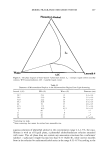
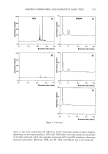
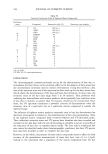
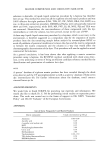
232 JOURNAL OF COSMETIC SCIENCE Due to the different and specific functions of matrix compounds in hair dye formula- tions, the chemical composition of matrix compounds covers a broad range, including surfactants, pH adjusters, consistency providers, antioxidants, emulsifiers, perfumes, perfume solubilizers, and preservatives. Each of these additives plays a clear role in the formulation. For instance, preservatives such as methylparaben or DEDM-hydantoin and antioxidants such as BHT, sodium sulfite, and L-ascorbic acid sodium salt have to be added to keep the product stable. Literature on the influence of the various matrix products on the chromatographic separation of oxidative hair dyes is very rare, although it is of tremendous importance. Some authors simply do not consider their influence on the analysis (3-5), while others try to reduce matrix interference by optimizing the measurement wavelength (6). From the point of view of the chromatographic separation of the dyes, two main situations can occur: ß a given matrix component shows a specific retentive behavior and can be detected with the UV detector. ß the matrix component forms a complex with a dye intermediate that will change the retentive behavior of the dye intermediate. Furthermore, it must be noted that some matrix components can also interfere with the column itself, i.e., adsorb onto the stationary reversed phase, therefore changing the separation properties of the oxidative hair dyes. Therefore, the aims of the work described in this article were to investigate possible matrix influences on the chromatographic separation of the dye-forming compounds and to set up an effective method of separating the matrix components from the dye-forming compounds. This method should not, of course, affect the chromatographic behavior of the dyes. Due to the high number of dyes and matrix compounds, a selection of products had to be made according to lists of frequently used dye intermediates and matrix products with their concentrations in formulations provided by COLIPA (Comit• de Liaison Europ•en de l'Industrie de la Parfumerie, de Produits Cosm•tiques et de Toi- lette see Appendix). The forty-seven dyes and eighteen matrix components selected for these experiments are representative of four groups of dye-forming compounds, classified according to their chemical characteristics, and of five classes of additives used as matrix products in the formulations. The influence of matrix components on the dye determi- nation has been performed on selected dyes from each group. EXPERIMENTAL The chromatographic procedure has been described in detail in a previous article (1). INSTRUMENTATION All chromatographic separations were carried out using the following equipment: a two-piston HPLC pump with a low-pressure ternary gradient system module (System 325 from Kontron Instruments S.P.A., Milan, Italy), an autosampler 360 with a loop of 20 ml (Kontron Instruments S.P.A.), a diode array detector 440 (Kontron Instruments S.P.A.), and a vacuum degassing system, Degasys DG 1300 (Unifiows, Japan). The
Purchased for the exclusive use of nofirst nolast (unknown)
From: SCC Media Library & Resource Center (library.scconline.org)