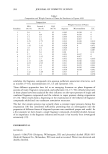
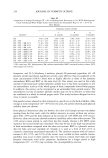
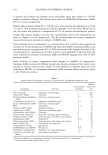
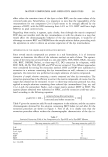
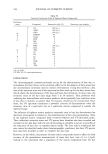
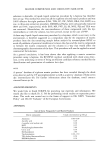
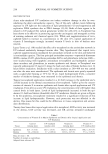
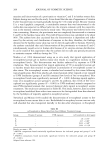
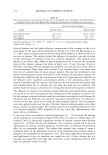
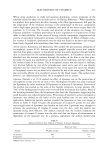
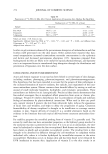
SKIN DELIVERY OF VITAMIN E 273 When using emulsions to study percutaneous absorption, certain properties of the emulsion should be taken into account such as: (a) Drying differences--When emulsions are applied, they spread over the skin, forming a thin film (approximately 400 pm). As the temperature of the emulsion increases to the temperature of the skin, components with a high vapor pressure start to evaporate, and most of the water escapes from the emulsion in 5-10 min. The viscosity and structure of the emulsion can change. (b) Vitamin solubility--Uniform penetration of active ingredients is required even if they differ in their solubility. In the course of drying, volatile components evaporate and the content of nonvolatile components increases correspondingly. (c) Effect of droplet size-- For vitamin E emulsions, penetration into the skin was found to be faster and stronger from finely dispersed microemulsions than from conventional emulsions. Aerosol so/zttion. Kamimura and Matsuzawa (40) studied the percutaneous absorption of ot-tocopheryl acetate (0.5% benzene solution) sprayed topically across skin samples obtained from plastic surgery. ot-Tocopheryl acetate was easily absorbed through healthy skin as determined by the autoradiographic measurements. ot-Tocopheryl acetate was absorbed into the stratum corneum through the surface of the skin in the first place. Secondly, the agent was absorbed into all the layers of the epidermis, and then went into the various tissues in the dermis. The ot-tocopheryl acetate was also found to infiltrate into the hair follicles by way of the pilosebaceous canal, and a part of it was directly absorbed into the connective-tissue sheaths by way of the inner and outer root sheaths. ot-Tocopheryl acetate was not found to be absorbed by way of the sweat gland. There was also noticeable affinity of ot-tocopheryl acetate for the blood vessels. The authors have, however, not differentiated between the ot-tocopherol and its acetate. Liposomes. Natsuki et al. (114) studied the effect of liposome size on the penetration of ot-tocopheryl acetate into the rat skin in vitro. Hydrogented lecithin was used to prepare the liposomes by either sonication (S-liposomes) or injection (I-liposomes). Recovery of the lecithin was studied on the arms of five healthy volunteers. A large amount (50- 70%) of the hydrogenated lecithin was recovered from the human skin surface. More of the lecithin penetrated from the S-liposomes than from the I-liposomes, suggesting that small liposome size enhanced penetration. Penetration of vitamin E acetate entrapped in liposomes was studied on the backs of five male hairless rats 30 min after topical application. Submicron particle analysis revealed the liposomes to have size ranges as shown in Table V. Table VI gives the penetration of vitamin E acetate 30 min after topical application of liposomes into hairless rat back skin. Liposomes were thought to promote the penetration of vitamin E acetate into the skin, with the smaller size liposome being more effective. The authors conclude that the lecithin enhanced the penetration of vitamin E acetate into the skin and that the degree of enhancement is dependent on the liposome size. In a previous experiment the authors showed that Table V Submicron Particle Size Analysis of Vitamin E Acetate Liposomes Mean size (nm) Sample Weight average Number average I-Liposome 188 147 S-Liposome 31 14 Adapted from reference 114.

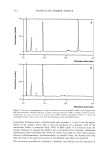
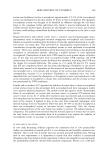
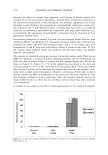
274 JOURNAL OF COSMETIC SCIENCE Table VI Penetration of 14C-VEA 30 Min After Topical Application of Liposomes Into Hairless Rat Back Skin Radioactivity of 14C-VEA (% of dose) Sample Recovery Skin Free VEA 70.64 + 1.35 17.23 + 1.05 I-Liposome 65.75 + 0.03 • 22.60 + 0.54 b S-Liposome 58.13 _+ 2.50 b'd 28.72 _+ 1.13 c'• Values are mean ñ S.E. from six rats. Significantly different from free VEA at •P 0.02, S P 0.01, and c P 0.001, and different from I-liposomes at d p 0.05 and •P 0.01. Adapted from reference 114. lecithin in gel-ointment enhanced the percutaneous absorption of indomethacin and that lecithin itself penetrated into the skin tissues. Other authors have reported that lipo- somal encapsulation increased triamcinolone acetonide concentration in the epidermis and dermis and decreased percutaneous absorption (115). Liposomes prepared from hydrogenated lecithin are likely to be useful for topical pharmacotherapy, and liposome size is an important factor in transdermal drug absorption through the distribution and penetration of liposomes into the skin surface. CONCLUSIONS AND FUTURE DIRECTIONS Acute and chronic exposure to sun rays has been linked to several types of skin damage, including sunburn, photoaging, photocarcinogenesis, and photoimmunosuppression. One hypothesis that has been extended to account for the genesis of skin pathologies is the increased formation of reactive oxidants, free radicals, and impairment of the cuta- neous antioxidant system. Nature counters these harmful effects by arming us with an arsenal of small molecular lipophilic, hydrophilic, and enzymatic antioxidants. These antioxidants are believed to act synergistically. Preclinical data clearly demonstrate that free-radical scavengers like ot-tocopherol afford protection from acute or chronic pho- todamage. Vitamin E inhibits disturbances due to peroxidation of lipids and stabilizes biological membranes by physicochemical interactions. When used in skin care prod- ucts, natural vitamin E protects the skin from ultraviolet light, reduces the appearance of facial lines and wrinkles, and helps to delay the progression of aging. Cutaneous bioavailability of dietary tocopherol is thought to be insufficient to scavenge reactive oxidants in skin. Topical delivery of vitamin E is a suitable alternative based on the evidence in the literature that such topical delivery boosts cutaneous antioxidant func- tion. For stability purposes the esterified prodrug form of vitamin E is generally used. The acetate by itself does not have antioxidant properties, as the hydroxyl group involved in the oxidation reaction is protected in the ester. If it is to act as an antioxidant, the ester must be hydrolyzed to release the free ot-tocopherol. Both human and murine skin have been shown to absorb and accumulate cx-tocopheryl acetate. The prodrug form is then thought to be absorbed by diffusion through the cell membrane to cytoplasm within individual cells, where it is further hydrolyzed by intercellular enzymes to the active cx-tocopherol. Hydrolysis occurs in human skin and has been found to be enhanced by UVB irradiation in murine skin. Application of vitamin E to the skin results in an
Purchased for the exclusive use of nofirst nolast (unknown)
From: SCC Media Library & Resource Center (library.scconline.org)