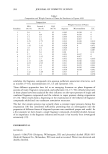
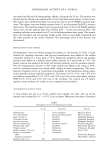
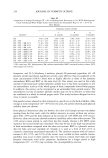
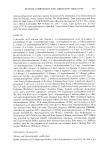
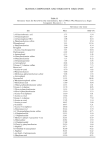
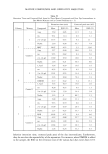
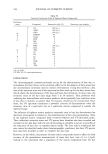
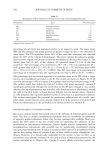
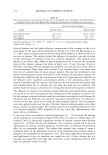
MATRIX COMPOUNDS AND OXIDATIVE HAIR DYES 235 Table II Retention Times for Forty-Seven Dye Intermediates, Each of Which Was Measured as a Single Component Solution (n = 3) Retention time (rain) Dye Mean RSD (%) 3,4-Diaminobenzoic acid 2.75 1.54 2,4-Diaminophenol 3.95 0.17 2,4-Diaminophenol HC1 3.98 0.18 p-Phenylenediamine sulfate 5.21 0.54 P hloroglucinol 5.23 12.56 p-Phenylenediamine 5.60 9.34 Pyrogallol 5.90 3.59 2-Amino-3-hydroxypyridine 5.91 0.84 Hydroquinone 6.02 6.92 p-Aminophenol 6.13 3.46 m-Phenylenediamine sulfate 7.00 3.23 m-Phenylenediamine 7.15 6.42 2,6-Diaminopyridine 7.91 3.93 m-Aminophenol 8.04 3.43 Toluene-2,5-diamine sulfate 8.50 7.73 Resorcinol 9.23 4.67 4-Amino-m-cresol 9.70 1.82 0-Phenylenediamine 9.86 3.87 2-Methoxy-p-phenylenediamine sulfate 9.94 1.35 0-Aminophenol 10.51 5.98 Pyrocatechol 11.23 18.06 p-Methylaminophenol sulfate 11.88 2.02 2-Methylresorcinol 11.89 6.84 2-Chloro-p-phenylenediamine sulfate 12.33 2.01 Toluene-2,4-diamine 12.78 8.85 2-Nitro-p-p henylenediamine 13.14 2.20 4-Nitro-0-phenylenediamine 15.10 2.53 2-Amino-4-nitrophenol 15.50 3.01 5-Amino-o-cresol 15.66 4.11 Toluene-3,4-diamine 17.53 7.50 6-Amino-m-cresol 17.95 1.34 2-Amino-p-cresol 18.07 2.90 p-Anisidine 18.47 4.21 2-Amino- 5 -nitrophenol 18.66 3.14 4-Chlororesorcinol 20.44 3.70 4,4'-Diaminodiphenylamine sulfate 20.83 0.75 1,6-Naphtalenediol 25.23 2.24 2,7-Naphtalenediol 25.81 1.59 3-Methyl- 1-phenyl-2-pyrazoline-5-one 26.01 6.39 4-Chloroaniline 26.82 2.50 2,3-Naphtalenediol 27.88 2.38 N- Phenyl-p-phenylenediamine 29.56 3.64 2-Naphtol 29.71 0.93 N, N-Diethyl-m-aminophenol 30.00 0.02 1-Naphtol 30.01 0.42 3 -tert-butyl-4- hydroxyanisole 31.85 0.58 4-Hexylresorcinol 32.26 0.55

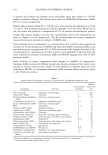
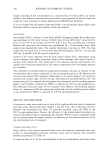
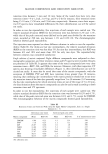
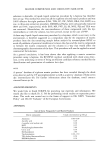
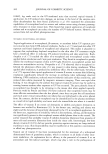
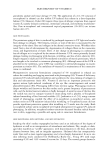
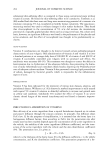
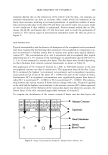
236 JOURNAL OF COSMETIC SCIENCE Sample solutions of dye intermediates at a concentration of 0.025 g/100 g in matrix media (at the different concentrations given above) were prepared by dilution from the respective stock solutions at various proportions of MeOH and Soerensen. It has to be noted that all samples contained NaAsc as an antioxidant agent added to the Soerensen buffer to ensure the stability of the dye samples. PROCEDURES Reversed-phase HPLC conditions. A non-linear MeOH (A)/aqueous phase (B) gradient was used as follows: 0-25% A for 19 rain, 25-80% A for 10 rain, 80% A for 5 rain, 80-95% A for 5 rain, 95% A for 10 rain, and 95-0% A for 3 min. The total flow was ! ml/min. Between the injections, the column was equilibrated by a 25-ml mobile phase. Each analysis was repeated five times. The column temperature was kept at 48øC. The data acquisition was carried out at two or three selected wavelengths: 220 nm, 235 nm, and 290 nm, in parallel with the spectra acquisition. Isolation of the matrix components from the final analyte solution. First, experiments using anion exchange, solid phase extraction, liquid cation exchange, and liquid-liquid ex- traction were carried out. The results led to the selection and the optimization of a liquid-liquid extraction procedure of the matrix components from the sample solution by n-heptane. Two milliliters of sample solution (single-matrix product solution or mixture of dye intermediates and a matrix compound, at the concentrations given in the Experimental section) were treated with n-heptane. Depending on the matrix product, the extraction involved one to three steps. In the first step, the extraction was performed on the 2-ml sample using 20 ml n-heptane, the two phases were separated, and the resulting aqueous phase 1 was thereafter submitted to HPLC or analyzed by UV-Vis spectrophotometry. For additional extraction steps, 20 ml n-heptane were added to the resulting aqueous phase n-l, separation of the two phases was performed, and the resulting aqueous phase n was submitted to HPLC or analyzed by UV-Vis spectrophotometry. RESULTS AND DISCUSSION A systematic study was carried out on each of the eighteen selected matrix compounds and forty-seven selected hair dyes (Tables I and II). First, their individual retentive behavior was determined and their UV spectrum recorded, using the DAD or the UV-Vis spectrophotometer. Second, the efficiency of the liquid-liquid extraction pro- tocol on the selected matrix compounds was checked. When a matrix compound could not be extracted from the sample solution, its influence on the retentive behavior of the dye intermediates was investigated. CHROMATOGRAPHIC STUDY Single solutions of dye-forming compounds. Forty-seven dye-forming compounds were sub- jected to chromatography and their retention times and UV spectra were recorded. Results are presented in Table II. It comes out that 91% (43 dye intermediates) of the dye intermediates tested have their
Purchased for the exclusive use of nofirst nolast (unknown)
From: SCC Media Library & Resource Center (library.scconline.org)