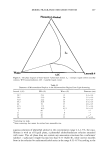
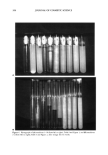
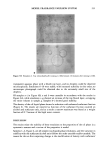
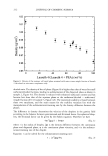
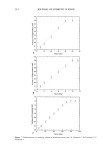
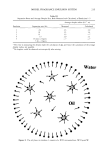
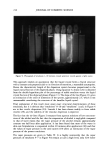
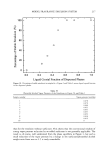
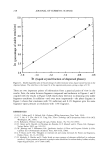
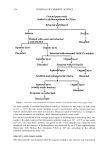
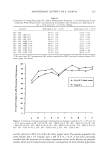
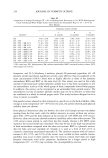
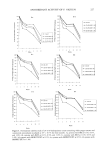
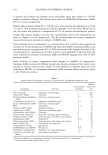
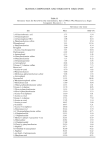
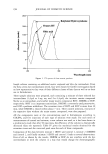
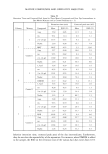
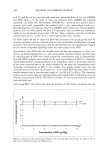
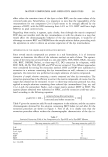
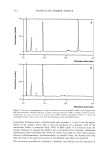
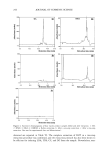
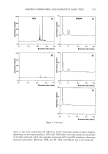
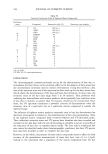
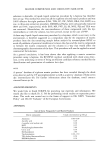
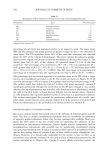
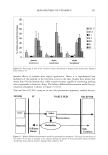
MATRIX COMPOUNDS AND OXIDATIVE HAIR DYES 247 solutions is desirable. A liquid-liquid extraction procedure by n-heptane has therefore been set up. This method was tested on all the eighteen selected matrix products and was 100% effective for eight products (LDA, TDS, CC, DC, NNO, ORA, OA, BHT) in a one- to three-step extraction procedure. DMDM and NaAsc were only partially extracted (80% and 50%, respectively), while EOP, MP, PVP, LS, SS, NOL, PQ and TEA were not extracted. Nevertheless, the non-interference of these compounds with the dye intermediates or with the column, has been proved, except in the case of PVP. A three-step liquid-liquid extraction procedure by n-heptane, which is not toxic to the environment, is therefore suggested as a compulsory step for the separation of matrix products from the dye-containing sample before analysis by reversed-phase HPLC to avoid all problems of potential interference between the dyes and the matrix compounds or between the matrix compounds and the column in a way that would affect the chromatographic determination of the dyes. This procedure will now be applied to actual commercial formulations. As a general conclusion, it has been shown that after applying a matrix extraction procedure using n-heptane, the RP-HPLC method, combined with diode array detec- tion, is very promising in terms of being an efficient candidate reference method for the identification and quantitation of oxidative hair dyes. NOTE A spectra' database of eighteen matrix products has been recorded through the diode array detector and the UV spectrophotometer as well as a spectra' database of forty-seven dye intermediates (8). For further information about the database, email contact: vincent@irmm.jrc.be ACKNOWLEDGMENTS We would like to thank COLIPA for providing raw materials and information. We would also like to thank Dr. E. Pel for performing initial studies on separation proce- dures. This work was carried out in the frame of support to DG XXlV "Consumer Policy" and DG III "Industry" of the European Commission. APPENDIX List of Some Frequently Used Matrix Products Matrix component Usual concentration (g/100 g) Ammonia 6.00-9.00 Ascorbic acid 0.20 L-ascorbic acid sodium salt 0.20 BHT 0.25 Diethyleneglycolmonoether 5.00 Citric acid 0.30 Diethanolamine 2.00 Triethanolamine 0.10-1.50 TEA-dodecylbenzenesulfonate 0.50 DEDM-hydantoin 0.10

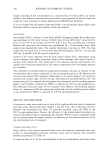
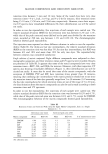
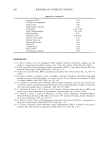
248 JOURNAL OF COSMETIC SCIENCE Appendix (continued) Syntopon 8 D1 © 6.00 Ethoxylated nonylphenol 3.00 Ethyl acetate 2.00 Hydroxyethyl cellulose 2.40 Isopropanol 3.00-15.00 Lauric diethanolamide 1.50-2.00 Methyl paraben 0.05 Propylene glycol 5.00-9.00 Sodium lauryl sulfate 2.95 Sulfated castor oil 4.00 Polyvinylpyrrolidon 2.00 Oleic acid 5.00 n-Nonylamine 25.00 Oranex HT © 3.00 Cetrimonium chloride 0.50 REFERENCES (1) E. Pel, G. Bordin, and A. R. Rodrfguez, HPLC candidate reference method for oxidative hair dye analysis. I. Separation and stability testing,J. Liq. Chrom. Re/. TechnoL, 21(6), 883-901 (1998). (2) E. Pel, Application of High Performane Liquid Chromatography (HPLC) to the Study of Oxidative Hair Dyes (Internal annual report, GE/R/ACH/03/95, 1995), pp. 1-19. (3) D. H. Liem andJ. Rooselaar, HPLC of oxidation hair colours, Mitt. Gebiete Lebensm. Hyg., 72, 164-176 (1981). (4) N. Goetz, J. Mavro, L. Bouleau, and A. de Labbey, "Analysis of Oxidative Hair Dyes Using High Performance Liquid Chromatography," in Cosmetic Analysis: Selective Methods and Techniques, P. Bord, Ed. (Marcel Dekker, New York, 1985), pp. 245-287. (5) C. Gennaro, P. L. Bertolo, and E. Marengo, Determination of aromatic amines at trace levels by ion interaction reagent reversed-phase high-performance liquid chromatography--Analysis of hair dyes and other water-soluble dyes, J. Chromatogr., 518, 149-156 (1990). (6) V. Andrisano, R. Gotti, A.M. di Pietra, and V. Cavrini, Analysis of basic hair dyes by HPLC with on-line post-column photochemical derivatisation, Chromatographia, 39, 138-145 (1994). (7) C. Genova, A. Zatta, L. Deiana, F. Montesion, F. Buosi, and G. Gazzaniga, "Ethoxylated Mono- Branched Primary Alcohols in Hair Dyes," in Cosmetics 1997 ConjUrerice Proceedings: Modern Challenges to the Cosmetic Formulation, 1997, pp. 359-377. (8) U. Vincent, Practitwl Aspects of the Determination of Oxidative Hair Dyes by RP-HPLC--Development of a Data Base (Annual report, GE/R/ACH/04/99, 1999), pp. 1-24. (9) U. Vincent, Evaluation of High Performance Liquid Chromatography (HPLC) in Relation to the Study of Oxidative Hair Dyes (Internal annual report, GE/R/ACH/13/97, 1997) pp. 1-26.
Purchased for the exclusive use of nofirst nolast (unknown)
From: SCC Media Library & Resource Center (library.scconline.org)