222 JOURNAL OF COSMETIC SCIENCE areas of hyperpigmented skin such as blemishes, lentigo, melasma, chloasma, and freck- les, is known for its high oxidative reactivity. It is one of the chemicals that are difficult to stabilize. It becomes brown in air due to oxidation. One gram of hydroquinone is soluble in 17 ml of water and freely soluble in alcohol (1,2). In Thailand, hydroquinone is classified in a specially controlled cosmetic category according to the FDA-Cosmetic Act BE 1992. In antifreckle and hair dyeing cosmetic products, its content is limited by law to 2% w/w. Most hydroquinone products used in creams, gels, lotions, and oint- ments are locally manufactured in Thailand. Being located in a tropical area, most Thai people suffer from solar effects on their skin. Freckles are one of these effects. Hydroquinone is one of the cheapest hypopigmenting agents available in the Thai market that most middle and lower class Thai people have preferred to use along with sunscreening products. However, with low stability and the side effects of allergy and irritation by hydroquinone for many consumers, the Cosmetic Control Division, FDA, of Thailand has special concerns for these products. In 1995, the FDA and the Toxicology Division of the Department of Medical Science, Ministry of Health, in Thailand reported that six out of 20 samples collected from the market contained more hydroquinone than the allowed amount (3). This was excused because of the high instability of hydroquinone, and most manufacturers had put the excess hydroquinone in their products in order to keep the constant amount of 2.0% during storage. Recently, many researchers have been involved in finding means to prevent or delay deterioration by oxidative reactions in cosmetic preparations. A variety of antioxidants both from natural sources and synthetic processes are available in the market. In Thai markets, antioxidants that are usually incorporated in hydroquinone formulations are sodium metabisulfite, BHT (butylated hydroxy toluene), BHA (butylated hydroxy an- isole), ascorbic acid, vitamin E, citric acid, and/or combinations of these chemicals. Their shelf-life is about one year. Hydroquinone itself has been used as an antioxidant in combination with others in the concentration of 0.05-0.1% (4). Various disadvantages of some of these antioxidants have caused concern. For example, an application of BHA and BHT is now restricted in many countries, since undesirable effects of these additives on the enzymes of the liver and lungs can occur (5). Occasionally, the antioxidant ability of vitamin E is less active (6). More recently, research has focused on developing safer and more effective antioxidants from natural sources, such as Rosmarinus officinalis L. (7,8) and Piper spp. (8-10). Chemical constituents of white pepper (Piper nigrum, Linn.) and their application to food preservation have been evaluated (6). However, a study of the antioxidative activity of the extract from white pepper has never been performed for cosmetic preparations. Hydroquinone, which is known for its high sensitivity to oxi- dation, has been chosen as an indicator for comparison of the antioxidative activity of white pepper extract to commercial antioxidants in the form of 2% w/w hydroquinone cream. MATERIALS AND METHODS EXTRACTION AND FRACTIONATION OF PEPPER SEEDS An amount of 729.56 g of the powdered dry fruits of white pepper (P. nigrum, Linn.)

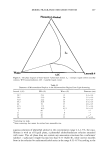
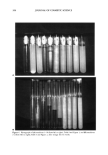
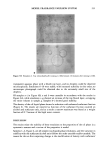
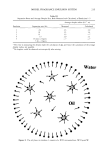
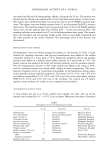
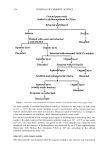
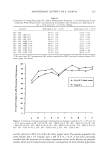
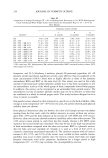
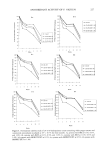
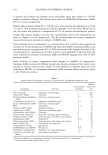
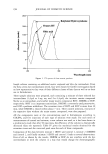
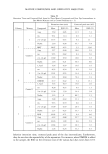
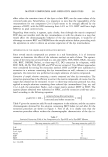
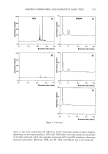
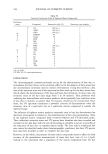
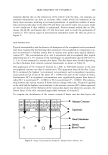
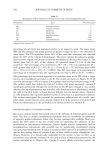
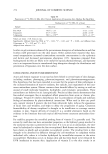
ANTIOXIDANT ACTIVITY OF P. NIGRUM 223 was soaked in 600 ml of dichloromethane (Merck, Germany) for 24 hrs. The mixture was filtered and the flitrate was washed with 25 ml of distilled water (Figure 1) three times. The organic layer (dichloromethane) was extracted with 25 ml of 2N-HCL solution three times. The organic layer was further extracted with 25 ml of saturated NaHCO 3 solution three times. The resulting organic layer was extracted with 25 ml of 1N-NaOH solution three times, and the aqueous layer was acidified (pH = 1) with concentrated HCL. The resulting solution was extracted with 25 ml of dichloromethane three times. The organic layer was discarded, and the aqueous weakly acidic fraction was finally evaporated and the white powder of the extract obtained. The percentage yield of this fraction was determined. PREPARATION OF TEST SAMPLES Hydroquinone cream was freshly prepared according to the formula in Table I. Light mineral oil, isopropyl myristate, and glyceryl monostearate were added to the melted cetostearyl alcohol in a water bath at 70øC. Separately, propylene glycol and paraben solution were added to a sodium lauryl sulfate solution in a water bath at 73øC. The former mixture was added to the latter and stirred constantly until an emulsion formed. The 2% hydroquinone solution in 95% ethyl alcohol was added to the cream at 40øC, and the resulting mixture was stirred while cooling to room temperature. The incor- poration of pepper extract or commercial antioxidants to the fomulation during prepa- ration depends on their solubility properties. The extract (0.1%, 0.5%, and 1.0% w/w) and sodium metabisulfite (0.1%, 0.5 %, and 1.0% w/w) were in the water phase, whereas BHT (0.1%, 0.5%, and 1.0% w/w) was in the oil phase. The control was 2% hydro- quinone cream without the extract or any commercial antioxidants. ANTIOXIDATIVE ACTIVITY STUDY A 10-g sample was put in a 20-ml, tightly screw-capped, test tube. One set of test samples was incubated at 45 ø + 0.5øC in an incubator (Memmert Incubator, Germany) Table I Formulation of 2% w/w Hydroquinone Cream % w/w Functions Sources Hydroquinone 2 95% ethyl alcohol 8 Light mineral oil 6 Cetostearyl alcohol 5 Isopropyl myristate 4 Glyceryl monostearate 10 Sodium lauryl sulfate 5 Propylene glycol 5 Paraben solution 20% w/w 1 Extract or antioxidants qs BHT Sodium metabisulfite Distilled water qs to 100 Active ingredient Solvent for hydroquinone Emollient Emollient Emollient Emollient stabilizer Emulsifier Humectant Preservative Antioxidant Solvent for water phase Merck, Germany Merck, Germany Honghuad, Bangkok Honghuad, Bangkok Honghuad, Bangkok Chemikit, Bangkok Sunnyworld, Bangkok Vithayasom, Bangkok Kech's, USA Sunnyworld, Bangkok May & Baker, England
Purchased for the exclusive use of nofirst nolast (unknown)
From: SCC Media Library & Resource Center (library.scconline.org)