j. Cosmet. Sci., 50, 249-279 (July/August 1999) Skin delivery of vitamin E MEERA RANGARAJAN and JOEL L. ZATZ, Department of Pharmaceutics, College of Pharmacy, Rutgers-The State University of New Jersey, 160 Frelinghuysen Road, Piscataway, NJ 08854-8020. Accepted for publication June 3 O, 1999. Synopsis Acute and chronic exposure to sun rays have been linked to several types of skin damage, including sunburn, photoaging, photocarcinogenesis, and photoimmunosuppression. One likely hypothesis for the genesis of these skin pathologies is believed to be the formation of free radicals. This suggestion has led to the supplementation of antioxidants such as o•-tocopherol (vitamin E) in various cosmetic skin preparations. Vitamin E is now considered essential for the stabilization of biological membranes, particularly those containing large amounts of polyunsaturated fatty acids. For stability considerations, o•-tocopherol is com- monly used as its prodrug ester. This article reviews the chemistry of vitamin E, its cutaneous biological functions, its prodrug forms and their metabolism into the active form of free vitamin E, and the effect of varying formulations on the percutaneous absorption of vitamin E. INTRODUCTION Evans and Bishop in the 1920s discovered that vitamin E (then o•-tocopherol) is an essential nutrient influencing reproduction in the rat. The term tocopherol came from "tokos" (childbirth) and "phorein" (to bring forth), and the -ol suffix indicates its phenolic nature. Now the term "vitamin E" is a generic name for all tocol and tocotrienol derivatives qualitatively exhibiting the biological activity of o•-tocopherol. Vitamin E, a fat-soluble vitamin, is considered essential for the stabilization of biological membranes, especially those with high amounts of polyunsaturated fatty acids (1). As further evi- dence of the interplay between lipid peroxides and skin disease is obtained, topical use of vitamin E in cosmetics is being highly recommended (2). When vitamin E is added to cosmetics, it may protect against destructive chemicals that compromise the integrity of skin and hair (3). The biological actions of vitamin E are due to its antioxidant property. o•-Tocopherol is thought to modulate the structure and functions of the lipid-protein system that makes up the plasma lipoprotein (4). Vitamin E has been used systemically, particularly in diseases in which lipid peroxidation is thought to be in- volved, such as in arteriosclerosis, diabetes, cancer, and hematological diseases. Repetitive sun exposure can result in skin changes known as photoaged skin. The clinical changes that are seen in photoaged skin differ from those of normally aged skin in some protected sites. There is increased wrinkling, elastosis, solar comedones, pigmentary 249

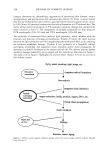
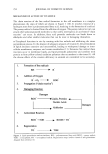
250 JOURNAL OF COSMETIC SCIENCE changes, phototoxicity, photoallergy, aggravation of preexisting skin diseases, immu- nosuppression, and precancerous and cancerous skin lesions (5). Thus, it seems natural that the use of photoprotectants will be a good preventive measure against actinic insult. In 1962 Norris (6) provided evidence for free radical formation in UV-radiated skin. The theory of free radical involvement in UV-mediated cutaneous damage was confirmed by other scientists as well (7). The components of sunlight responsible for skin aging are UVB wavelengths (290-320 nm) and UVA wavelengths (320-400 nm). The oxidation of unsaturated fats produces lipid peroxides, which interfere with the structure and function of biological membranes. Vitamin E limits the chain reaction between the lipid peroxides and their neighboring polyunsaturated fatty acids, confining the resultant membrane damage. Vitamin E acts primarily as a lipophilic radical- scavenging antioxidant and suppresses chain initiation and/or chain propagation by donating its phenolic hydrogen to the oxygen radicals (8). The defense systems against oxidative damage induced by active oxygen and free radicals are illustrated in Figure 1. The dark circle in Figure 1 highlights the portion where vitamin E elicits its activity in this defense system. H202, metal, smoking, light, drugs, etc. • (suppress radical format free radicals [a•d. •.•c_al•} _• • (suppresinitiatchain •:•}•:•olecules: lipids, proteins, sugars, DNA, etc. • (break chain propaga chain oxidation age diseases, cancer, aging Figure 1. Defense systems against oxidative damage induced by active oxygen and free radicals. Adapted from reference 8.
Purchased for the exclusive use of nofirst nolast (unknown)
From: SCC Media Library & Resource Center (library.scconline.org)