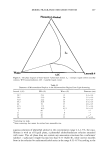
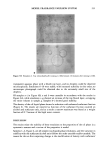
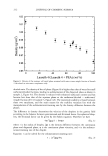
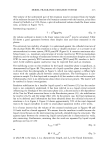
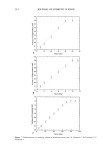
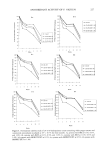
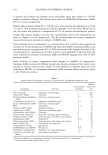
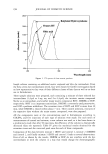
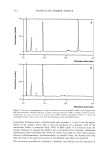
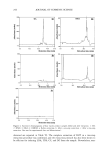
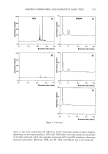
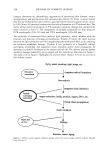
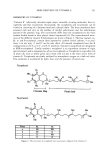
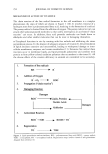
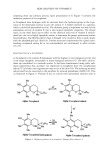
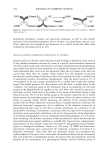
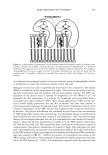
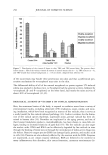
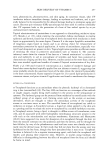
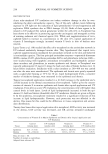
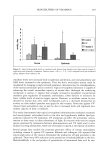
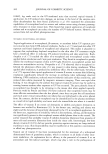
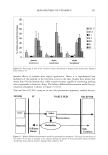
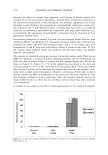
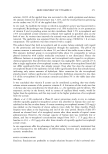
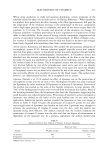
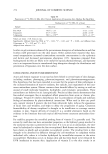
MATRIX COMPOUNDS AND OXIDATIVE HAIR DYES 245 1300 ORA 3_•a 6OO- 300_ -75 0.0 150 30.0 45.0 57 0 Retention time (min) 1300 9OO- 600- 300- -75 0.0 3b I 15.0 30.0 45 0 57.0 Retention time (min) -50 0.0 -50 0.0 100 50 0.0 Figure 4. Continued DMDM 4a I I I 7.5 15 0 22.5 30 0 Retention time (mln) 4b I I I 7.5 150 22.5 30.0 Retention time (min) 4_qc 7.5 15.0 22.5 30.0 Retention time (min) more, it has to be noted that the efficiency of the extraction protocol varies slightly, depending on the matrix product. LDA and TDS need a one-step extraction procedure to be fully extracted, while the complete extraction of CC and DC involves a three-step extraction procedure. Moreover, NOL, LS, SS, TEA, and PQ are not at all extracted.

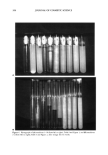
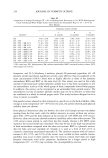
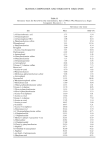
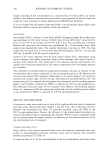
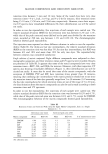
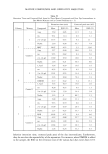
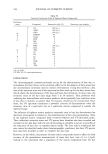
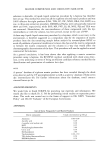
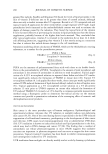
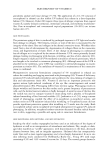
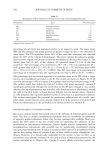
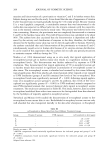
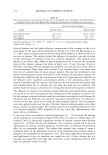
246 JOURNAL OF COSMETIC SCIENCE Table VI Statistical Extraction Yield of Eighteen Matrix Compounds Evaluation using Compound Extraction yield (%) Extraction step number H P L C U V / V I S OA 100 NNO 100 ORA 100 DMDM 80 NaAsc 50 EOP 0 MP 0 PVP 0 BHT 100 LDA 100 TDS 100 CC 100 DC 100 LS 0 SS 0 NOL 0 PQ 0 TEA 0 (n.p.) (n.p.) (n.p.) (n.p.) n.p.: no peak. UV/VIS: UV-Vis spectrophotometry. CONCLUSION The chromatographic method previously set up for the determination of hair dye in- termediates has been shown to be extremely effective for the analysis of forty-seven hair dye intermediates commonly used in cosmetic formulations. Using that method, a data base of the retention time and of the spectrum has been built up for the forty-seven dyes, which allows the determination of the dyes and their discrimination. In most cases, the retention times of the hair dyes range from 5 to 30 minutes. Thus problems with confusing dye intermediates with matrix products, which generally have retention times of less than 5 minutes or greater than 30 minutes, should not be encountered. Once more, the UV spectrum constitutes a powerful criterion of discrimination when the retention time of a particular dye or a particular matrix compound is outside the expected range. The influence of eighteen matrix products commonly used in hair dye formulations has also been investigated in relation to the determination of hair dye intermediates. Nine of the eighteen matrix compound show retentive behavior and UV-detectable peaks. Their individual retention times and UV spectra have therefore also been recorded and included in the data base with the aim of providing as complete a picture as possible of the separation of hair dyes in complex matrix media. The nine matrix compounds left over cannot be identified under these chromatographic conditions, but their UV spectra have also been recorded in order to complete the data base. However, on the whole, the presence of some matrix compounds seems to affect the final accuracy of the quantitative measurements of some hair dyes (case of 2-n-l,4-pd), leading to the conclusion that a separation of the matrix compounds from the dye
Purchased for the exclusive use of nofirst nolast (unknown)
From: SCC Media Library & Resource Center (library.scconline.org)