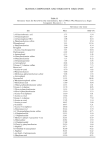
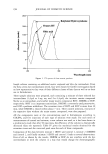
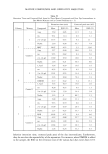
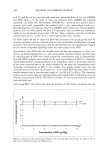
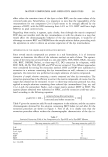
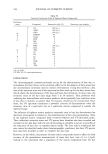
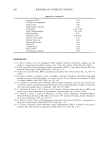
232 JOURNAL OF COSMETIC SCIENCE Due to the different and specific functions of matrix compounds in hair dye formula- tions, the chemical composition of matrix compounds covers a broad range, including surfactants, pH adjusters, consistency providers, antioxidants, emulsifiers, perfumes, perfume solubilizers, and preservatives. Each of these additives plays a clear role in the formulation. For instance, preservatives such as methylparaben or DEDM-hydantoin and antioxidants such as BHT, sodium sulfite, and L-ascorbic acid sodium salt have to be added to keep the product stable. Literature on the influence of the various matrix products on the chromatographic separation of oxidative hair dyes is very rare, although it is of tremendous importance. Some authors simply do not consider their influence on the analysis (3-5), while others try to reduce matrix interference by optimizing the measurement wavelength (6). From the point of view of the chromatographic separation of the dyes, two main situations can occur: ß a given matrix component shows a specific retentive behavior and can be detected with the UV detector. ß the matrix component forms a complex with a dye intermediate that will change the retentive behavior of the dye intermediate. Furthermore, it must be noted that some matrix components can also interfere with the column itself, i.e., adsorb onto the stationary reversed phase, therefore changing the separation properties of the oxidative hair dyes. Therefore, the aims of the work described in this article were to investigate possible matrix influences on the chromatographic separation of the dye-forming compounds and to set up an effective method of separating the matrix components from the dye-forming compounds. This method should not, of course, affect the chromatographic behavior of the dyes. Due to the high number of dyes and matrix compounds, a selection of products had to be made according to lists of frequently used dye intermediates and matrix products with their concentrations in formulations provided by COLIPA (Comit• de Liaison Europ•en de l'Industrie de la Parfumerie, de Produits Cosm•tiques et de Toi- lette see Appendix). The forty-seven dyes and eighteen matrix components selected for these experiments are representative of four groups of dye-forming compounds, classified according to their chemical characteristics, and of five classes of additives used as matrix products in the formulations. The influence of matrix components on the dye determi- nation has been performed on selected dyes from each group. EXPERIMENTAL The chromatographic procedure has been described in detail in a previous article (1). INSTRUMENTATION All chromatographic separations were carried out using the following equipment: a two-piston HPLC pump with a low-pressure ternary gradient system module (System 325 from Kontron Instruments S.P.A., Milan, Italy), an autosampler 360 with a loop of 20 ml (Kontron Instruments S.P.A.), a diode array detector 440 (Kontron Instruments S.P.A.), and a vacuum degassing system, Degasys DG 1300 (Unifiows, Japan). The

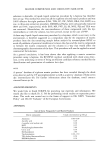
MATRIX COMPOUNDS AND OXIDATIVE HAIR DYES 233 column temperature was kept constant by means of the thermostat of an electrochemical detector (Decade, Antec Leyden, Leiden, The Netherlands). Data processing was done with the Data System 450-MT2/DAD series (Kontron Instruments S.P.A.). The column was a Merck Lichrospher RP 60 Select B, 250 x 4 mm, 5-1am particle size. In some cases, a UV-Vis spectrophotometer (Lambda 7 from Perkin Elmer) was used additionally with the above equipment. CHEMICALS L-Ascorbic acid sodium salt (NaAsc), 3,4-diaminobenzoic acid (3,4-daba), p- aminophenol (4-ap), m-aminophenol (3-ap), 0-aminophenol (2-ap), 2,4-diaminophenol (2,4-dap), 2,4-diaminophenol HC1 (2,4-daph), 4-amino-m-cresol (4-a-3-mp), 2-amino- p-cresol (2-a-4-mp), 6-amino-m-cresol (2-a-5-mp), 5-amino-0-cresol (4-a-2-ht), 2-amino-5-nitrophenol (2-a-5-np), 2-amino-4-nitrophenol (2-a-4-np), N,N-diethyl-m- aminophenol (3-deap), p-phenylenediamine (1,4-pd), m-phenylenediamine (1,3-pd), 0- phenylenediamine (1,2-pd), 2-nitro-p-phenylenediamine (2-n-l,4-pd), 4-nitro-0- phenylenediamine (4-n-l,2-pd), 2-chloro-p-phenylenediamine sulfate (2-cl-l,4-pds), N- phenyl-p-phenylenediamine (4-adp), 4,4'-diaminodiphenylamine sulfate (4,4'-dadps), resorcinol (res), 4-chlororesorcinol (chlres), 4-hexylresorcinol (hres), p-anisidine (1,4-ad), 2,6-diaminopyridine (2,6-dap), 2-amino-3-hydroxypyridine (2-a-3-hp), 2-methylresor- cinol (2,6-dht), toluene-2,4-diamine (2,4-dat), toluene-3,4-diamine (3,4-dat), toluene- 2,5-diamine sulfate (2,5-dats), 1-naphtol (1-nap), 2-naphtol (2-nap), 1,6-naphtalenediol (1,6-dhnap), 2,3-naphtalenediol (2,3-dhnap), 2,7-naphtalenediol (2,7-dhnap), phloro- glucinol (phlg), pyrogallol (pg), hydroquinone (hq), pyrocatechol (pc), p- methylaminophenol sulfate (met), 2-methoxy-p-phenylenediamine sulfate (2,5-das), 3-tert-butyl-p-hydroxyanisole (3-tb-4-ha), 4-chloroaniline (4-cla), 3-methyl-l-phenyl-2- pyrazoline-5-one (3-m-l-p-2-p-5-o) were obtained from Fluka. p-Phenylenediamine sul- fate (1,4-pds), and m-phenylenediamine sulfate (1,3-pds) were kindly provided by "Les Colorants Wackherr," Saint-Ouen l'Aum6ne, France. Sodium tetraborate decahydrate (p.a.), acetic acid 95% (suprapure), ammonia 25% (suprapure), hydrochloric acid (0.1 M), oleic acid (OA) (p.a.), n-heptane (p.a.), isopropanol (p.a.), sodium sulfite (p.a.) (SS), and polyvinylpyrrolidon (PVP) were obtained from Merck. BHT (butylated hydroxy- toluene), methylparaben (MP), and lauryl sulfate (LS) were obtained from Sigma. Lauric diethanolamide (LDA), TEA-dodecylbenzenesulfonate (TDS), and Syntopon 8 D1 © (ethoxylated octyl phenol-EOP) were provided by Witco S.A. Triethanolamine (TEA) was obtained from Mobi-Lab bvba, Zutendaal, Belgium. DEDM-hydantoin (DMDM), dimethicone copolyol (DC), nonoxynol-12 (NOL), and polyquaternium-11 (PQ) were kindly provided by "Keuringsdienst van Waren," Enschede, The Netherlands. n- Nonylamine 98% (NNO) was obtained from Janssen Chimica, and Oranex HT © (ORA) was provided by Spinnrad GmbH, Gelsenkirchen, Germany. Cetrimonium chloride (CC) and methanol (HPLC quality) were obtained from Fluka. Pure water (18.2 Ml•/cm quality) used for the preparation of solutions was obtained from a MilliQ Plus 185 system (Millipore, Molsheim, France). PREPARATION OF REAGENTS Solvents and chromatographic mobile phase Buffer solution pH 8 (Soerensen buffer): 440 ml hydrochloric acid (0.1 N) and 2 g/1
Purchased for the exclusive use of nofirst nolast (unknown)
From: SCC Media Library & Resource Center (library.scconline.org)