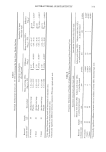
ANTIBACTERIAL SUBSTANTIVITY 373 •o tim o +1 +1 +1 +1 +l +1 v v v +1 +l +1 +1 +1 +1 • • • c'-,1 c'-,1

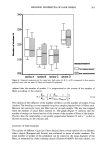
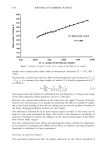
374 JOURNAL OF COSMETIC SCIENCE a placebo soap after repeated washing. Using this new modification, we were able to demonstrate significant inhibition of bacterial growth after inoculation even 24 hours after washing. Sufficient residual antimicrobial agent remained on the skin after 24 hours that individuals exhibited greater than a 0.5 log difference between the antibacterial soap and the vehicle soap two to five hours after contact with bacteria. This effect was observed in at least 80% of the subjects at each sampling time. It is known that colonization is a necessary precursor to the establishment of infection on the skin (11). An antimicrobial agent remaining on the skin can help prevent the colonization of potential pathogens such as S. a•re• by inhibiting their growth and survival. Since S. a•e•s can colonize the skin and cause skin infections, washing with an antibacterial soap with 1.5% TCC has the potential to aid in the prevention of these diseases. As in previous studies (8-10), TCC effectively inhibited the growth ofS. a•re•s in this study. The results presented here suggest a method of great utility to evaluate the antimicrobial substantivity or residual efficacy of antibacterial soaps under simulated use conditions. As an extension of the method described by Aly and Maibach (8) and Finkey et al. (9), this improved method permits the assessment of substantivity up to 24 hours after washing. The Hill Top Chambers © provide consistent, reliable conditions that are optimal for bacterial survival and growth on the skin, contributing to reproducible results. With minimal changes, the method is amenable to evaluating various product forms such as liquid soaps, shower gels, and hand sanitizers or to evaluating the efficacy of personal cleansing products against other organisms such as Escherichia coil Further work is needed with products containing other antimicrobial agents to establish the utility of the method for evaluation of a broad range of products. ACKNOWLEDGMENTS The authors wish to thank Dr. Raza Aly, Department of Dermatology, University of California School of Medicine, San Francisco, California, for his extensive and valuable technical guidance in the development of this method. REFERENCES (1) J. Leyden and A.M. Kligman, "Antimicrobials," in Safety and Efficacy of Topical Drugs and Cosmetics, A.M. Kligman and J.J. Leyden, Eds. (Grune & Stratton, New York, 1982), pp. 289-309. (2) P. Williamson and A.M. Kligman, A new method for the quantitative investigation of cutaneous bacteria, J. Invest. Dermatol., 45,498-503 (1965). (3) S. N. Cohen, "Treatment of Cutaneous Staphylococcal and Streptococcal Infections," in Skin Microbi- ology: Relevance to Clinical Infection, H. I. Maibach and R. Aly, Eds. (Springer-Verlag, New York, 1981), pp. 329-332. (4) W. C. Noble, "Staphylococci as Pathogens," in The Skin Microflora and Microbial Skin Disease, W. C. Noble, Ed. (Cambridge University Press, Cambridge, U.K., 1992), pp. 153-172. (5) R. N. Michaud, M. B. McGrath, and W. A. Goss, Application of a gloved hand model for multipa- rameter measurements of skin-degerming activity, J. Clin. Micros., 3, 406-413 (1976). (6) M. Rotter, W. Kohler, and G. Wewalka, Povidone-iodine and chlorhexidine gluconate containing detergents for disinfection of hands, J. Hosp. Inject., 1, 149-158 (1980). (7) A. R. Cade, A method for testing degerming efficiency of hexachlorophene soaps,J. Soc Cosmet. Chem., 2, 281-290 (1951).
Purchased for the exclusive use of nofirst nolast (unknown)
From: SCC Media Library & Resource Center (library.scconline.org)