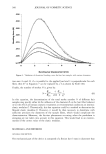
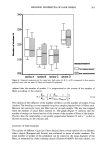
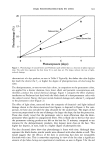
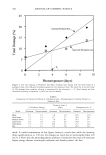
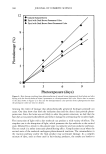
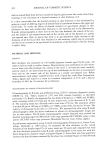
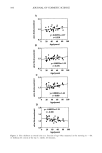
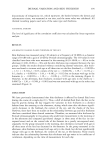
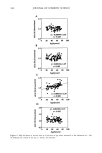
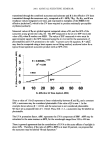
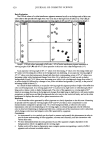
386 JOURNAL OF COSMETIC SCIENCE 12 9 6 ß Undyed Natural Brown ß Dyed with Dark Brown Permanent Color ß Dyed with Dark Brown Demi-Permanent Color i i 0 3 6 9 Photoexposure (days) Figure 6. Hair damage resulting from photoirradiation of natural brown (pigmented) hair before and after dyeing with the brown shades of either a permanent or a demipermanent hair color. Notice that in contrast to the data shown in Figure 4, in this case the demipermanent color provides better photoprotection than the permanent color (see text for details). limiting the extent of damage that photochemically generated hydrogen peroxide can cause. Our data show that both the oxidation dyes and the direct dyes provide photo- protection. Since the latter are not likely to alter the protein structure, we feel that the hair dyes act as passive photofilters and reduce damage by attenuating the incident light. The interaction of light with a dye molecule can produce a wide variety of effects. The simplest case is the absorption of light, which promotes the dye molecule to the excited state, followed by a return to the ground state via radiative and non-radiative pathways. The net result is a rather innocuous photofiltering effect. Complications occur when the excited state of the molecule undergoes photochemical reactions. The intermediates in the reaction pathway and/or the final product may accentuate damage. In a complex mixture of dyes, such as those used in hair-dyeing products, the results are harder to

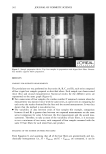
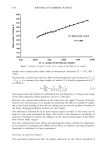
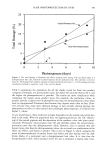
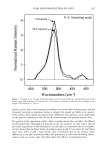
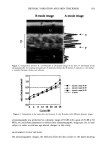
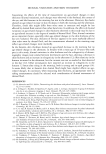
HAIR PHOTOPROTECTION BY DYES 387 .4- z i Unexposed • 96 h exposed S--S Stretching mode 600 550 500 450 400 Wavenumbers (cm Figure 7. Changes in the intensity of the band associated with the disulfide (S--S) stretching mode of hair keratin upon photo-exposure of Piedmont hair. The amount of damage is calculated from changes in the height of this band at ca. 510 cm -•. predict apriori. Since most commercial products use similar dyes and precursors, and the chemistry involved in oxidation dyeing is similar, the results are likely to be qualita- tively similar. Some subtle and quantitative differences may, however, exist, depending on the precise combination and the use of certain unique and product-specific dyes. The pattern of dye deposition within a fiber is another factor that can affect the efficacy of photoprotection. Although this depends on the dye structure to some extent, the pH and other ingredients in the formulation can also play an important role. For example, we have found that the black shades of oxidation dyes at pH 9.5 penetrate the hair fibers quite well, while at pH 7 most of the color is localized close to the surface. These differences in the dye distribution affect the appearance of color and the fading charac- teristics and, as a result, they will likely affect the efficacy of photoprotection.
Purchased for the exclusive use of nofirst nolast (unknown)
From: SCC Media Library & Resource Center (library.scconline.org)