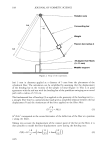
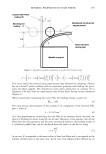
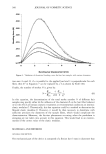
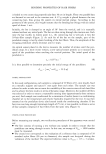
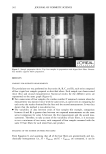
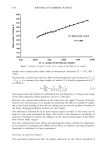
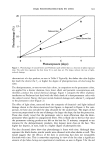
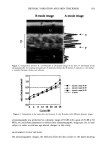
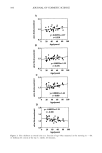
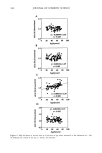
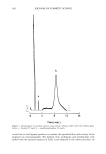
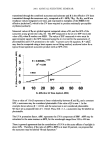
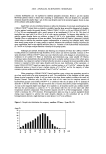
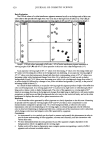
DIURNAL VARIATION AND SKIN THICKNESS 395 discontinuity of echogenicity (2), which represents the border between the dermis and subcutaneous tissue, was measured at ten sites, and the mean value was calculated. All thermal recording papers used were of the same type and thickness. STATISTICAL ANALYSIS The level of significance of the correlation coefficient was calculated by linear regression analysis. RESULTS AGE-RELATED CHANGES IN SKIN THICKNESS OF THE FACE Skin thickness was measured using 130 subjects at a frequency of 30 MHz in a dynamic range of 30 dB with a gain of 20 dB by B-mode ultrasonography. The 130 subjects were classified into those who were measured in the morning (8:30-10:00, n = 40) or in the afternoon (14:00-16:00, n = 90), and the skin thickness was compared between the two groups. Unlike the results obtained without considering diurnal variations, skin thick- ness was found to increase with age at all three sites on the face (forehead: y = 0.00291x + 1.37, r -- 0.310, p 0.05 corners of the eye: y = 0.00229x + 1.39, r = 0.276, p 0.1 cheeks: y = 0.00381x + 1.44, r --- 0.483, p 0.02) but to decrease with age in the forearms (y = -0.00221x + 1.19, r = -0.308, p 0.05) in the morning (Figure 3). However, in the afternoon, skin thickness increased with age only in the cheeks (y --- 0.00672x + 1.30, r -- 0.508,p 0.001) and was not associated with age at the other sites examined (Figure 4). DISCUSSION We have previously demonstrated that skin thickness is affected by dermal fluid even during the course of a single day (11). Thus, a shift of dermal fluid from the face to the legs by gravity during the day triggers the variation in skin thickness in a distinct fashion from the morning to the afternoon, during which time skin thickness signifi- cantly decreases in the forehead, the corners of the eye, and the cheeks of the face. However, there have been no studies on the relationship between age and skin thickness that have considered those diurnal variations. Therefore, we measured skin thickness by B-mode ultrasonography in two groups who underwent measurement in the morning or in the afternoon and compared age-related changes in three areas of the face (as sun- exposed areas) and on the ventral side of the forearm (as a poorly sun-exposed area), separately. In the group measured in the morning, skin thickness increased with age in all three areas of the face but decreased in the forearms. In the group measured in the afternoon, skin thickness increased with age only in the cheek, but did not significantly change with age in the forehead, the corners of the eye, or the forearms. These results indicate that the relationship between skin thickness and age varies in its coefficient of correlation, depending on the time of measurement for each day.

396 JOURNAL OF COSMETIC SCIENCE A 2.5 1.5 0.5 0 B 2.5 a 1.5 o•,• 0.5 0 c 0.5 o 1.5' 1.0 0ø, o y= -0.00099x+1.56 r= -0.105 20 40 60 80 100 Age(years) y= 0.00120x+1.49 r=- 0.105 2O 4O 6O 8O 100 Age(years) ß ' ß •" ß ß ß y= 0.00672x+1.30 r= 0.508 20 40 60 80 100 Age(years) y= -0.00118x+l.ll r=- -0.161 20 40 60 80 100 Age(years) Figure 4. Skin thickness at several sites as a function of age when measured in the afternoon (n = 90). A: forehead. B: corners of the eye. C: cheeks. D: forearms.
Purchased for the exclusive use of nofirst nolast (unknown)
From: SCC Media Library & Resource Center (library.scconline.org)