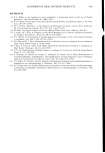
ANTIBACTERIAL SUBSTANTIVITY 3 7 5 (8) R. Aly and H. I. Maibach, In vivo methods for testing topical antimicrobial agents,J. Soc. Cosmet. Chem., 32, 317-323 (1981). (9) M. B. Finkey, N. C. Corbin, L. B. Aust, R. Aly, and H. I. Maibach, In vivo effect of antimicrobial soap bars containing 1.5 % and 0.8% trichlorocarbanilide against two strains of pathogenic bacteria,J. Soc. Cosmet. Chem., 35, 351-355 (1984). (10) D. D. Scala, G. E. Fischler, B. M. Morrison, R. Aly, and H. I. Maibach, Evaluation ofantibacterial bar soaps containing triclocarban, American Academy of Dermatology, poster presentation, 1995 pro- ceedings. (11) J. S. Maddox, J.C. Ware, and H.C. Dillon, The natural history of streptococcal skin infection: Prevention with topical antibiotics,J. Am. Acad. Dermatol., 13, 207-213 (1985).

j. Cosmet. sci., 52, 377-389 (November/December 2001) Hair photoprotection by dyes CHANDRA M. PANDE, LINDA ALBRECHT, and BRIAN YANG, Clairol Inc., 2 Blachley Road, Stamford, CT 06922. Accepted for publication August 15, 2001. Synopsis We have found tinat hair dyes protect hair against photodamage. The efficacy of photoprotection of dye products has been measured by monitoring the tensile strength of hair fibers and the integrity of the disulfide bonds in the fibers. Although the hair dyed with permanent dye products are initially weakened due to oxidative chemical damage, they also show a slower rate of degradation upon photoirradiation, compared to the undyed hair. Thus, a less appreciated benefit of using hair colors is their ability to provide protection against sun damage. INTRODUCTION Human hair has a complex structure, with at least three distinct phases. The cuticle cells form a hard outer protective barrier for the cortical cells within. The latter contain fibrillar proteins, which provide mechanical strength to the fiber, and melanin pigments responsible for color, embedded in an amorphous protein matrix. Occasionally, the fibers also contain a medulla, located in the center of the fiber, whose function is not well understood. The dry mass of hair fibers is primarily made up of keratin proteins, with small contribution from lipids and melanin pigments. Under ambient conditions of 25øC and 50% RH, hair binds ca. 10% water by weight (1-3). The natural hair color originates from a combination of absorption and scattering of the incident light by the pigment granules that are distributed within the cortical cells. Exposure of hair fibers to sunlight, or simulated solar light, leads to bleaching of the color, as well as damage to the fiber itself. At the molecular level the fiber damage involves the amino acids, constituting the proteins, and the lipids (3-9). One of the manifestations of this structural damage is a loss in the mechanical strength of the affected fibers (8). It has been shown that the mechanical strength of the unpigmented fibers is compromised at a rate that is significantly faster than that seen for the pig- mented fibers (9). It has also been shown that the rate of scission of the cystine disulfide bonds due to weathering is also faster for the unpigmented fibers, compared to the pigmented fibers (10). This correlation between the loss in the mechanical strength of the fibers and the scission of the disulfide bonds is not surprising since the latter contribute significantly to the wet mechanical strength of hair fibers (1, and references cited therein). 377
Purchased for the exclusive use of nofirst nolast (unknown)
From: SCC Media Library & Resource Center (library.scconline.org)