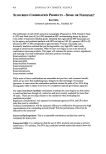
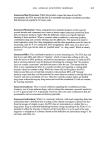
2001 ANNUAL SCIENTIFIC SEMINAR 423 HURDLE TECHNOLOGY: PRINCIPLES FOR FORMULATING PRESERVATIVE-FREE COSMETICS Jon J. Kabara, Ph.D. Technology Exchange, Inc., PO Box 339, Galena, IL 61036 Introduction Opportunities exist for innovative formulators who want to look beyond current technologies and apply new principles of preservation to the development of novel preservative-free and/or self- preserving products. The application of Hurdle Technology to cosmetic and drug preservation is critical to making such safe and effective products. This technology combines a number of preservative factors (hurdles) that the microorganism(s) in question are not able to survive ("jump over'). Using an array of inhibiting factors (water activity, pH, surfactants, fatty acids and esters, packaging, etc.) allows less extreme use of any particular preservative treatment, especially classical preservatives, to control microbial growth. Such products can be labeled "preservative-free" or more accurately "self-preserving". Water Activity (a,•) • Living organisms have water as an absolute requirement for survival and growth. Limiting the availability of water can usually carry out control of microbial growth. Table 1 shows the lowest values permitting growth of microorganisms important in contaminated cosmetic products. Table 1. Lowest a,• Permitting Growth of Microorganism. Class of Microorganism Minimum a,, Value Pseudomonads 0.97 Coliforms 0.95 Staphylococcus aureus 0.86 Yeasts 0.88 Molds 0.80 Surfactants in Self-Preserving Formulas 2 The primary use of surfactants is as detergents, foaming or wetting agents, solubilizers or dispersants. Surfactants also act as co-emulsifiers because they are partly water soluble and partly oil soluble. This hydrophilic-lipophilic balance (HLB) is a function of specific structure and temperature. Surfactants are classified as anionic, cationic or nonionic. When present in aqueous solution at concentrations above their critical micelie concentration (CMC) surfactants can form micelies. Preservatives absorbed or enclosed in micelies have decreased preservative efficacy due to a reduction in preservative concentration. Surfactants on the other hand may help solubilize preservatives thereby making them more effective. 3 Fatty Acids and Esters as Multifunctional Components Fatty acids have a long history of uses as antimicrobial and anti-insecticidal agents. Monoglycerides which are esters of fatty acids have multifunctioal activity. Highly purified monoglyceride (90%monoester) behaves differently than the usual commercial grade. Distilled monoglycerides form emulsions which are more stable and more easily preserved emulsions. Where the fatty acid is lauric, an added benefit of germicidal action and emolliency has been found.

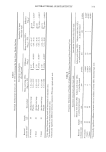
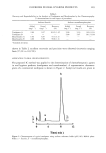
424 JOURNAL OF COSMETIC SCIENCE Table 2 Comparison of the Antifungal Activities of Fatty Acid Esters and Some Commonly Used Preservatives Food additives Minimum inhibitory concentration (lag/ml) Aspergillus Candida Saccharomyces Niger utilis cerevisiae Monocaprin 123 123 123 Monolaurin 137 69 137 Butyl-p-hydroxybenzoate 200 200 200 Sodium lauryl sulfate 100 400 100 Sorbic acid 1000 1000 1000 Dehydroacetic acid 100 200 200 4 Biomimetic Phospholipds Phospholipds are another example of emulsifiers which can have special properties. While some phospholipids 0ecithin) can inactive preservatives, lipids which mimic structure and function of phospholipids have been prepared that have antimicrobial activity. This new family ofphospholipids has been developed in which the arrangement of the phosphate and quaternary groupings has been reversed. Rather than interfering with preservative systems these biomimetic phospholipids display potent antimicrobial activity without showing significant toxicity or skin irritation effects. These new lipid derivatives are active against a wide spectrum of organisms and have minimum inhibitory concentrations (MIC) between 50 and 1250 ppm Antioxidants as Preservatives Although the primary function of antioxidants is to delay autoxidation of unsaturated lipids in products, they also show significant antimicrobial activity. BHA and TBHQ are the most effective antimicrobial of the phenolic antioxidants and are more active than the usual parabens. 6 Aroma Chemicals as Preservatives Spices and essential oils have long been used to prevent the microbial deterioration of products. The active principles in aromatic oils include alcohol, aldehydes, acids, phenols, esters, terpenes and polyphenols. Aroma chemicals are multifunctional so that their use in products should not only be based on the desired scent but also upon its inherent germicidal properties. Chelating Agents as Preservative Potentiators • Although EDTA and other chelating agents are considered weak biocides, their effects as biocide potentiators are significant. With their use gram-negative organisms tends to react more like a gram-positive organism and are easier to kill. The greatest potentiating effect is found on Pseudomonas sp. 8 Packaging & Product Preservation If the use of preservative-free or self-preserving formulas are to be realized, then the application of better protective packaging must be considered a hurdle. Some companies are already marketing products without preservatives in containers that can dispense product without contamination. 1-8 In J.J. Kabara and D.S. Orth(Eds.) Preservative-Free and Self preserving Cosmetic and Drugs. Marcell Dekker, Inc. New York, 1997,pp 45-73.
Purchased for the exclusive use of nofirst nolast (unknown)
From: SCC Media Library & Resource Center (library.scconline.org)