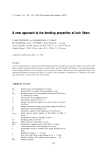
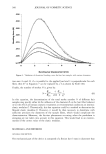
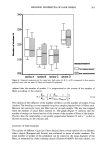
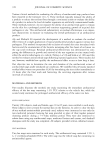
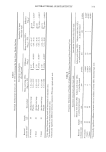
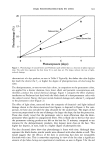
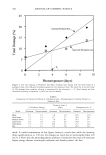
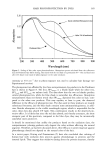
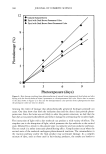
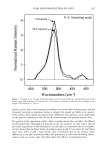
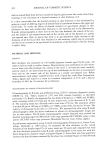
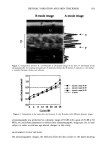
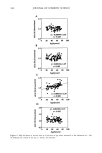
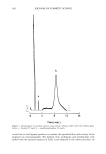
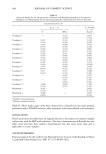
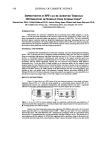
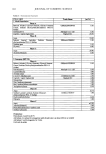
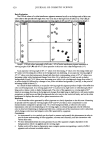
382 JOURNAL OF COSMETIC SCIENCE 25 20 15 10 Untreated Piedmont Hair..,x•. • [] Dyed with Permanent color I I I ! 0 2 4 6 8 10 Photoexposure (days) Figure 2. The total damage to Piedmont hair fibers resulting from dyeing with the black shade of a permanent hair color, followed by photo-exposure for the indicated times. The solid line is the best linear fit. The damage from oxidative coloring is represented by the intercept (t : 0). Total damage has been calculated according to equations 1 and 2 (see text for details). Table I. Comparison of Various Attributes of a Permanent and a Demipermanent Coloring Product on Piedmont Hair % Oxidative damage Crossover time, ' c (days) Photoprotection, % Shade Permanent Demipermanent Permanent Demipenmnent Permanent Demipermanent Black 5.7 2.3 3.8 3.0 62.9 35.8 Dark brown 7.2 5.4 6.7 5.7 39.6 36.1 Medium brown 7.4 4.1 7.8 6.1 34.3 25.7 Light brown 6.9 2.8 9.0 6.0 24.8 13.5 Dark blonde 7.9 3.3 10.0 5.5 27.2 24.1 Red 7.3 3.5 9.5 5.8 29.5 24.2 shade. A careful examination of this figure, however, reveals that while the intensity drops significantly at ca. 520 nm, the changes are much less at wavelengths below 420 nm. It is likely that the photodegradation products of oxidation dyes may still attenuate higher energy (shorter wavelength) radiation and thereby protect the hair.

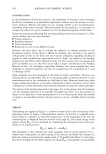
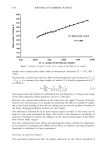
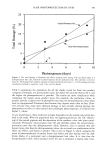
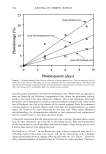
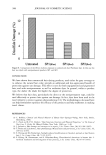
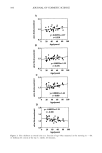
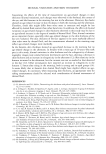
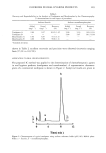
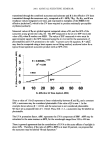
HAIR PHOTOPROTECTION BY DYES 383 25 2O 15 10 Undyed Piedmont Hair Dyed with Demipermanent I I I I 0 2 4 6 8 10 Photoexposure (days) Figure 3. The total damage to Piedmont hair fibers resulting from dyeing with the black shade of a demipermanent hair color, followed by photo-exposure for the indicated times. The solid line is the best linear fit. The damage from oxidative coloring is represented by the intercept (t: 0). Total damage has been calculated according to equations 1 and 2 (see text for details). Table I summarizes the parameters for all the shades tested for these two product categories. Generally, in a given product type, the darker the color the shorter the x•. and the higher the photoprotection it provides. The results are more complicated when comparing the results across product types. For example, the permanent colors, in general, provide a higher level of photoprotection than the demipermanent colors when used on unpigmented (Piedmont) hair because they deposit more color on hair. How- ever, because they cause more chemical damage to hair initially (during dyeing), the photoprotective effect is only realized after prolonged photo-exposure, as evidenced by higher % values. As one would expect, these results are strongly dependent on the natural color of the hair used in the study. With the pigmented hair, two opposing processes, the "lift" (bleach- ing) of the natural pigment and the deposition of the synthetic color, take place simul- taneously. Permanent colors produce more lift and therefore reduce the natural photo- protection more than the demipermanent colors. However, since in general they also deposit more color than the demipermanent colors, the net result is a combination of the above two effects, and harder to predict. This is seen in Figure 6, which compares the result of photoirradiation of natural brown hair before and after dyeing with the dark brown shades of a permanent and a demipermanent hair color. It is clear that the demipermanent color, which produces little lift and is primarily a deposit-only color,
Purchased for the exclusive use of nofirst nolast (unknown)
From: SCC Media Library & Resource Center (library.scconline.org)