J. Cosmet. Sci., 55, 149-155 (March/April 2004) Normal human epidermal keratinocytes treated with 7-dehydrocholesterol express increased levels of heat shock protein THOMAS MAMMONE, NEELAM MUIZZUDDIN, EARL GOYARTS, DAVID GAN, PAOLO GIACOMONI, KEN MARENUS, and DANIEL MAES, Estee Lauder Laboratories, 125 Pinelawn Road, Melville, NY 11747. Accepted for publication January 26, 2004. Synopsis Human skin, and its isolated cells, respond to insults with a variety of repair and protective mechanisms. One such mechanism is the production of heat shock proteins (HSPs). Heat shock proteins help the other cellular proteins fold correctly into their active three-dimensional structures. Therefore, they can enhance the survival of cells under harsh, denaturing conditions. In order to develop a means of promoting the heat shock response to prepare the skin to withstand insult, we are investigating materials that appear to protect the skin biologically. One such material is vitamin D3 and its precursors. We have observed that keratinocytes treated with 7-dehydrocholesterol (7-DHC), a precursor of vitamin D3, have increased levels of protein and mRNA for heat shock proteins. In addition, we observed that topically applied 7-DHC increases the minimal dose of UVB required to induce erythema. These data suggest that 7-DHC can induce heat shock proteins in skin keratinocytes and that they will be more resistant to UVB insult. INTRODUCTION Mammalian cells have a variety of protection and repair systems that enhance the survival of their cells under stressful environments. These include DNA repair, antioxi dants, and heat shock proteins. Heat shock proteins (HSPs) are a family of conserved proteins that can be induced in all organisms upon exposure to stress conditions such as high temperatures, UVA irradiation, and oxidative insult. Experimental evidence has shown that HSP proteins can protect cells from a variety of stress-induced damage (1-7), including UVB. Repeated heat shock and heat shock protein induction has even been shown to delay aging of skin fibroblasts (8). In addition to environmental insults, a number of chemical agents have been shown to induce cellular expression of heat shock proteins. This list includes sodium arsenite, cadmium salts, sodium salicylate, and alcohols (9-11). 1,25-Dihydroxyvitamin D3 has 149

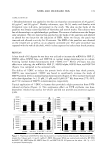
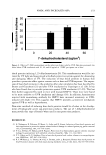
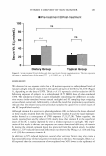
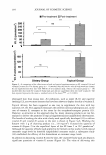
150 JOURNAL OF COSMETIC SCIENCE also been shown to increase heat shock protein expression in mammalian cells (12,13). In cell culture systems, 1,25-dihydroxyvitamin D3 has been reported to increase kera tinocyte differentiation (14,15). 1,25 Dihydroxyvitamin D3 has also been shown to increase p53 and c-fos expression in keratinocytes (16). Kitano et al. (17) observed a decrease in keratinocyte cell growth with 1,25-dihydroxyvitamin D3. However, others have reported that 1,25-dihydroxyvitamin D3 increased cell growth in normal keratinocyte proliferation (18). This contradiction may be due to the biphasic dose response effects of 1,25-dihydroxyvitamin D3 on keratinocyte proliferation (19). These results suggest that 1,25-dihydroxyvitamin D3, and possibly its precursor 7-de hydrocholesterol, may induce a stress response in keratinocytes. The present investiga tion was undertaken to determine if 7-dehydrocholesterol induces heat shock proteins and if this induction results in any clinical benefit when 7-dehydrocholesterol (7-DHC) is applied topically to human skin. MATERIALS AND METHODS Normal human epidermal keratinocytes (NHEK Clonetics) were grown in KBM media (CloneticsY supplemented with hydrocortisone (5 x 10- 4 mg/ml), epidermal growth factor (1 x 10- 7 mg/ml), insulin (5 x 10- 3 mg/ml), bovine pituitary extract (2 ml), and GA-1000 (antibiotic) (0.5 ml). NHEKs, approximately 80% confluent, were treated with 10- 6 M 7-dihydrocholesterol. Normal human epidermal keratinocytes (NHEK) were grown in media supplemented with human keratinocyte growth serum (HKGS). Total RNA was recovered with TRizol Reagent (Life Technologies) and treated with Dnase to remove any trace DNA. Total RNA levels were quantitated by fluorescent staining with RiboGreen (Molecular Probes) and by gel electrophoresis on 1 % agarose. The cDNA was prepared with the RETROscript kit (Ambion). The external standard was cyclophilin (Ambion) and the internal standard was G6PDH. cDNA was heated for ten minutes prior to amplification and was amplified with T aq polymerase (DNA Master SYBR Green I, Roche Molecular Biochemicals) in 20-µl reactions containing the fol lowing amounts of cDNA as template: 1 µg for cyclophilin, 0.5 µg for G6PDH, and 5 µg for HSP70A, HSP90 alpha, HSP90 beta, and HSP27. PROTEIN LEVELS OF HSP70 NHEK were grown to 75% confluency in six-well plates before being treated with different doses of 7-DHC (in EtOH). These treatments were carried out for 24 hours. Following the treatment, the keratinocytes were harvested by trypsination and centrifu gation. The cells were then resuspended in lysing buffer (150 mmol/1 NaCl, 50 mmol/1 Tris buffer pH 8.0, 1 % NP-40) and sonicated for three one-minute intervals with a cone attachment on a model W-225 sonicator (Heat Systems-Ultrasonics, Inc., Farmingdale, NY). The HSP70 ELISA kit from StressGen (Victoria, Canada) was used to quantify the levels of HSP70 in the NHEK supernatants. Hyperosmotic stress with sorbitol was used as a positive control to demonstrate that heat shock protein is induced in these cells (33).
Purchased for the exclusive use of nofirst nolast (unknown)
From: SCC Media Library & Resource Center (library.scconline.org)