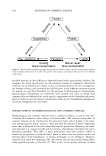
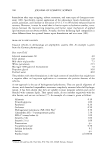
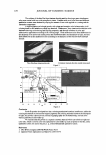
230 JOURNAL OF COSMETIC SCIENCE IN VITRO PREDICTION OF SUNSCREENS' PFA VALUES Olga V. Dueva, Ph.D., James SaNoueira, Ovidiu Romanoschi, Ph.D. and Barbara Donovan Playtex Products, Inc., Allendale, NJ 07401 Introduction Effective protection against the UV A associated with cumulative skin damage is an important element of sunscreen and anti-aging cosmetic formulations. Protection Factor A (PF A) - JCIA method based on persistent pigment darkening (PPD) [I], can measure UVA protection of sunscreens. PPD is a stable skin response, which is linearly dependent on the dose of UVA irradiation [2,3]. PFA is determined from the ratio of the sunscreen-protected minimal PPD to the unprotected PPD, evaluated 2-4 hrs after UVA exposure. The time of UV A exposure is based, according to the test protocol [1], on a sunscreen 's estimated PF A value. Thus, correct in vitro prediction of a sunscreen's PFA is essential for the accuracy of in vivo tests. Method Description. The proposed in vitro method for the prediction of a sunscreen's PF A values was developed and �valuated in 2001-2003 by integrating and optimizing methodologies described by Chardon A. et al., Moya! D. et al. [2,3], and Wendel V. et al. [4]. In this method we have considered and addressed the following issues: PF A potential of a sunscreen is defined by its' attenuation in the UV A region biological effects ofUVAI (340-400 nm) and UVA2 (320-340 nm) on skin are very different [5,6] PPD action spectrum is a reliable endogenous dosimeter for UV A irradiation that enters the skin [2,3] substrate, application dose and statistical approach are important for the accuracy of in vitro measurements. In order to obtain a prediction of a sunscreen 's PF A the following steps are recommended. � Determine the in vivo SPF for the sunscreen on at least five panelists. Step 2. Determine the in vitro SPF of the sunscreen based on its absorbance spectrum in the UV region [7] utilizing Vitro skin as substrate and application dose of 2 mg/sq. cm [8]. The irradiance spectrum of the lamp source should reflect the one that is used by the testing lab for PF A tests. Equation 1: SPF in vivo= SPF in vitro= -40-0-nm�� 2 90 ="= m ____ _ JE(1.)· S(1.)/10[A(,-}c] 290nm Where: E(,i) = irradianceat wavelergth ,l of the light spectrum used S(,1) = effectiveress of a biological endpoint at wavelergth A Note: for the SPF it is erythemaaction spectrum A(,1) = absorbance C = constant factor for theadjustmentof the spectrum Step 3. If in vitro SPF differs from the in vivo SPF, an adjustment of the absorbance spectrum is needed "to nonnalize" it to the SPF value obtained in vivo (Eq. 1 ). This eliminates the impact of the thickness of the applied layer on the absorbance spectrum of a sunscreen. During this adjustment only the height of the sunscreens' absorbance spectrum is corrected to correspond to its' in vivo SPF and the configuration of the spectrum that depends on the composition of actives is not affected. This "normalization" also takes into account the implications of possible photo-instability of the sunscreen during its' PF A study [9]. If in vitro SPF is equal to in vivo SPF, no adjustment is needed and the integration area of sunscreens' absorbance spectrum in the UV A 1 region "as is" can be used for in vitro estimation of its' PF A (Eq. 2). Equation 2: Step 4. Calculate in vitro PF A (Eq.2) 400 nm using: the integration area of the f E(A)·S(A) "normalized" spectrum of a sunscreen in PFA - PPD in vitro= 400 n m 34 o n m the UV A 1 region, the irradiation spectrum J E(A)·S(A)VIO[A(1.}c] of the 150 wt xenon arc lamp with 2 mm 340nm Where: E(),} = irradiance at wavelength A of the light spectrum used S{),. J = effectiveness of a biological endpoint at wavelength A Note : for the PPD prediction it is PPD action spectrum A{A)= absorbance C = constant factor for the adjustment of the spectrum as in Eq. I. standard deviations) represents the predicted PFA value. WG355 and I mm UG 11 filters, and the PPD action spectrum. Step 2 to Step 4 are repeated at least five times. From the set of in vitro PF As, the average and the standard deviation are calculated. The lower bound (average minus three

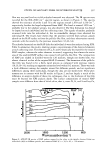
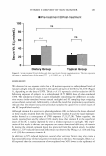
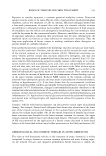
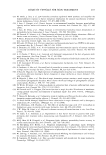
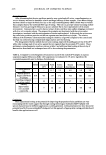
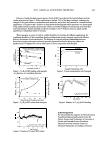
2003 ANNUAL SCIENTIFIC MEETING 231 Experimental Results The proposed method has been evaluated in PF A studies of fifteen sunscreens that contained various combinations of FDA approved organic and inorganic actives. Estimated in vitro PFA values for tested sunscreens were calculated by simultaneously utilizing 2 integration areas (UV A 1 only and UVAl&UVA2) and compared with in vivo results. It was found (Graph) that the integration area of UV Al provides superior in vitro/in vivo con-elation versus the integration area of UVAl&UVA2. The comparison of the in vitro PF A values with the perfect fit (predicted in vitro = measured in vivo) indicated that the prediction based on the integration area of UV Al only, gives a better fit (sum of squared residuals is 24.97) than the one based on both UV Al and UVA2 (sum of squared residuals is 162.50). These findings were also confirmed by the retrospective analysis of the results from the CTFA round-robin study of seven sunscreen compositions. Graph. In vitro/In vivo Correlation 22 A ·� 17 A 12 c.. g ..':: �/ 2 2 4 12 14 16 In Vivo PFA (PPD, JCIA) • In Vitro Based on UVA! A In Vitro Based on UVA] & UVA2 ·~ 0-· In Vivo Perfect Fit Conclusion The proposed method for in vitro prediction of a sunscreen's PFA can be successfully employed as a preliminary step before human tests. It provides excellent in vitro/in vivo correlation, saves time and resources and serves as an optimization tool for sunscreen development and evaluation. This method is equally applicable to sunscreens with low, medium and high PF A values and a wide range of actives. Our findings are in agreement with the existing knowledge regarding the effects of UV A 1 and UV A2 wavelength bands on skin. A similar approach may be applied for in vitro determination of the sunscreen's protection potential against other types of UV damage by utilizing various action spectra, emission spectrum of the specific light source and integration areas that are relevant to the test conditions and skin biological response. References I. JC/A Technical Bulletin. JC/A Measurement Standard for UVA Protection Efficacy, Issued Nov. 21 (1995) 2. Chardon A, Moya! D, and Hourseau C. In: Lowe NJ, Shaath NA, Pathak MA eds. Sunscreens: de1·elopment, evaluation and regulatory aspects. New York: Marcel Dekker, 559-582 (/997) 3. Moyal D, Chardon A and Kollias N. Photodermatol Photoi111111unol Photomed, 16, 250-255 (2000) 4. Wendel V, Klette E, and Gers-Barlag H. SOWF, 127 (IO), 12-30 (2001) 5. Kligman LH and Kligman AM. In: Lowe NJ, Shaath NA, Pathak MA eds. Sunscreens: development, evaluation and regulato,y aspects. New York: Marcel Dekker, 117-137 (/997) 6. http://www. bccancer. bc.ca/H PI/Education/CM ESki nCancer/PreExami nation Reading/_Carcinogenesis.htm 7. http://www.labsphere.com/tech info/docs/SPF of Sunscreens.pdf 8. Sottery J. IMS S�minar Series (2002) - - 9. DGK -Task Force "Sun Protection" IFSCC Magazine, vol. 5, No 3, 161-166 (2002) Acknowledgements We are very grateful for the support of our colleagues at Playtex Products, Inc., especially Mike Gallagher, Dr. Paul Siracusa and Evan Hutchison. We would like to thank Dr. John Sottery ofIMS and Dr. Robert M. Sayre of RPTL for valuable discussions.
Purchased for the exclusive use of nofirst nolast (unknown)
From: SCC Media Library & Resource Center (library.scconline.org)