158 JOURNAL OF COSMETIC SCIENCE stripped wound model. Tape stripping using various types of adhesive tapes has been used in the literature to remove the stratum corneum at different depths (2-6). The degree of stratum corneum damage after stripping has often been determined using transepidermal water loss (TEWL) measurements (3,6,7). We adapted the wound model from Bashir et al. (7), where the authors used 40 strippings of Transpore® tape to disrupt the stratum corneum barrier. MATERIALS AND METHODS This was a one-day, double-blind, randomized study evaluating a first-aid wipe formu lation for sting/burn potential on induced superficial wounds. The study followed a direct comparison test design of four test formulations. The clinical investigation was approved by an institutional review board, and the informed consent of the subjects was obtained prior to initiation of the investigation. SUBJECT SELECTION Twenty-four healthy subjects (18 females, six males), aged 19-48 (mean age 34), com pleted the study. The population consisted of 22 Caucasians, one Hispanic, and one Asian. The main criteria for exclusion were: (a) allergy to first-aid preparations or to local anesthetics, (b) a tendency toward forming keloids, (c) dark pigmentation, and (d) hairy volar forearms. TAPE-STRIP PREP ARA TI ON Transpore® tape (3M, St. Paul, MN) was used to create superficial wounds (7). Prior to the tape-stripping procedure, the individual tape strips were precut to approximately 7 .0 x 1.5 cm and were then applied to release paper for storage. TEST SITES AND WOUNDING PROCEDURE Four test sites were identified in each subject, two on each volar forearm. Each test site (2 x 3 cm) was mapped on the skin with a permanent marker. The test sites were located at least 5 cm from the wrist, 3 cm from the antecubital fossa, and 3 cm from each other. Transepidermal water loss (TEWL) was measured (g/m2/h) by means of a ServoMed EPl evaporimeter (ServoMed AB, Stockholm, Sweden) under standard environmental con ditions (8). TEWL was measured at two timepoints: (a) at baseline prior to wounding and (b) after wounding, to verify skin barrier damage. One probe-covering metal plate was dedicated to each subject. Superficial wounds were created by sequential removal of stratum corneum layers using Transpore® tape. Individual tape strips were placed on the test site within the black marks, rubbed firmly, and removed with a quick stroke. This was repeated in alternate directions until a clear glistening layer was visualized upon removal of the strip or after a total of 40 times (7), whichever came first. Once the glistening layer was reached, or the first 40 strips had been removed, TEWL was measured. The criterion for wound standardization was the achievement of a TEWL value in the range of 30-70 g/m2/h. If

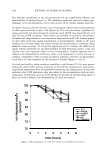
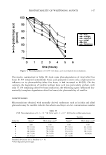
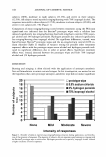
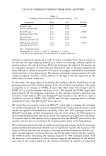
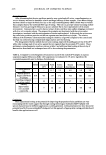
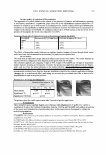
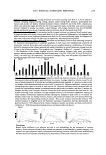
LACK OF BURNING/STINGING FROM FIRST-AID WIPES 159 such a value was not reached, an additional five to ten strippings were performed and the TEWL was remeasured. This continued until a desirable TEWL was reached. Wounding was staggered for each test site. After wounding at the first site was com pleted, the wound was tested with the assigned study formulation. Stripping on the following wound started approximately five minutes from the application of the test formulation to the prior wound, so that there was an interval of at least ten minutes between the sensory assessment of the two wounds. FORMULATIONS AND STINGING/BURNING ASSESSMENT The test article prototype was a first-aid wipe with a cellulose base containing 1.0% pramoxine HCL, 0.13% benzalkonium chloride (Bactine®, Bayer, Morristown, NJ). Three controls were also included: (a) 0.9% sodium chloride (generic, USP) on a cellulose base wipe, used as the no-sting/no-burn control (b) 3% hydrogen peroxide (generic, USP) on a non-woven Webril® cotton pad, used as a first-aid sting/burn control and (c) 70% isopropyl alcohol (generic, USP) on a non-woven Webril® cotton pad, used as a second sting/burn control. This positive control was included to assess the sensory response capability of the subjects. To assure the use of clean cotton pads during the procedure, we used the Webril® pads housed in a 25-mm Hill Top Chamber (Hill Top Research, Cincinnati, OH) and removed them by means of forceps. All wipes and pads were cut to approximately the same size (2 x 2 cm) and were saturated with the assigned test formulation. The prototype wipe was already presatu rated and was cut to match the size of the other wipes. Saturation of the wipes or pads was conducted just prior to application. Each test formulation was applied to one of the four tape-stripped wounds immediately after wounding and was left on the site for 15 seconds. The application was randomized and double-blinded so that neither the applicator-technician nor the subject knew which study formulation was used. During the 15-second application, the subjects were asked to report if they experienced a stinging or burning sensation, and if so, its intensity. The stinging/burning responses were categorized as follows: 0 = none, 1 = mild, 2 = moderate, and 3 = severe. A subject's data was excluded from the analysis if he/she reported a score of O on all the test sites, since this implied a lack of sensory responses also to 70% isopropyl alcohol. The statistical design was a four-period crossover (William's Design) study (9). Wil coxon's signed-rank test was used to compare the test articles. Analyses appropriate for a two-period crossover were conducted with the prototype Bactine® group versus the alcohol control product and the hydrogen peroxide product to test for possible order (treatment sequence) effects. All hypothesis testing was two-sided at the alpha = 0.05 level. RESULTS Six subjects (25%) reported mild burning and stinging with the Bactine® prototype wipes. Seven subjects (29.2%) reported mild burning and stinging with the 0.9% sodium chloride. With 3% hydrogen peroxide, the stinging/burning was mild in twelve
Purchased for the exclusive use of nofirst nolast (unknown)
From: SCC Media Library & Resource Center (library.scconline.org)