]. Cosmet. Sci.J 55, 189-205 (March/April 2004) Clinical effects of cosmetic vehicles on skin JOACHIM W. FLUHR and LUIGI RIGANO, Department of Dermatology and Allergology, Friedrich Schiller University, Jena, Germany U. W.F.), and ISPE Research Institute, Milan, Italy (L.R.). Accepted for publication January 26, 2004. INTRODUCTION Cosmetic vehicles play a central role in topical treatments in dermatology, with their protective, integrative, and problem-solving effects being of increasing interest. Differ ent therapeutic and physiologic functions of cosmetic vehicles are well recognized, and a review of such has recently been published (1). Research has shown that the compo sition of cosmetic vehicles is of great importance for the specific treatment of some skin diseases. However, the role of vehicles in drug delivery systems for different skin diseases has not yet been studied in detail. In this review a number of features of cosmetic vehicles will be presented, including vehicle composition, classification, role in thera peutics, and potential mechanisms of vehicle function, including their role(s) in epider mal barrier function and specific diseases. The use of the appropriate vehicle composition for the treatment of specific skin disorders has a significant impact on both the clinical outcome of treatment and, more-importantly, on the relapse-free period. Beneficial effects of an oil-in-water (o/w) moisturizing cream on the permeability barrier function in irritant and allergic contact dermatitis have been shown repeatedly (2). The chosen vehicle should no longer be regarded simply as a drug carrier, vehicle, or delivery system, but rather as an essential component of successful topical treatment. For example, a ceramide-dominant barrier repair lipid mixture in atopic dermatitis showed increased barrier repair and stratum corneum hydration (3). Furthermore, it has been shown that the use of fatty acid-rich emollients prevents the development of atopic eczema ( 4). Thus, it may be of importance to adapt type and composition of cosmetic vehicles either as adjuvant treatment or as the delivery system, according to the disease status. BASIC COSMETIC VEHICLE CLASSIFICATION Vehicles for dermatological and cosmetic uses can be divided into different classes according to their composition (Figure 1). However, the classification of commercially Address all correspondence to Joachim W. Fluhr. 189

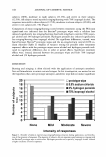
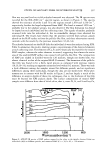
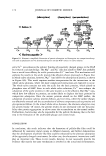
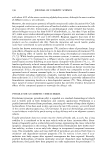
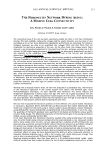
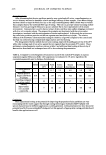
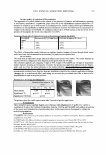
190 JOURNAL OF COSMETIC SCIENCE Powder I Agu. solutions I - ◄--- Emulsion Cooling Quick moisturization Pastes ► Lipids Barrier repair Slow moisturization Figure 1. Revised phase triangle regarding dermatological vehicles. Such a classification has been useful in order to facilitate the choice of a vehicle for specific skin diseases according to the function of its different components. available products is often difficult or impossible based solely upon product labeling. For example, the listed specification for the emulsion systems is commonly abbreviated either as o/w, to delineate oil in water, or w/o, to delineate water in oil. As a consequence, the amount of water, and conversely the lipid fraction, in the different emulsion systems are usually not specified. Therefore, for the purposes of dermatological compounding, pharmacopoeia formulations are sometimes more suitable and easier to handle than commercially available vehicles, as the specific components can be identified and modu lated according to specific disease requirements. Some specific formulation examples are described throughout the text below. SPECIFIC EFFECTS OF DERMATOLOGICAL AND COSMETIC VEHICLES Dermatological and cosmetic vehicles exert a number of effects, in and on the skin, including skin hydration, skin cooling, and barrier effect. The relative cooling effect of cosmetic vehicles can be attributed to the amount of water and/or alcohol in the emul sion system(s) and to water "activity," more precisely the amount of freely evaporating water that is liberated in the early phase after topical application. Moreover, the emul sion structure (e.g., liquid crystals) and the presence of hydrotopes determine the water liberation properties. This effect is more pronounced when the cosmetic vehicle is formed by an aqueous or hydro-alcoholic phase or when these are present within the external phase of the formulation, in lotions, hydrogels, or o/w emulsions. However, relatively non-stable w/o emulsions, like cold creams, also can exert mild cooling effects when applied topically to the skin (5). This is due to the special structure of these
Purchased for the exclusive use of nofirst nolast (unknown)
From: SCC Media Library & Resource Center (library.scconline.org)