ROLES OF VEHICLES FOR SKIN TREATMENT 197 Petrolatum can be used as a drug delivery system, especially for lipophilic agents, but also in liposomal formulations (78). When applied topically, petrolatum itself penetrates only the very superficial layers of the stratum corneum. The most important property of petrolatum is its moisturization of the stratum corneum, attributable to its relative occlusive effects (as discussed above) (5 ,79). As such, petrolatum is considered a standard vehicle for comparative testing of hydration and barrier repair (80). The hydration effect of petrolatum on the stratum corneum has been measured by a number of noninvasive methods, including capacitance, conductance, optothermal in frared spectrometry, and transepidermal water loss (5,7,14,72,81,82). In many studies petrolatum is used as a positive standard to demonstrate the reduction of transepidermal water loss. Petrolatum is regarded as one of the most potent occlusive vehicles (5, 7). Ghadially and colleagues reported an accelerated barrier recovery after barrier disruption using topical petrolatum (83). In this study, penetration of petrolatum was evident throughout the stratum corneum interstices, allowing a normal or even accelerated barrier recovery despite its occlusive properties (83). In addition, a petrolatum-based barrier cream for hand dermatitis has shown positive results (84). Moreover, a petrola tum-containing cream showed a decrease in bacteria colonization and a reduced fre quency of dermatitis in premature infants (85). The reported comedogenicity of petro latum remains controversial, as the rabbit ear model used in these studies does not accurately predict skin conditions in humans (86-88). Thus, it is clear that the derma tological utility of petrolatum remains high, with new claims being developed regularly. High purity standards are always recommended. For example, Morrison reports that a number of recent patents claim the utility of petrolatum for different skin care products, including one for treatment of diaper rash, a moisturizing bar with soap containing petrolatum as a major component, a skin care product to reduce wrinkles, and products for moisturization and skin conditioning (7 6). Recent publications using disposable diapers designed to deliver continuously a petro latum-based formulation to the skin also have shown significant reductions in the severity of erythema and diaper rash (89,90). ROLE OF PHYSIOLOGICAL LIPIDS IN DERMATOLOGICAL AND COSMETIC VEHICLE FORMULATIONS The barrier function of the skin is mediated by intercellular bilayers in the stratum corneum. Cholesterol, ceramides, and essential and non-essential fatty acids play a key role in the formation of these bilayers (91,92). Stratum corneum lipids are composed of about 40% ceramides, 25% cholesterol, and 20% free fatty acids (by weight) (92). Taking the average molecular weight of these three lipid classes into account, the normal stratum corneum has an approximately equimolar physiologic ratio of ceramides, cho lesterol, and free fatty acids. Following barrier disruption in hairless mice, epidermal cholesterol and fatty acid syntheses are immediately increased, while increased ceramide production is evident about six hours later (91,93-95). These key barrier lipids are delivered to the intercellular space of the stratum corneum as a mixture of precursors by the extrusion of lamellar body content at the stratum granulosum-stratum corneum interface (96,97). Fusion of the extruded lamellar contents within the lower stratum corneum leads to continuous membrane sheets, which ultimately form mature mem-

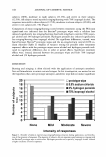
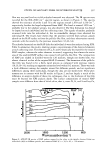
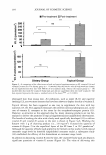
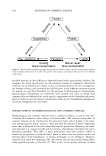
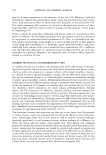
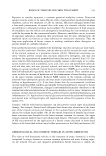
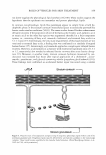
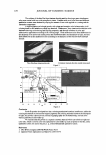
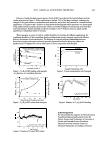
198 JOURNAL OF COSMETIC SCIENCE brane bilayer structures (97 ,98). The final membrane structural transformation correlates with changes in lipid composition, i.e., the polar lipid precursors (glycosphingolipids, phospholipids, and cholesterol sulfate) are metabolized to more nonpolar lipid products (91,96). The lipid bilayer maturation within the different depths of the stratum granu losum (SG) and the stratum corneum (SC) is mediated by different classes of pH dependant enyzmes, namely secretory phospholipase A2 , steroid sulfatase (both with a near-neutral pH optimum), and sphingomyelinase and beta-glucocerebrosidase (both with an acidic pH optimum). These enzymes are responsible for a coordinated matura tion of the extruded lipid sheets from lamellar bodies to lamellar bilayers (Figure 2). Topical application of physiologic lipids has distinct effects from those of nonphysiologic lipids like petrolatum. Studies have shown that topical application of only one or two of the three physiologic lipids to a disrupted hairless mouse skin impedes rather than facilitates barrier recovery, evidenced by changes in transepidermal water loss (95). However, if members of all three key lipid classes (i.e., cholesterol, ceramide, and free fatty acid or their precursors) are applied together to barrier-disrupted skin, normalized rates of barrier repair are observed (56,95). The topically applied physiologic lipids not only are concentrated in the stratum corneum membrane domains, but also are delivered to the nucleated layers of the epidermis (56,95). Depending on the composition of the lipid mixture, either normal or abnormal lamellar bodies are formed, ultimately result ing in either normal or abnormal lamellar membrane unit structures in the stratum corneum intercellular spaces (56,95). The process of passive lipid transport is across the stratum corneum as well as uptake into nucleated cells (stratum granulosum). The subsequent reorganization of lamellar unit structures takes about two hours after acute barrier disruption in murine epidermis (95 ,97). It appears that the incorporation of applied physiologic lipids into barrier lipids follows two pathways: First, there is direct incorporation into stratum corneum membrane domains second, lipids appear to tra verse the intercellular route in the stratum corneum and ultimately get incorporated into lower stratum granulosum cells (Figure 3). The intercellular lipids then appear able to enter the nucleated cells, incorporate into the appropriate lipid metabolic pathways, and ultimately utilize the lamellar body delivery system to re-enter the intercellular mem brane domains (56). Topically applied lipids to either intact or acetone treated skin did SG/SC INTERPHASE LOWER TO MID SC - - - .. - - - - - - - - - - - - - - - - .. - - - - - - - - - - - - - - - - - - - - - - - - - - - - - - Phospholipase �-GlcCer'ase Figure 2. Lamellar body exocytosis and end-to-end fusion oflamellar body-derived sheets to uninterrupted plasma membranes, and subsequent compaction of adjacent membrane sheets into lamellar bilayer unit structures. These changes correlate with extracellular lipid processing of polar lipids to non-polar lipids. These steps are required in order to form the intercellular bilayer structures. [From Elias and Menon, 1996 (ref. 99), with permission.]
Purchased for the exclusive use of nofirst nolast (unknown)
From: SCC Media Library & Resource Center (library.scconline.org)