PHOTOSTABILITY OF WHITENING AGENTS 141 0.22% citral 0.12% �-ionone 0.066% mandarin heart cone. 0.052% ethyl caproate 0.029% tagette e.o. 0.0219% citronella! 0.015% ethyl pelargonate 0.015%. • Tea: Ethanol 93.8% green tea extract on supercritical CO2 5.4% cloves e.o. 0.2% fenugreek abs. 0.2%, ethyl caprylate 0.00364%, �-damascone 0.00364%, linalyl acetate 0.002% acetaldehyde 0.00182% terpinyl acetate 0.00182% ethyl caproate 0.00182% geranyl acetate 0.00182% isovaleric aldehyde 0.00182% neryl acetate 0.0018% linalool oxide 0.00164% linalool 0.0012% 4-ethylguaiacol 0.00091 % cis-jasmone 0.00076% trans-2-hexenal 0.0003% sandalwood e.o. 0.00028% meth yl salicylate 0.00024% terpinene-4-ol 0.00024%. • Violet: Ethanol 94.4% methyl a-ionone 2.0% violet leaves abs. 10% sol. 1.6% a-ionone 1.0% linalool 1.0%. All percentages are w/w. Apparatus. Devices employed were an HPLC apparatus cons1strng of a SPD-10 AV UV/vis. detector, an LC 9A pump unit control, and a C-R6A Chromatopac integrator (Shimadzu) sub-micron particle analyzer model N4 MD (Coulter Electronics) anchor stirrer DLS (Velp) UV/vis. Lambda 2 spectrophotometer (Perkin Elmer) and UVB lamp TL40W/12RST40Tl2 (Philips). MICRO EMULSIONS Preparation. Several alkyl glucoside surfactants were tested in microemulsion formula tions. They were previously dispersed in water then the chosen oil was added, tritating to transparency with the cosurfactant. In two separate series of experiments, kojic acid and arbutin were added to the chosen microemulsion at 0.25% w/w. Citral and linalool were also introduced in the same microemulsion to evaluate the influence of model odorous molecules on the photosta bility of both whitening agents. Characterization. Microemulsions in the absence and presence of whitening agents were tested for stability by applying repeated freeze-thaw cycles (4 hours at -20°C, 4 hours at +40°C, and 16 hours at room temperature for 1 week). Mean diameters were then determined at 25 .0° ± 0.1 ° C by means of quasi-elastic laser light scattering techniques (QELLS), as described elsewhere (12). PERFUMED MICROEMULSIONS Preparation. The fragrances coconut, fragrance, orange, tea, and violet were added to the previously prepared and characterized microemulsion in the 0.01-0.1 % w/w range, after diluting them with ethanol. In microemulsions containing 0.03% w/w of each fragrance, 0.25% w/w kojic acid or arbutin was added in separate experiments. Characterization. All measurements were performed as described for microemulsions in the absence of fragrances. Olfactory evalt1ation. Olfactory analysis on perfumed microemulsions was done as follows: 20 ml of the sample under study was placed in a 4-cm-diameter beaker and sniffed at 25°C and at controlled relative humidity.

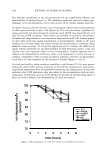
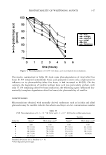
142 JOURNAL OF COSMETIC SCI ENC E UVB PHOTODEGRADATION STUDIES Experimental conditions. Photodegradation experiments were performed using a UVB lamp with a 290-320 nm range. Samples were introduced in Pyrex glass containers placed at 10 cm from the light source and maintained under continuous stirring. In such conditions the radiation power per surface unit was 5.97 x 10⁻⁴ W cm- 2 , with a maximum radiation dose of 7.165 J cm- 2 (13). At prefixed times, samples were with drawn and opportunely diluted for HPLC analysis. Whitening agents: Formulations • Arbutin Aqueous solutions: 5.0 x 10- 3 Mat pH 3.0, 5.0, 7.0, 8.0 9.2 x 10- 3 Mat pH 7.0 9.2 x 10- 3 Mat pH 7.0 in the presence of 5.0% w/w hexylene glycol, 2.0% w/w decylpolyglucose, and 0.25% w/w lecithin (sol. a). O/W microemulsions: 9.2 x 10- 3 M (0.25% w/w) alone 9.2 x 10- 3 M (0.25% w/w) in the presence of 2.3 x 10- 5 M citral or 4.0 x 10- 5 M linalool 9.2 x 10- 3 M (0.25% w/w) in the presence of 0.03% w/w of the following perfume formulations: orange, coconut, violet, tea, and fragrance. • Kojic acid Aqueous solutions: 5.0 x 10- 3 Mat pH 3.0, 5.0, 7.0, 8.0 1.7 x 10- 2 Mat pH 5.0 1.7 x 10- 2 M at pH 5.0 in the presence of 5.0% w/w hexylene glycol, 2.0% w/w decylpolyglucose, and 0.25% w/w lecithin (sol. a). O/W microemulsions: 1.7 x 10- 2 M (0.25% w/w) alone 1.7 x 10- 2 M (0.25% w/w) in the presence of 2.3 x 10- 5 M citral or 4.0 x 10- 5 M linalool 1.7 x 10- 2 M (0.25% w/w) in the presence of 0.03% w/w of the following perfume formulations: orange, coconut, violet, tea, and fragrance. Analytical conditions were as follows: Column: Spherisorb C18 5 µ x 15 cm. Mobile phase: CH3OH:5.0 x 10- 3 M dodecylamine pH 5.2 (40:60). Flow: 0.8 ml min- 1 . t r : 2.1 min (arbutin), 2.3 min (kojic acid). Uv max: 282 nm (arbutin), 268 nm (kojic acid). Odorous molecules. The photodegradation of 2.3 x 10- 5 M citral and 1.3 x 10- 5 M vanillin in the microemulsion was determined in the presence and absence of kojic acid in two separate series of experiments, following the experimental conditions described above. Analytical conditions were as follows: Column: Spherisorb C18 5 µ x 15 cm. Mobile phase (citral): CH 3 OH:H2O 80:20. Flow: 1.0 ml min- 1 . Uv max: 254 nm. tr: 4.0 min. Mobile phase (vanillin): CH 3 OH:H2O 30:70. Flow: 1.0 ml mil- 1 . Uv max: 280 nm. tr: 8.6 min. RES UL TS AND DISCUSSION MICROEMULSIONS Several microemulsions were obtained: the composition of the most stable one, which was chosen to dissolve kojic acid, arbutin, and the odorous molecules, was: IPP = 5.0% w/w lecithin = 3.3% w/w decyl polyglucose = 6.7% w/w ethanol 2.0% w/w hexylene glycol = 3.8% w/w and water = 79.2% w/w.
Purchased for the exclusive use of nofirst nolast (unknown)
From: SCC Media Library & Resource Center (library.scconline.org)