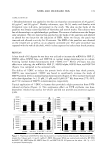
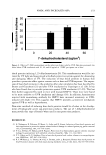
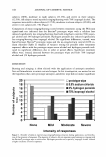
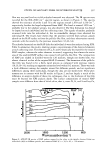
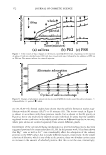
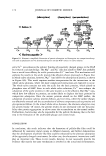
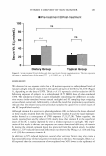
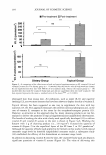
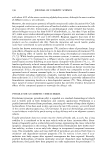
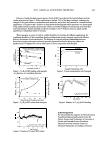
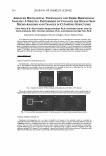
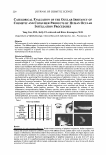
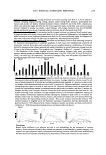
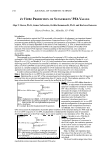
NHEK AND INCREASED HSPs 151 CLINICAL RESULTS 7 Dehydrocholesterol was applied to the skin in ethanol at concentrations of 20 µg/cm2, 40 µg/cm2, and 60 µg/cm2. Healthy volunteers, ages 18-50, males and females with Fitzpatrick type I-II skin, participated in the study. The skin on the backs of the panelists was evenly colored and free of blemishes and stretch marks. The subjects were free of dermatologic or ophthalmologic problems. The source of radiation was the Berger solar simulator. The test material was patched on the backs of the panelists and allowed to absorb for two hours for the induction of HSPs. After two hours, the patch was removed and allowed to air dry for 30 minutes. The MED of the panelists was obtained on the treated site as well as on an adjacent untreated site. The same procedure was repeated with the vehicle (alcohol), which is also suspected to induce heat shock proteins. RESULTS A heat shock of 42 degrees for one hour was utilized to increase the mRNA for HSP 27, HSP90 alpha, HSP90 beta, and HSP70A in normal human keratinocytes in culture. Treating normal human keratinocytes with 7-DHC (10- 6 M) for 24 hours was also effective at inducing the mRNA for HSP 27, HSP90 alpha, HSP90 beta, and HSP70A (Figure 1) as compared to the untreated cells. The ability of 7-DHC to induce the protein levels of the major heat shock protein, HSP70, was investigated. 7-DHC was found to significantly increase the levels of HSP70 protein levels in normal human keratinocytes (Figure 2). This increase was found to be dose-dependent. At 1.25 µM, 2.5 µM, and 10 µM (10- 5 M), there were 27%, 66%, and 71 % increases of HSP70 in keratinocytes, respectively. Topical application of 7-DHC to human skin provided a slight protection from UVB induced erythema (Figure 3). This suppressive effect on UVB erythema was dose dependent. Alcohol was used as the vehicle and did not provide any protection against UVB. 60000 -�-------------ll-····· ............ , i 50000 1 .I 40000 � 30000 i 20000 ii 10000 � untreated . e j1 i untreated heat shock 0.1 uM 7-DHC 1 uM 7-DHC 120000 j 100000 . 80000 . ,, 60000 � 40000 .2: 20000 � 0 untreated heat shock 0.1 uM 7-DHC 1 uM 7-DHC 1 Figure 1. Expression of mRNA for heat shock proteins in normal human keratinocytes. Keratinocytes were treated for 24 hours with 1.0 and 0.1 µM of 7-DHC. Messenger RNA was isolated and probed by RT-PCR for HSP27 (A), HSP90alpha (B), HSP90 beta (C), and HSP70A (D). All points are the mean ± SE. *p 0.05 vs untreated keratinocytes.

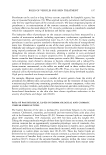
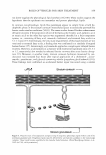
152 JOURNAL OF COSMETIC SCIENCE 6.00 ,-----------------------------------, 71% 5. 00 +-- - - - - ---------------- C 4.00 ·a5 Cl) I C) 2.00 C 1.00 Control Sorbitol 1 00mM 1.25 2.5 10uM (7DHC) concentration uM Figure 2. Expression of HSP70 protein in normal human keratinocytes treated with 7-DHC. Keratinocytes were treated for 24 hours with 1.25, 2.5, and 10 µM of 7-DHC. Cells were homogenized and the levels of HSP70 determined by ELISA. Sorbitol was used as a positive control. Data are expressed as nanograms of HSP per well and are the mean of three wells. CONCLUSION 7-Dehydrocholesterol-treated cultured normal human keratinocytes have increased levels of mRNA for the heat shock proteins HSP90 alpha, HSP90 beta, HSP70A, and HSP27. The levels of HSP70 protein as determined by ELISA were also increased as a result of 7-dehydrocholesterol treatment in cultured normal human keratinocytes. Clinical treat ment with 7-dehydrocholesterol on human skin increased the value of the minimal erythemal dose. Previously, 1,25-dihydroxyvitamin D3 was shown to provide a photoprotective effect on human skin (20) and mouse skin (21). This molecule may provide endogenous photo protection, but its mechanism of action is not known. 1,25-Dihydroxyvitamin D3 has been shown to increase the synthesis of heat shock proteins in monocytes ( 13) and of metallothionein in mouse keratinocytes (32), and provide protection against a variety of environmental stresses in these systems ( 12, 13). 7-Dehydrocholesterol may induce heat shock proteins by directly activating heat shock protein synthesis. Alternatively, 7-DHC may be converted to 1,25-dihydroxyvitamin D3. 7-Dehydrocholesterol is converted into vitamin D3 in the stratum spinosum (22,23), and vitamin D3 has been shown to be converted to the active 1,25- dihydroxyvitamin D3 in cultured human keratinocytes and skin models (24). Therefore, 7-dehydrocholesterol may be a pro-ingredient that is converted by the skin into heat
Purchased for the exclusive use of nofirst nolast (unknown)
From: SCC Media Library & Resource Center (library.scconline.org)