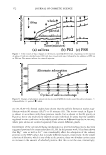
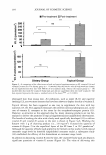
216 JOURNAL OF COSMETIC SCIENCE structure. In these models, cell migration via fibronectin connections, and cell multiplication are able to be observed and quantified. The results show that the selected active compound (Deliner®) induced a significant increase (p0.01) in the number of fibroblasts having colonized the artificial wound: + 21% as compared to the control. It also stimulated the cellular proliferation of fibroblasts in this area ( + 26% as compared to the control). Parallel to this stimulation of the re-colonization, used at 1%, this selected material increased fibroblastic fibronectin production in this area: + 56% as compared to the control (p0.05). A correlation could be foreseen between the different parameters measured. The increase in fibronectin quantities present in the Reconstructed Skin could induce cellular migration and proliferation, through the creation of a veritable intra-dermal "scaffolding" action. Selected active compounds therefore proposes, through the stimulation of cutaneous fibronectin production, an increased fibroblastic re-colonization of areas from which these cells had been eliminated. This re-colonization logically should result in the origin of an extracellular new matrix formation, COLETICA chose to evaluate the anti-wrinkle effects of DELINER® in an jn vjvo study on healthy volunteers. 20 healthy female volunteers have been used for this study performed on a "half-face". During 56 days, each volunteer applied on a "half-face" a placebo formulation and a formulation containing 3% of the selected active compound on the other "half-face". Before and after the 56-day treatment, the wrinkle depth of each "crow's feet" of volunteers was performed without modifying the volume of the analysed area using a "fringe projection" analysis method. The results show that, a 56-day treatment was able to significantly improve the cutaneous relief of the volunteers on the "crow's feet" area: depth of main wrinkles -7.9% (ns), micro-depressionary network (wrinkles and lines) -11.2% (p0.05), lines -13.5% (p0.05). Under the same experimental conditions, the placebo formulation did not induce any significant reduction of the measured parameters: depth of main wrinkles -3% (ns), micro-depressionary network (wrinkles and lines) -0.3% (ns), lines only +1.8% (ns). In conclusion, the selected active compound through perfectly identified metabolic effects, offers a significant reduction in wrinkle depth on the "crow's feet" area of volunteers. From this work first, it must be agreed today that certain messages from keratinocytes regulate fibroblastic fibronectin production throughout the life cycle. Moreover, some active compounds are capable of acting on all of the phenomena acting during the wound-healing process, by stimulating fibroblastic fibronectin production. In addition to this specific action on the pathological process targets, such active compounds could reorganizes the macromolecules of the extra-cellular matrix, the only controller of concerted cellular adhesion, movement and migration within skin tissue. In a particularly relevant way in term of cutaneous physiology, the specific metabolic activities of one of this selected ingredient result in vivo in a significant "anti-wrinkle" effect. Bibliography KARTTUNEN T., RISTELI J., AUTIO-HARMAINEN H., RISTELI L., Effect of age and diabetes on type IV collagen and laminin in human kidney cortex, Kjdney Int. 30, 586-591 (1987) OIKARINEN A., Aging of the skin connective tissue: how to measure the biochemical and mechanical properties of aging dermis, Photodermatol. Photojmmunol. Photomed. 10, 47-52 (1994) PEACOKE M., CAMPISI J., Cellular senescence: a relation of control, differentiation or aging?, J. Cell 8jochem. 45, 147-155 (1991) PIERAGGI M., JULIAN M., BOUISSOU H., Fibroblast changes in cutaneous ageing, Vjrchows Arch. A. Pathol. Anal. Hjstopathol. 402, 275-287 (1984) RUOSLAHTI E., Proteoglycans in cell regulation, J. 8jo/. Chem. 264, 13369-13372 (1989) TSUJI T., Ultrastructure of deep wrinkles in the ederly, Cutan. Pathol. 14, 158-164 (1987) UITTO J., Connective tissue biochemistry of the aging dermis. Age-related alterations in collagen and elastin, Dermatol. Clin. 4, 433-446 (1986)

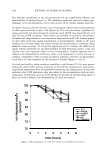
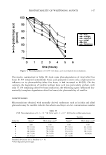
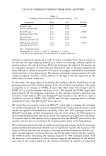
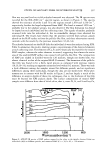
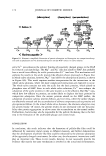
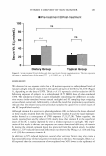
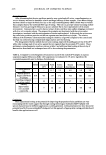
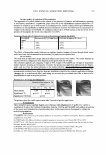
2003 ANNUAL SCIENTIFIC MEETING 217 IMPROVING ANTIFUNGAL ACTIVITY OF ZINC PYRITHIONE THROUGH PARTICLE COATING TECHNOLOGY Diana T. Ciccognani1, Ph.D., George Polson•, Ph.D., David Lei1, Ph.D., Kevin DiNicola1, Richard Shalvoy1, Ph.D., Jorje Arresse2, Ph.D. and Gerald Pierard2, Ph.D. 1 Arch Personal Care Products, Cheshire, CT 2 University Medical Center Sart Tilman, Liege, Belgium Zinc pyrithione (ZPT) is an FDA approved antidandruff active that is highly insoluble and so generally sold as a dispersion product. It is known to be effective against many microorganisms including Malassezia sp., the lipophilic yeasts fowid on the scalp which are the major cause of dandruff. It was hypothesized that by adding an appropriate coating to the zinc pyrithione particles it might be possible to target the active at the Ma/assezia sp and enhance its chemical, physical and biological properties. Coating zinc pyrithione particles · Different techniques were used to make coated ZPT particles including powder coating, in-situ formation of coating materials in the presence of ZPT, in-situ formation of ZPT in the presence of coating materials and coating of ZPT in aqueous and solvent based dispersions. The resulting particles were fully characterized for activity and surface properties. Different types of coating were applied in the hope of imparting additional properties to the ZPT that could be useful to the various applications that this active is sold into. Table 1 shows the physical properties of some of these coated materials that were aimed primarily at the personal care industry. Table 1. ZPT was coated with lipophilic materials and the resulting products were fully characterized. Different processes were tried and ZPT in both powder and 48% dispersion forms were used in these experiments. Amino Stearyl Siliconyl Coating material Palm oil Lecithin silicone dimethicone Beeswax ZPT form used powder powder dispersion dispersion dispersion Coating content 11.7 7.5 4.0 3 3 (%) ZPT Assay (%) 85.8 90.0 32.0 30.l 27.3 Coating 35 15 35 33 thickness(A) - Particle size 7.44 13.41 0.48 0.46 0.49 (Dso, µm) Antimicrobial activity of coated ZPT There was a concern that some of these coatings might impede the activity of the zinc pyrithione. Zone of inhibition tests were carried out to determine whether the coatings had an adverse affect on the activity of the ZPT. These experiments clearly demonstrated that the coatings did not lower the bioavailability of the antifungal particles.
Purchased for the exclusive use of nofirst nolast (unknown)
From: SCC Media Library & Resource Center (library.scconline.org)