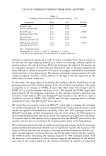
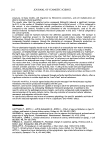
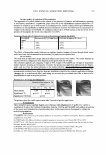
180 JOURNAL OF COSMETIC SCIENCE Table I Comparison of Topical or Dietary Activity: Which Modality Delivers More Vitamin E and Vitamin E Acetate to the Skin? Conditioning period Baseline sampling Treatment period Final sampling Day no. Activity -7➔0 1 ➔ 11 11 Dietary Subjects use Skin and blood Daily use of vehicle Skin and blood group products lacking BW sampling vitamin E and Shampoo without immediate! y after vitamin E acetate vitamin E vitamin Daily 400 IU supplementation O'.-tocopherol Topical Subjects use Skin and blood Daily use of Skin and blood group products lacking Vitamin E BW sampling vitamin E and Shampoo without immediate! y after vitamin E acetate vitamin E washing with test No vitamin E product supplement performed the washes. One gram of product or vehicle was applied to the prewetted forearm (yielding a dosage level of 3.8 mg/cm2) (23) and gently massaged (lathered) for one minute over the entire surface of the forearm. The forearm was rinsed under running water (3 5 ° C) for 15 to 20 seconds and allowed to air dry for two to three minutes. VITAMIN RECOVERY AND ANALYSIS After completing all clinical and biophysical assessments, the test sites were extracted and analyzed for vitamins. Briefly, a technician placed a 7.5-cm2 hollow glass cup (Crown Glass Co., Somerville, NJ) on each site and applied 1 ml of ethanol into the cup. Using a glass rod, the skin was gently rubbed for one minute, and the extract of the SC was transferred into a precoded vial. This extraction procedure was repeated three times. The extraction solutions were pooled and stored at -20°C until analysis. In the sunlight exposure studies, skin sampling was performed after the skin had acclimated to normal room temperature for 15 to 20 minutes (70° 2°C) and relative humidity (RH 45-55%) and sweating had subsided. Prior to extraction, a technician gently blot-dried the forearm skin with a paper towel. In the study comparing oral to topical supplementa tion, blood was drawn by a registered nurse and prepared for vitamin E analysis accord ing to published methods (24). All samples were centrifuged, and the supernatant was transferred to another vial and evaporated to dryness under a stream of N2 before being redissolved in 0.5 ml of methanol:isopropanol:butanol (70:20: 10). Vitamin E (a-tocopherol) and vitamin E ac etate (a-tocopheryl acetate) were quantified by HPLC using an Ultracarb™ 5µ-ODS 20 column (100 x 4.6 mm, Phenomenex®, Torrance, CA) eluted with a mobile phase composed of methanol:isopropanol:butanol (75:20:5) at a flow rate of 0.75 ml/minute and detected with a Waters UV-VIS model 484 detector (Millipore, Milford, MA) set

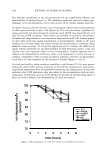
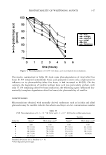
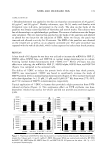
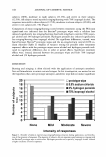
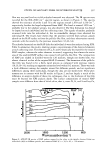
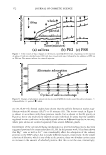
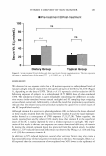
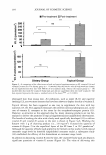
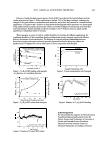
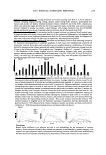
VITAMIN E DELIVERY BY SKIN CLEANSER 181 to 288 nm. Under these conditions, the typical retention times for vitamin E and vitamin E acetate were five and seven minutes, respectively, and the limits of detection for each (vitamin E/skin surface area) were approximately 2-4 pmoles/cm2. It is worth noting that the HPLC method used here does not discriminate between the stereo isomers of tocopherol. REAGENTS AND TEST FORMULATIONS All solutions and reagents, except as noted, were analytical grade and obtained from Sigma Chemical Co. (St. Louis, MO) and Aldrich Chemical Co (Milwaukee, WI). Ethanol (dehydrated alcohol, 200 proof, U.S.P. Punctilious) was obtained from Quan tum Chemical Co. The vitamin E (d-a-tocopherol) and vitamin E acetate (d-a tocopheryl acetate) standards used for the HPLC analysis were analytical grade (99% pure) and were purchased from Fluka Chemical Corporation (Ronkonkoma, NY). All rac-a-tocopherol and all-rac-a-tocopherol acetate (BASF Corporation, Mount Olive, NJ) were used to formulate the vitamin E body wash. Vitamin E tablets (Carlson Aqua Gem-E tablet, 400 IU a-tocopherol) were from Carlson Laboratories, Inc. (Arlington Heights, IL). Blood samples were collected using the Vacutainer™ system (Becton Dickinson, Franklin Lakes, NJ). The following commercially available products were provided to subjects for use during the skin normalization period: Baby Magic TM Laugh & Splash Baby Bath (for skin cleansing), Baby Magic™ Laugh & Splash Baby Shampoo (for hair cleansing), and Baby Magic™ Baby Lotion Original (as a skin moisturizer). The vitamin E body washes used in these studies are commercially available (Palmolive™ Vitamins Shower Creme and Softsoap™ Vitamins Body Wash). Both products contain 0.15% vitamin E and 0.10% vitamin E acetate and employ a polymeric delivery system (25). STATISTICAL ANALYSIS All data reported in the text are means ± SE. To assess the significance of changes due to skin washing and sun exposure and/or washing, a paired t-test was used to evaluate each exposure variable at the 5 % significance level. Analysis of variance (ANOV A) was used to determine overall differences relating to subject, exposure, time (when appro priate), and treatment as effects. RESULTS SUN EXPOSURE STUDIES The effects of natural sunlight on the vitamin E and vitamin E acetate in the superficial layers of the SC were measured in August and October 2000. Exposure to 30 minutes of midday sunlight (radiance = 0.81 mJ/cm2 UVB and 1.76 mJ/cm2 UVA) in central New Jersey in mid-August reduced surface vitamin E levels by 65%, from 19.0 ± 3.7 pmoles/cm2 to 6.5 ± 1.9 pmoles/cm2 (n = 16,p 0.05) (Figure 1). When the study was repeated eight weeks later in mid-October (radiance = 0.47 mJ/cm2 UVB and 1.1 7 mJ/cm2 UVA), a similar result was obtained: namely, vitamin E in the superficial SC was reduced by 50%, from 31.2 ± 8.1 pmoles/cm2 to 15.6 ± 4.5 pmoles/cm2 (n = 14, p
Purchased for the exclusive use of nofirst nolast (unknown)
From: SCC Media Library & Resource Center (library.scconline.org)