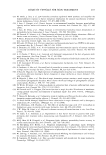
186 JOURNAL OF COSMETIC SCIENCE examined by a board-certified dermatologist, who had no other involvement or interest in the conduct of the study. REFERENCES (1) K. Trouba, H. Hamadeh, R. Amin, and D. Germolec, Oxidative stress and its role in skin disease, Antioxid. Redox. Signal, 4, 665-673 (2002). (2) S. R. Pinnell, Cutaneous photodamage, oxidative stress, and topical antioxidant protection,]. Am. Acad. Detmatol., 48, 1-19 (2003). (3) J. Fuchs, R. Mehlhorn, and L. Packer, Free radical reduction mechanisms in mouse epidermis skin homogenates,]. Invest. Dermatol., 93, 633-341 (1989). (4) J. Thiele, F. Dreher, and L. Packer, "Antioxidant Defense Systems in Skin," in Drugs vs. Cosmetics: Cosmeceuticals, P. Elsner and H. Maibach Eds. (Marcel Dekker, New York, 2000), pp. 145-188. (5) Y. Shindo, E. Witt, D. Han, and L. Packer, Dose response effects of acute ultraviolet irradiation on antioxidants and molecular markers of oxidation in murine epidermis and dermis,]. Invest. Dermatol., 102, 470--475 (1994). (6) G. Rhie, M. H. Shin, J. Y. Seo, W. W. Choi, K. H. Cho, K. H. Kim, K. C. Park, H. C. Eun, and J. H. Chung, Aging- and photoaging-dependent changes of enzymic and nonenzymic antioxidants in the epidermis and dermis of human skin in vivo, ]. Invest. Dermatol., 117, 1212-121 7 (2002). (7) J. Thiele, M. G. Traber, and L. Packer, Depletion of human stratum corneum vitamin E: An early and sensitive in vivo marker of UV photo-oxidation,]. Invest. Dermatol., 110, 756-761 (1998). (8) A. Tavakkol, Z. Nabi, S. Cardona, N. Soliman, and T. Polefka, Tropospheric ozone induces lipid hydroperoxides and depletes vitamin E in human skin in vivo with no detectable clinical or biophysical changes,]. Invest. Dermatol., 114, 844 (2000). (9) F. Nachbar and H. Korting, The role of vitamin E in normal and damaged skin,]. Mo!. Med., 73, 7-17 (1995). (10) R. Wolf, D. Wolf, and V. Ruocco, Vitamin E: The radical protector,]. Eur. Acad., Derrnatol. Venereal., 10, 103-117 (1998). (11) Institute of Medicine of the National Academies, Dietary Reference Intakes for Vitamin C, Vitamin E, Selenium, and Carotenoids (National Academy Press, Washington, DC, 2000), pp. 186-283. (12) E. S. Ford and A. Sowell, Serum a-tocopherol status in the United States population: Findings from the Third National Health and Nutrition Examination Survey, Am. ]. Epidemiol., 150, 290-300 (1999). (13) Y.-M. Peng, Y.-S. Peng, Y. Lin, T. Moon, D. Roe, and C. Ritenbaugh, Concentrations and plasma tissue-diet relationship of carotenoids, retinoids, and tocopherols in humans, Nutr. Cancer, 23, 233- 246 (1995). (14) G. W. Burton, M. G. Traber, R. V. Acuff, D. N. Walters, L. H. Kayden, and K. U. Ingold, Human plasma and tissue a-tocopherol concentrations in response to supplementation with deuterated natural and synthetic vitamin E, Am.]. Clin. Nutr., 67, 669-684 (1998). (15) A. Kretz and U. Moser, "Vitamins," in Handbook of Cosmetic Science & Technology, A. 0. Barel, M. Paye, and H. I. Maibach, Eds. (Marcel Dekker, New York, 2001), pp. 463--472. (16) S.S. Shapiro and C. Saliou, Role of vitamins in skin care, Nutrition, 17, 839-844 (2001). (17) M. Kamimura and T. Matsuzawa, Percutaneous absorption of a-tocopherol acetate,]. Vitaminol., 14, 150-159 (1968). (18) D.S. Alberts, R. Goldman, M. J. Xu, R. T. Dorr, J. Quinn, K. Welch, J. Guillen-Rodriguez, M. Aickin, Y. M. Peng, L. Loescher, and H. Gensler, Disposition and metabolism of topically adminis tered a-tocopherol acetate: A common ingredient of commercially available sunscreens and cosmetics, Nutr. Cancer, 26, 193-201 (1996). (19) F. Dreher, B. Gabard, D. A. Schwindt, and H. I. Maibach, Topical melatonin in combination with vitamins E and C protect skin from ultraviolet-induced erythema: A human study in vivo, Br. ]. Dermatol., 139, 332-339 (1998). (20) N. Muizzuddin, A. R. Shakoori, and K. D. Marenus, Effect of topical application of antioxidants and free radical scavengers on protection of hairless mouse skin exposed to chronic doses of ultraviolet B, Skin Res. Technol., 4, 200-204 (1998). (21) E. Pelle, N. Muizzuddin, T. Mammone, K. Marenus, and D. Maes, Protection against endogenous and

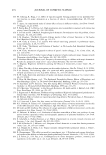
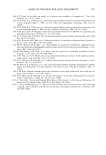
VITAMIN E DELIVERY BY SKIN CLEANSER 187 DVB-induced oxidative damage in stratum corneum lipids by an antioxidant-containing cosmetic formulation, Photodermatol. Photoimmunol. Photomed., 15, 115-119 (1999). (22) A. Fontana, A look at the skin care market: Personal cleansing and personal wash, Expose, 5, 4-7 (2002). (23) US EPA Exposure Factors Handbook (Office of Health and Environmental Assessment, Exposure As sessment Group, Washington, DC, EPA/600/8-89/043, 1992), pp. 8-11. (24) B. L. Lee, S. C. Chua, H. Y. Ong, and C. N. Ong, High-performance liquid chromatographic method for routine determination of vitamins A and E and 13-carotene in plasma,]. Chromotogr., 581, 41--47 (1992). (25) Z. Nabi, T. G. Polefka, N. Soliman, and A. Tavakkol, Composition and use, WO Patent Ol 74328A3. (26) E. S. Krol, K. A. Kramer-Stickland, and D. C. Liebler, Photoprotective actions of topically applied vitamin E, Drug Meta. Rev., 32, 413--420 (2000). (27) K. S. Yuen and G. M. Halliday, Alpha-tocopherol, an inhibitor of epidermal lipid peroxidation, prevents ultraviolet radiation from suppressing the skin immune system, Photochem. Photobiol., 65, 587-592 (1997). (28) R. M. Maison and G. M. Beijersbergen van Henegouwen, Topical antioxidant vitamins C and E prevent DVB-radiation-induced peroxidation of eicosapentaenoic acid in pig skin, Radiat Res., 157, 402--409 (2002). (29) Z. Wang, M. Boudjelal, S. Kang,]. J. Voorhees, and G. J. Fisher, Ultraviolet irradiation of human skin causes functional vitamin A deficiency, preventable by all-trans retinoic acid pre-treatment, Nat. Med., 5, 418--422 (1999). (30) 0. Sorg, C. Tran, P. Carraux, L. Didierjean, F. Falson, and J. H. Saurat, Oxidative stress-independent depletion of epidermal vitamin A by UVA,]. Invest. Dermatol., 188, 513-518 (2002). (31) S. T. Weber, N. Han, and L. Packer, Ozone: An emerging oxidative stressor to skin, Curr. Prob/. Dermatol., 29, 175-186 (2002). (32) E. Pelle, E. P. Miranda, C. Fthenakis, T. Mammone, K. Marenus, and D. Maes, Cigarette smoke induced lipid peroxidation in human skin and its inhibition by topically applied antioxidants, Skin Pharmacol. Appl. Skin Physiol., 15, 63-68 (2002). (33) D. H. Blatt, S. W. Leonard, and M. G. Traber, Vitamin E kinetics and the function of tocopherol regulatory proteins, Nutrition, 17, 799-805 (2001). (34) S. E. Ekananyake-Mudiyanselage, A. Tavakkol, T. Polefka, P. Elsner, and J. J. Thiele, Rinse-off product containing alpha-tocopherol: An efficient strategy of supplementing the skin barrier with vitamin E and protecting it from photo-oxidative damage,]. Invest. Dermatol., 121, 1108 (2003). (35) M. Ranganrajan and J. Zatz, Kinetics of permeation and metabolism of O'.-tocopherol and O'.-tocopheryl acetate in micro-Yucatan pig skin,]. Cosmet. Sci., 52, 35-50 (2001). (36) Z. Nabi, A. Tavakkol, M. Dobke, and T. G. Polefka, Bioconversion of vitamin E acetate in human skin, Curr. Prob/. Derrnatol., 29, 175-186 (2001). (3 7) W. Baschong, C. Artmann, D. Hueglin, and J. Roeding, Direct evidence for bioconversion of vitamin E acetate into vitamin E: An ex vivo study in viable human skin,]. Cosmet. Sci., 52, 155-161 (2001). (38) K. Werninghaus, M. Meydani, J. Bhawan, R. Margolis, J.B. Blumberg, and B. A. Gilchrest, Evalu ation of the photoprotective effect of oral vitamin E supplementation, Arch. Dermatol., 130, 1257- 1261 (1994).
Purchased for the exclusive use of nofirst nolast (unknown)
From: SCC Media Library & Resource Center (library.scconline.org)