NHEK AND INCREASED HSPs 155 (28) F. Trautinger, I. Kindas-Mugge, B. Barlan, P. Neuner, and R. M. Knobler, 72-kD heat shock protein is a mediator of resistance to ultraviolet B light,]. Invest. Dermatol., 105, 160-162 (1995). (29) F. Trautinger, R. M. Knobler, H. Honigsmann, W. Mayr, and I. Kindas-Mugge, Increased expression of the 72-kDa heat shock protein and reduced sunburn cell formation in human skin after local hyperthermia,]. Invest. Dermatol., 107, 442-443 (1996). (30) S. B. Kwon, C. Young, D.S. Kim, H. 0. Choi, K. H. Kim,]. H. Chung, H. C. Eun, K. C. Park, C. K. Oh, and J. S. Seo, Impaired repair ability of hsp 70.1 KO mouse after UVB irradiation,]. Dermatol. Sci., 28, 144-151 (2002). (31) C. Bayerl and E. G. Jung, Microinjection of an antibody against HSP 72 in keratinocytes to study acute UV injury, Exp. Dermatol., 8, 247-253 (1999). (32) M. Karasawa, J. Hosoi, H. Hashiba, K. Nose, C. Tohyama, E. Abe, T. Suda, and T. Kuroki, Regulation of metallionein gene expression by 1 alpha, 25-dihydroxyvitamin D3 in cultured cells and in mice, Proc. Natl. Acad. Sci., 84, 8810-8813 (1987). (33) M. Garmym, T. Mammone, A. Pupe, D. Gan, L. Declercq, and D. Maes, Human keratinocytes respond to osmotic stress by p38 map kinase regulated induction of HSP70 and HSP27,]. Invest. Dermatol., 117, 1290-1295 (2001).

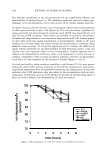
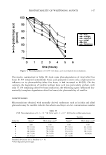
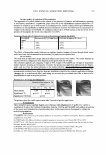
J. Cosmet. Sci.} 55, 157-162 (March/April 2004) Lack of burning and stinging from a novel first-aid formulation applied to experimental wounds A. PAGNONI, G. SPINELLI, R. S. BERGER, J. BOWMAN, S. GARREFFA, and A. M. SNODDY, Hill Top Research, Inc., 388 Ryders Lane, Milltown, NJ 08850 (A.P., R.S.B., J.B.), and Bayer Consumer Care, 36 Columbia Road, Morristown, NJ 07960 (G.S., S.G., A.M.S.). Accepted for publication May 20, 2003. Synopsis Antiseptic-anesthetic first aid formulations typically produce a burning or stinging sensation when used on wounds. The aim of this study was to assess the lack of sting/burn potential of a prototype first-aid wipe when applied to superficial wounds. This was a one-day, double-blind, randomized study, evaluating the stinging/burning sensation from a prototype first-aid wipe with a cellulose base containing 1.0% pramoxine HCL and 0.13% benzalkonium chloride. The study followed a direct comparison test design of four test formulations. The remaining three articles were: (a) sterile 0.9% sodium chloride (no-sting/no-burn control), (b) 3% hydrogen peroxide (first-aid sting/bum control), and (c) 70% isopropyl alcohol (second sting/burn control). The test was performed on 24 subjects. The tape stripping method was used to create four standardized wounds on the volar forearms, reaching the glistening layer. Each test article was applied to the wound for 15 seconds. The subjects were asked to report the intensity of the stinging/burning sensation during the application. The prototype pramoxine-benzalkonium chloride wipe produced significantly less stinging/burning than both 70% isopropyl alcohol and 3% hydrogen peroxide. Also, the prototype wipe did not produce more stinging and burning in superficial wounds compared to the saline control. INTRODUCTION Antiseptic-anesthetic first-aid formulations are used on minor cuts, scrapes, and burns to alleviate or relieve the pain associated with minor wounds and to help prevent skin infections (1). These formulations often produce an immediate burning or stinging sensation of various intensity. Since such products are often used for minor scrapes in children, the development of a formulation that would not sting or burn at first contact is highly desirable. The aim of this investigation was to assess the potential of burning and stinging from a new prototype first-aid wipe formulation on superficial wounds. To control variability in the assessment of sensory responses we used a reproducible and standardized tape- 157
Purchased for the exclusive use of nofirst nolast (unknown)
From: SCC Media Library & Resource Center (library.scconline.org)