W/O EMULSION II Urea Glycerol 85% Triclosan ROLES OF VEHICLES FOR SKIN TREATMENT Pionier KWH Pharm2 Citric acid anhydr. Magnesium sulfate heptahydrate Purified water W/O EMULSION III Glycerol 85% Triclosan Excipial U Lipolotio3 195 5.0 10.0 3.0 30.0 0.07 0.5 ad 100.0 10.0 2.0 to 100.0 These cosmetic vehicles have shown good stability for more than three months (1) and can be used for compounding with active ingredients like evening primrose oil or pale sulfonated shale oil (in w/o emulsion II) or glucocorticosteroids. As a note of caution, formulations intended for facial use should avoid urea due to its potential irritative potency (61). For patients showing allergic reactions to constituents of dermatological or cosmetic vehicles (e.g., patients with a long history of leg ulcers (62)), most fragrances, lanolin, and parabens should be avoided if possible. Propylene glycol can potentially induce irritant and allergic contact dermatitis (63). In such instances, the following vehicle can be recommended (1). COLD CREAM Cetylwaxester Beeswax Paraffin oil Purified water Preservatives q .s. ROLE OF WOOL WAX (LANOLIN) IN COSMETIC VEHICLES 11.75 13.5 63.25 ad 100.00 Lanolin, or wool wax, is the secretion product of the sebaceous glands of sheep, and serves to impregnate and protect their wool fibers. Commercially available lanolin is commonly a mixture of wool wax (65-75%), water (20-30%), and paraffin (up to 15%). Wool wax contains mainly sterol esters, ester waxes, hydroxy esters, and lanolin alcohols (6-12%), 2 Hansen & Rosenthal, Germany: mineral oil 77.9%, polygyceryl-3-isostearate 10.0%, isopropyle palmitate 8.0%, polyethylene 4.1 %. 3 Spirig AG, Egerkingen, Switzerland: containing 4% urea.

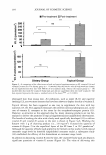
196 JOURNAL OF COSMETIC SCIENCE with about 40% of the esters containing alphahydroxy esters, although the exact number of different esters is yet unknown. Moreover, the sensitization potential of lanolin remains still under discussion (64). Clark has proposed a reduction or purification of lanolin alcohols in order to minimize the risk of sensitization (65,66). Interestingly, an epidemiological study revealed that lanolin induced allergies occur in less than 0.001 % of individuals, i.e., less than 10 per million (67), while recent studies showed higher percentages of positive test reactions in children with atopic dermatitis (1.7% and 4.4%) (68,69). Kligman suggests that most of the lanolin sensitization cases represent false-positive results, and thus wool wax-containing products can be considered safe (64). Pesticide impurities and rancid lanolin grades could have contributed to some problems encountered in the past. Lanolin has known moisturizing properties (70), similar to those of petrolatum. Long term effects of lanolin can be detected up to 14 days after termination of treatment (70). The hydrating effect of lanolin has been shown using electrophysical measurements (71,72). While lanolin penetrates into the stratum corneum, it remains concentrated in the upper layers (73 ). Compared to a different vehicle, topically applied lanolin accel erated barrier recovery following an acute barrier disruption with acetone (74), i.e., 3% lanolin significantly reduced transepidermal water loss both 45 minutes and four hours following disruption. Moreover, the immediate effect of lanolin on barrier recovery was pronounced. In fact, the positive barrier effect of lanolin was comparable to that of an optimized ratio of stratum corneum lipids, i.e., a barrier formulation (discussed in more detail below) including cholesterol, ceramides, essential fatty acids, and non-essential fatty acids (ratio 3:1:1:1) (55,56,74). Finally, skin roughness is positively influenced by formulations containing lanolin in a dose-dependent manner (7 5 ). Thus, although the exact nature of contact sensitization against lanolin has not been revealed, the positive effects of this compound appears to outweigh the allergic risk. PETROLATUM AS COSMETIC VEHICLE MODEL Petrolatum (synonym: petroleum jelly) is regarded as a standard dermatological vehicle and is widely used in both therapeutic and cosmetic applications. Petrolatum is a purified material obtained from petroleum, consisting of a variety of long-chain aliphatic hydrocarbons. It has been used in skin care since the late 19th century, yet is still listed in the current pharmacopoeia (e.g., US, Germany). In practical dermatology, petrolatum is used either as a vehicle for patch testing or drug delivery and as an adjuvant cosmetic vehicle. Usually petrolatum does not contain reactive chemical bonds and, as such, has a long stability. It is considered to be an inert vehicle with no direct irritation effect. Petro latum is frequently used as a vehicle for patch testing, representing the classic vehicle for lipophilic compounds in this setting. Petrolatum-based formulations have shown excel lent stability, as there is no or only little change in incorporated compound concentra tions. The remarkable value and long shelf life of petrolatum are derived both from its oxidation- and degradation-resistant properties (76). Its toxicity is low, even if accu mulation into body organs after repeated overexposure has been reported. Recently, purified hydrocarbons of known molecular structure (branched chain hydrogenated polydecenes, food grade) have been proposed as a safer replacement for petrolatum (77).
Purchased for the exclusive use of nofirst nolast (unknown)
From: SCC Media Library & Resource Center (library.scconline.org)