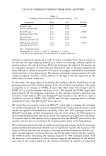
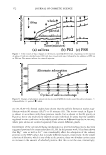
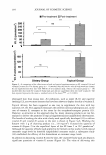
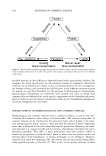
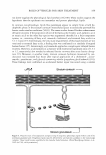
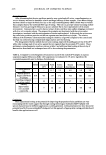
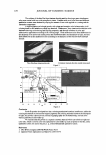
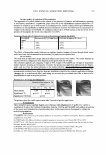
228 JOURNAL OF COSMETIC SCIENCE CATEGORICAL EVALUATION OF THE OCULAR IRRITANCY OF COSMETIC AND CONSUMER PRODUCTS BY HUMAN OCULAR INSTILLATION PROCEDURES Yang Gao, M.D., Kelly P. Lockwood and Bruce Kanengiser, M.D. Department of Ophthalmology, Clinical Research Laboratories, Inc., Piscataway, NJ Objective The assessment of ocular irritation potential is an important part of safety testing for cosmetic and consumer products. The different types of cosmetic and consumer products may irritate ocular tissues at different levels with various irritancy patterns. The purpose of this investigation was to examine ocular irritancy levels elicited by various categories of a specific class of cosmetic and consumer products, which have a potential to inadvertently enter the eye during use. Material and Methods The results of 205 (410 eyes) human subjects with self-assessed non-sensitive eyes and non-contact lens wearers, ranging in age from 19 to 69 years old, from 12 ocular instillation studies were reviewed. Test materials assessed belonged to I of 7 categories, which included liquid makeup, shampoo, baby wash, eye makeup re111over, mascara, powder eye shadow and facial cleanser (Table I). These test materials were evaluated by human ocular instillation followed by examinations, for which subjective perceptions of irritation were recorded, and component areas of ocular tissues were individually examined for inflammation and for the area and density of fluorescein staining patterns, at 30 seconds and at 5, I 5, 60 and 120 minutes post-instillation. Each subject was reclined in an automated ophthalmic chair at a 60° angle. A 75 - 100µ1 or 30mg dose of each test material was instilled into the inferior cul de sac, while the lower eyelid was retracted downward. Subjective irritation was determined by ascertaining from the subject any experiences of ophthalmic irritation (i.e. stinging, burning, itching, dryness, and foreign body sensation) at the time of the specified examination. Subjects were examined for evidence of excessive lacrimation. Each subject's upper and lower eyelids, specifically the lid margins and meibomian gland orifices, were examined for evidence of redness, scaling, swelling, and/or excessive meibomian secretions. The palpebral and bulbar conjunctivae were examined and scored for redness, inflammation, follicular, and/or papillary reactions. The cornea was examined for evidence of any inflammation, neovascularization, edema, infiltrates, opacities, and/or epithelial defects. To assess fluorescein staining patterns, a Fluorets sterile ophthalmic strip was inserted into the inferior cul de sac of each eye. A novel grading system (scale of O -13) was employed to evaluate the integrity of the palpebral and bulbar conjunctivae, corneal epithelium, and caruncle. Additionally, the tear film break-up time was assessed. All data was analyzed by one-way analysis of variance followed by Tukey's test and correlation (r-value). 111011r .. 1 Tablel Product Type Distribution Prodll:IS Preoaration Nllli,erofrn:s o/o LqwnBkel.fl Neat 40 9.76 Sha"1JOO IO''lo 160 39.02 Baby wash Neat 80 19.51 E:,e maket.p rem:ver Neat 60 14.63 Mascara Neat 10 2.44 Powder e:,e shadow Neat 40 9.76 Facial cleanser Neat 20 4.88 Total 410 100.00 Results /1/u, tration of ocular i"itation (Figure I). Ocular tissues consisting of palpebral conjunctiva, bulbar conjunctiva, cornea, and caruncle respond to cosmetic exposure with different severity, pattern and/or onset of symptoms, with respect to inflammation, abnormalities and/or observed tissue abrasion. As an example, this figure depicts ocular irritation induced by instillation of a cosmetic or consumer product. Moderate inflammation of the conjunctivae at a score level of 3, punctate fluorescein staining patterns of palpebral conjunctiva at an area level of 3 and a density score level of 2. superficial punctate keratopathy at a level 3 or 4 area with density level of 2 or 3 in the quadrants of inferior nasal and inferior temple, and punctate staining of caruncle at a level 4 area with density score level of 3 were observed.

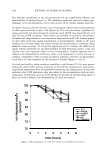
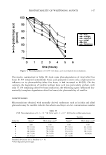
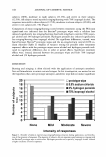
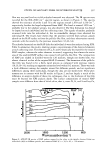
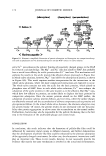
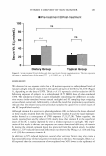
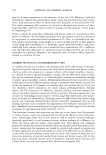
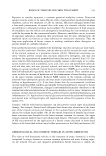
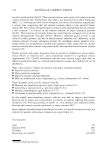
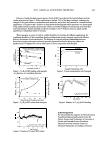
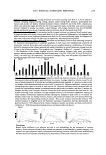
2003 ANNUAL SCIENTIFIC MEETING 229 Subiective i"itation (figure 2). Average maximum score levels (scoring scale from 0 to 4) of subjective irritation, including stinging, burning, itching, dryness, and/or foreign body sensation, demonstrated that mascara and powder eye shadow exhibited moderate irritation (2.8±0.102 and 2.45± 0.182, respectively), which were statistically higher (p0.05) than the remaining product types, except baby wash and eye makeup remover compared to powder eye shadow. Liquid makeup, with average maximum score level 0.5±0.088, elicited significantly lower levels of reported subjective irritation than all other products (p0.05). Obiective irritation (figure 3). No lacrimation, eyelid or corneal irritation was observed for all product types. Average maximum score levels (scoring scale from Oto 4) for conjunctiva} inflammation, with palpebral and bulbar conjunctiva! scores combined (combined scale from Oto 8), were significantly higher for shampoo and baby wash, with scores 4.075±0.126 and 4.1±0.16, respectively, than other products (p0.05). Distribution offluorescein staining (figure 4). Maximum area and density scores at each examining time point for fluorescein staining patterns of component quadrants of each tissue were multiplied and totaled for all examination intervals. Scores from each evaluated tissue were weighted based on a modification of the Draize method for assessing ocular irritancy potential and totaled to determine an overall fluorescein staining score for all eyes by the following equation: Total weighted score = (palpebral + bulbar) x 2 + cornea x 5 = canruncle x I, The distribution of the average weighted score for liquid makeup, shampoo, baby wash, eye makeup remover, mascara, powder eye shadow and facial cleanser were 11.4±1.34, 31.03±152, 39.19±._2.70, 9.6±0.91, 39.92± 3.45 and 9.55±1.98, respectively. The scores of shampoo, baby wash and powder eye shadow were significantly higher than those of other products (p0.05). , Figure 2 Figure 3 Figure 4 111 1{ ·i 1,:: Jj,. J ., H �j r I .: .i I I I I I I '.:J f w �i I I I I I I i a.r.- £:= .... � F.--- .... fpt ....... ':: , ____ .,._ - ..._..,., ____ Time Course of Ocular Irritation (figure 5). Subjective reports and objective irritation, as well as fluorescein staining were observed during the post-instillation time course. Average subjective irritation scores for all types of products peaked at 30 seconds post-instillation and decreased markedly at 5 minutes, except powder eye shadow, which maintained a high score level until 15 minutes (A). Objective ophthalmic irritation varied among the product types in severity at each interval (B). Objective ophthalmic scores decreased after 30 seconds for liquid makeup, mascara, eye makeup remover and powder eye shadow, and after 15 minutes for shampoo and baby wash. However, objective irritation for facial cleanser maintained the same level for 120 minutes following ocular instillation. Average weighted scores (C) of fluorescein ophthalmic staining on ocular surfaces revealed that superficial punctate staining was increased to peak levels at 15 minutes for shampoo, baby wash, eye makeup remover, mascara, and powder eye shadow and at 60 minutes following ocular instillation for liquid makeup and facial cleanser. Most ocular irritation resolved after 24 hours. The statistical analysis of weighted scores for fluorescein staining at examination intervals demonstrated very good correlation (r 0.95) between facial cleanser, shampoo or powder eye shadow and baby wash and fair correlation (r 0.80) between liquid makeup remover and mascara (data not shown). Figure 5 Conclusions · II ,5 .... � C Human ocular instillation is an effective and safe in vivo methodology for the assessment of cosmetic irritancy. Ocular irritation elicited by the evaluated test materials varied markedly by product category, with respect to the type (subjective reports, inflammation and staining), duration, and ocular tissue, demonstrating that these factors are important considerations for the prediction of the ocular initancy of a test material.
Purchased for the exclusive use of nofirst nolast (unknown)
From: SCC Media Library & Resource Center (library.scconline.org)