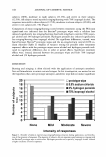
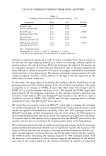
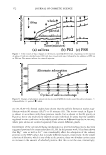
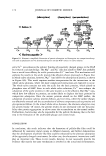
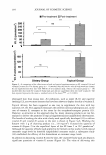
PHOTOSTABILITY OF WHITENING AGENTS 143 The mean diameters of all microemulsions were in the 25-30-nm range, and remained unmodified even after repeated freeze-thaw cycles (Table I), indicating a satisfactory stability, even in the presence of whitening agents and odorous molecules. PERFUMED MICROEMULSIONS All fragrances added to the microemulsion, both in the absence and in the presence of whitening agents, were compatible with it, as neither opalescence nor phase separation occurred. The mean diameters of microemulsions containing 0.05% w/w of each fra grance composition did not substantially vary after warming at 40°C and after one week of freeze-thaw cycles. Table II gives the results obtained with the micro'emulsion without kojic acid or arbutin similar values were obtained in the presence of whitening agents. Olfactory evaluation. Olfactory analysis aimed to identify the precise quantity of fragrance to be introduced in the microemulsion in order to obtain a pleasant fragrance, i.e., sufficient to mask the typical smell of surfactants, persistent over time and not too intense. The optimal concentrations were obviously not the same for all flavors, as their inten sities differ. Orange and coconut were added to the microemulsion over a 0.01-0.05% w/w range the weaker fragrances (fragrance, tea, and violet) were added to the micro emulsion over a 0.02-0.10% w/w range. The results of the addition of the chosen perfumed mixtures to the microemulsion led to the consideration that it was possible to cover the unpleasant smell of surfactants and IPP effectively, obtaining different results, depending on the type of fragrance used and on its intensity. PHOTODEGRADATION For both arbutin and kojic acid, photostability was maximum in those aqueous solutions whose pH was uncorrected (7 .0 for arbutin and 5 .0 for kojic acid). In the experimental conditions, at lower concentration (5.0 x 10- 3 M), arbutin was quite photostable, as has already been shown (14), while kojic acid underwent marked photodegradation, no kojic Table I Mean Diameters of Microemulsions After Repeated Freeze-Thaw Cycles Microemulsion Alone With arbutin With kojic acid With arbutin and citral With kojic acid and citral With arbutin and linalool With kojic acid and linalool Standard deviations are in brackets. Just prepared 27 .3 (8.2) 27.5 (4.4) 25.5 (8.2) 27.9(7.2) 28.5 (9.3) 24.9 (2.9) 25.5 (4.7) Mean diameter (nm) One-week freeze-thaw cycles 25.2 (7 .5) 25.4 (7.7) 25.7 (8.0) 30.0 (5.6) 28.4 (7.0) 25.7 (8.8) 26.7 (3.2)

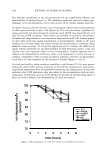
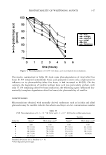
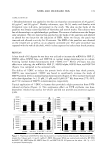
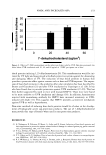
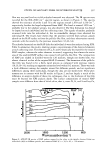
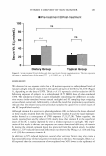
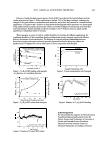
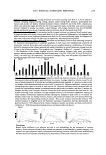
144 JOURNAL OF COSMETIC SCIENCE Table II Mean Diameters of Microemulsions in the Presence of 0.05% w/w Fragrance after One-Week Repeated Freeze-Thaw Cycles Mean diameter (nm) System 24 h after preparation 4 h (40°C) 4 h (40°C) + 4 h (-20°C) Microemulsion alone Coconut Fragrance Orange Tea Violet Standard deviations are in brackets. 27.3 (8.2) 27.3 (8.0) 29.6 (6.9) 27.3 (7.3) 27 .3 (9.2) 29.2 (5.6) 23.6 (6.2) 23.9 (8.1) 28.6 (7.6) 26.0 (8.5) 27.9 (7.4) 27.0 (8.0) 25.2 (7.5) 28.3 (8.2) 30.8 (6.9) 27.2 (8.2) 27.6 (8.0) 29.3 (8.3) acid being detectable in any aqueous solution after two hours, except in pH 5 .0 aqueous solution, in which 32% of the initial amount of kojic acid was still present (Table III). Higher concentrations (9.2 x 10- 3 M arbutin and 1.7 x 10- 2 M kojic acid) were chosen as they corresponded to 0.25% w/w, an amount usually employed in cosmetics as a whitening agent. In this case, arbutin was slightly less stable than at the lower concen tration, while kojic acid was more stable: after five-hour UVB irradiation, non-degraded arbutin at pH 7 .0 was at 81.0% (Figure 1), and non-degraded kojic acid at pH 5.0 was at 51.2% (Figure 2). In the presence of microemulsion components (sol. a), a slight increase in the stability of arbutin was noted, while kojic acid underwent somewhat faster degradation, particu larly at the start of irradiation. For both whitening agents, maximum photostability occurred when they were dissolved in the microemulsion (see Figures 1 and 2), indi cating some protective effect, probably due to the presence of a complex interfacial structure. This result is particularly significant, if one considers the destabilizing effect of the microemulsion components in solution on kojic acid, and might indicate the importance of the microstructure of the disperse system in increasing photostability. Since the microemulsions possessed a rather unpleasant smell due to the surfactants, which would make them unfit for cosmetic use, five aromatic mixtures were used to Table III UVB Photodegradation of Kojic Acid and Arbutin (5 x 10- 3 M) in Aqueous Solutions pH 3.0 pH 5.0 pH 7.0 pH 8.0 Time Kojic Kojic Kojic Kojic (h) acid* Arbutin* acid* Arbutin* acid* Arbutin* acid* Arbutin* 0 100 100 100 100 100 100 100 100 48.2 (2.25) 88.1 (0.6) 66.6 (1.1) 88.5 (4.2) 99.6 (2.9) 99.8 (3.2) 2 83.4 (1.9) 32.2 (3.1) 87.9 (1.5) 99.8 (1.7) 94.9 (3.0) 3 81.9 (4.0) 86.3 (1.4) 99.1 (1.6) 94.1 (1.9) 4 80.6 (2.2) 84.8 (2.6) 98.6 (2.5) 88.0 (2.3) 5 74.5 (2.8) 83.2 (3.0) 98.4 (2.0) 83.9 (2.8) Standard deviations are in brackets (n = 4). * Non-degraded percentages.
Purchased for the exclusive use of nofirst nolast (unknown)
From: SCC Media Library & Resource Center (library.scconline.org)