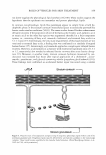
STUDY OF SALIVARY FILMS ON HYDROXYAPATITE 165 equipped with a micro-ATR attachment incorporating a sapphire prism (45°) as an internal reflection element. XPS experiments were performed with a UL V AC-PHI Model 5100 spectrometer using MgKu radiation (hv = 1253.6 eV). The utility of XPS for characterizing the surface of HAP has been demonstrated previously in our work (23,24). The Cls line at 284.6 eV was used for charge correction. SALIVA COLLECTION FOR IN VITRO STUDY Saliva samples were donated from three individuals prior to the experiments at around 9:00 a.m., before taking food or beverage. Whole mixed saliva was collected under masticatory stimulation by chewing a sheet of plastic film. Each sample of pure saliva was collected separately: parotid secretion was collected by means of Curby cups (2 5) and submandibular secretion by means of a special device (26). Those saliva samples were centrifuged at 4,000 rpm and used either undiluted or diluted with distilled water to the given concentrations. QUANTITATIVE ANALYSIS OF IN VITRO-ADSORBED SALIVARY PROTEINS ON HAP POWDER HAP powder (Wako Pure Chemical Industries, Japan) (Ca/P: 1.65 specific surface area: 8 m2 g- 1 ) was used instead of a HAP disk in this experiment. The typical adsorption experiments were carried out as follows: The HAP powder was dispersed in the saliva solutions or human albumin (Sigma, USA) standard solutions at a ratio of 30 mg:10 ml. The solutions were stirred continuously with a variable-speed magnetic stirrer (bar: 10 mm length: 4 mm p: 60 rpm) for given periods at room temperature. In the case of investigating the effects of several cations on the adsorption of protein, given amounts of CaC1 2 , MgC1 2 , and NaCl were added to the saliva or protein standard solutions. After given periods, 30 ml of distilled water was added to the dispersive solution, then centrifuged at 3,000 rpm for five minutes to remove the loosely adhered saliva. The supernatant was removed, and the solid was resuspended with 30 ml of water, then centrifuged. These procedures to remove loosely adhered saliva were repeated two more times. Then, 5 ml of HCl (0.2 mol/1) was added to dissolve the whole solids, to which 4 ml of sodium phosphate buffer (0.1 mol/1, pH 8.3) was added. The solution was mixed by a vortex mixer for five seconds. The mixture was centrifuged at 3,000 rpm for five minutes, then to 2.2 ml of supernatant was added 0.5 ml of fluorescamine acetone solution (GL Sciences, Japan) (0.03 w/v%). The solution was mixed for five seconds by a vortex mixer. After two minutes the intensity of fluorescence was measured on a Hitachi 650-60 fluorescence spectrophotometer at an excitation wavelength of 390 nm and an emission wavelength of 475 nm. The method was calibrated with the standards of the human albumin. ADSORPTION OF SALIVARY PROTEINS ON A MUCIN-COATED QUARTZ-CRYSTAL MICROBALANCE (QCM) The experiments were carried out with the QCM SF-105W (Sogo Pharmaceutical, Japan). A schematic representation of the mucin-coated quartz-crystal microbalance (QCM) is shown in Figure 1. On AT-cut quartz (9-MHz), gold electrodes (16 mm2 area)

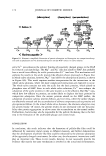
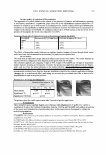
166 JOURNAL OF COSMETIC SCIENCE Mucin 2-Aminoethanethiol + + WNJS WNJS WNJS .L:IF = -K · .L:lm WNJS WIN s ....___ ___ f Quartz ______ _ Gold electrode Frequency counter .L:IF: frequency shift .L:lm : mass change K: constant Figure 1. Schematic representation of mucin-coated quartz-crystal microbalance (QCM) used for the investigation of pellicle accumulation. were deposited so that a frequency decrease of 1 Hz corresponded to a mass increase of 1 ng on the electrode. The gold electrode surface was modified with 2-aminoethanethiol hydrochloride (5 mmol/1) (Kanta Chemicals, Japan) for ten minutes. Details about this treatment have been described elsewhere (27 ,28). As a starting material for the accu mulation of the salivary protein, a commercially available material would be preferable to the other salivary components. Therefore, one side of the electrode was treated with pig-stomach mucin (0.2%, pH 7) (Waka Pure Chemical Industries, Japan) for ten minutes. The mucin is a general term for many types of glycoproteins secreted from several organs and is also one of the constituents of the tooth pellicle (29). The long-term stability of the QCM frequency over several hours was within ± 2 Hz. All experiments were carried out in an air-conditioned room at a temperature of 24 ° C. In a typical experiment, the mucin-coated electrode was immersed in distilled water (500 ml), and the frequency change caused by the injection of saliva (5 ml) was moni tored while stirring with a magnetic stirrer. To investigate the surface charge of the adsorbed materials on the electrode, PEI (30% polyethyleneimine P-70 solution, Waka Pure Chemical Industries, Japan) and PSS (sodium polystyrene sulfonate, Sigma, USA), which were supposed to give a positive and negative charge, respectively, on the surface, were added to the water as reference substances. RESULTS IN SITU FORMATION OF SALIVARY FILM ON HAP DISKS After collecting periods from 0.2 to 120 minutes in the mouth, the HAP disks were rinsed with distilled water and allowed to dry in the air for ten minutes. The pellicle-like
Purchased for the exclusive use of nofirst nolast (unknown)
From: SCC Media Library & Resource Center (library.scconline.org)